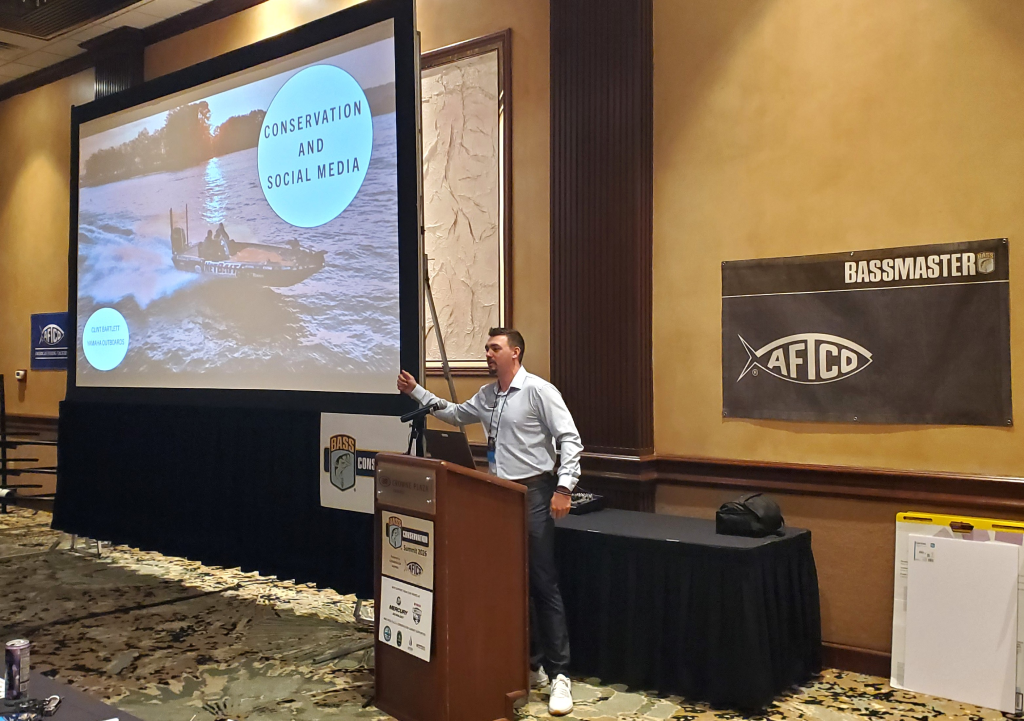
More than 100 conservation leaders, fisheries biologists, agency administrators, and B.A.S.S. Nation conservation directors from 34 states gathered in Knoxville for the 2026 B.A.S.S. Conservation Summit. The main issues were not flashy, but they are the kind that decide whether bass fishing stays healthy: communication, aquatic plant management, invasive species, and habitat.
Aquatic vegetation is one of those topics that gets oversimplified fast. Too much invasive growth can choke access, hurt boating, and change a fishery. Strip too much vegetation out and you can wreck nursery cover, water quality, and the structure bass and forage fish depend on. Good management lives in the middle, and it takes local data, agency work, angler input, and enough patience to do more than just spray first and ask questions later.
The summit also leaned into better conservation outreach. That matters because anglers are flooded with hot takes, rumors, and one-size-fits-all opinions every time a lake changes. Fisheries managers need to explain what they are doing in plain English, and anglers need to show up with more than anger when a resource is on the line.
Georgia’s Tony Beck and Florida’s Jayson Hooven were recognized as 2026 B.A.S.S. Conservation Directors of the Year, which is the kind of volunteer conservation work that usually happens without much spotlight. Local anglers who stay engaged are often the first warning system when habitat, access, or fish populations start slipping.
Bass fisheries do not stay strong by accident. They take habitat, science, harvest rules where needed, invasive control, and anglers willing to protect the water instead of just complain when the bite gets tough. That is conservation with mud on its boots.
Source & further reading
The Fishing WireRegulations and conditions change. Check current official guidance before you hunt, dive or travel.