
The U.S. Fish and Wildlife Service has proposed listing the Blanding’s turtle as threatened under the Endangered Species Act, pairing the listing with species-specific protections and exceptions for certain land-management activities. The November 27 announcement is a proposal, not a final federal listing.
The yellow-throated freshwater turtle occurs in 14 U.S. states across the upper Midwest and Northeast, as well as three Canadian provinces. Its habitat includes wetlands, ponds, marshes and vernal pools, but its needs extend beyond the water: turtles also use uplands for nesting and travel. The Service says they can move more than a mile over land, making roads and disconnected habitat important parts of the conservation problem.
What the proposal would change
The Service identifies habitat loss, fragmentation and degradation, road deaths, increased nest predation, and changing temperature and precipitation patterns among the threats driving the proposed listing. Illegal collection adds another pressure.
If finalized as proposed, the accompanying section 4(d) rule would restrict taking turtles and certain trade and possession activities, while providing specified exceptions. The agency’s explanation of the proposal describes exceptions for beneficial habitat restoration, qualifying routine agriculture on existing cultivated land, and forestry using approved best management practices. The detailed conditions matter; these are not blanket exemptions for every project on a farm, woodlot or wetland.
For landowners and habitat managers, this is a chance to review how the proposed protections and exceptions would apply to their work and submit relevant information before a final decision. Existing state protections still matter. The Service says the turtle already has protected or special status throughout its U.S. range, with requirements varying by state. The federal proposal is not permission to collect turtles or disregard those rules.
Why no critical habitat is proposed
The Service is not proposing a critical-habitat designation. Its stated concern is that publishing detailed location maps could make vulnerable turtle populations easier for illegal collectors to find. That decision does not mean habitat is unimportant: habitat loss and fragmentation remain central threats in the agency’s assessment.
The same concern applies to photographs shared from the field. The Service asks people not to post precise locations of wild turtles online. Readers who need help identifying a turtle can contact a local nature center or their state wildlife agency instead of broadcasting its whereabouts.
Comment deadline and where to read the rule
The proposed rule is scheduled for Federal Register publication November 30, with comments due January 29, 2027. The formal notice sets an electronic submission deadline of 11:59 p.m. Eastern time that day. Written requests for a public hearing must be received by January 14, 2027.
Use Regulations.gov and search docket FWS-R3-ES-2026-4390, or follow the notice’s U.S. Mail instructions. The Service will not accept comments by email, fax or hand delivery. Comments become public, and the agency cautions that it cannot guarantee withholding personal identifying information. Useful submissions include documented information about populations, habitat, threats, conservation work or the proposed exceptions—not simply a vote for or against listing.
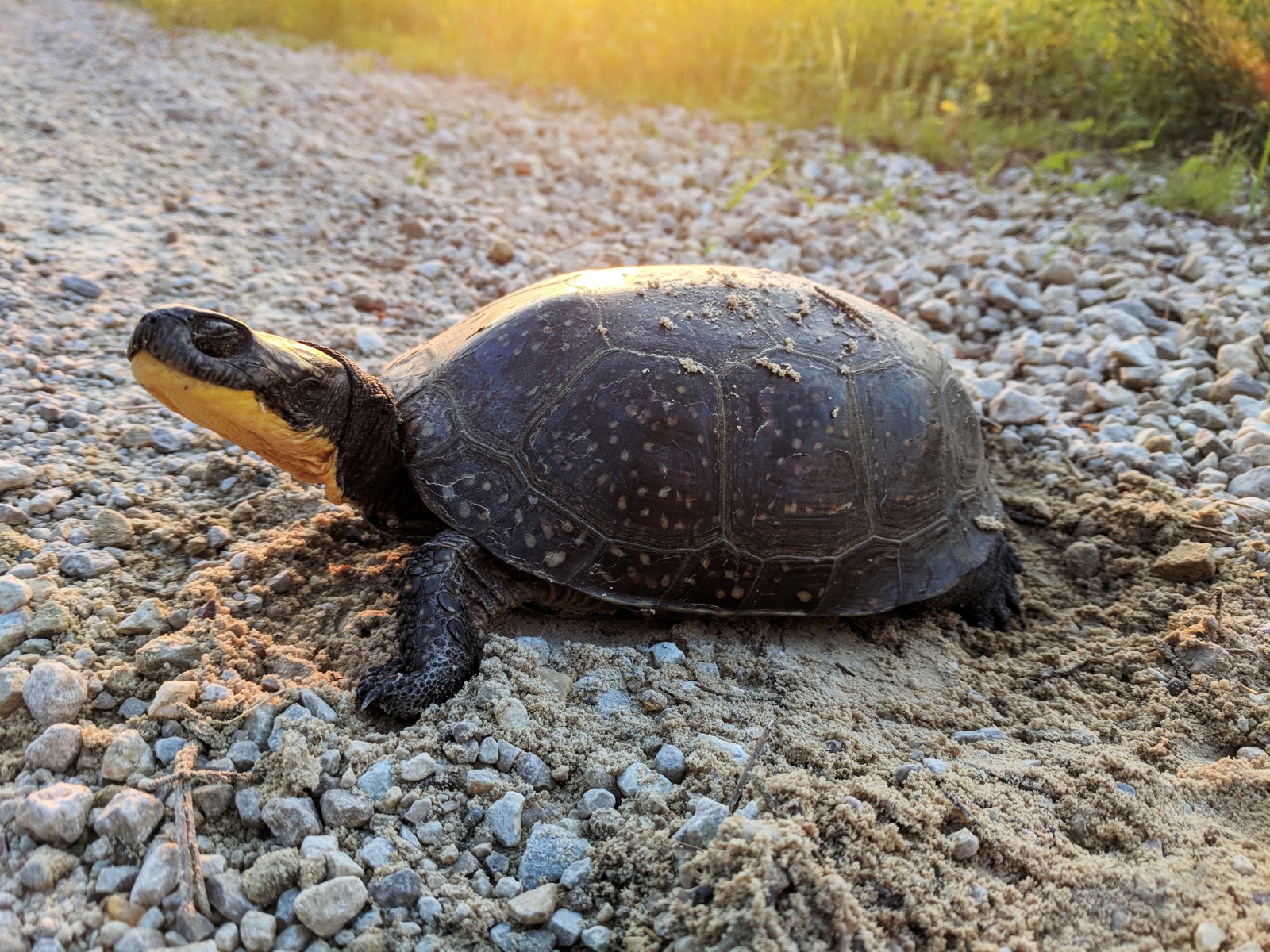
Illustrative file photograph: Blanding’s turtle on gravel, photographed in 2018 by Courtney Celley/USFWS. The USFWS image record identifies the photograph as public domain; it does not depict a new survey or enforcement incident.
Source & further reading
U.S. Fish and Wildlife ServiceRegulations and conditions change. Check current official guidance before you hunt, dive or travel.
As an Amazon Associate I earn from qualifying purchases.