
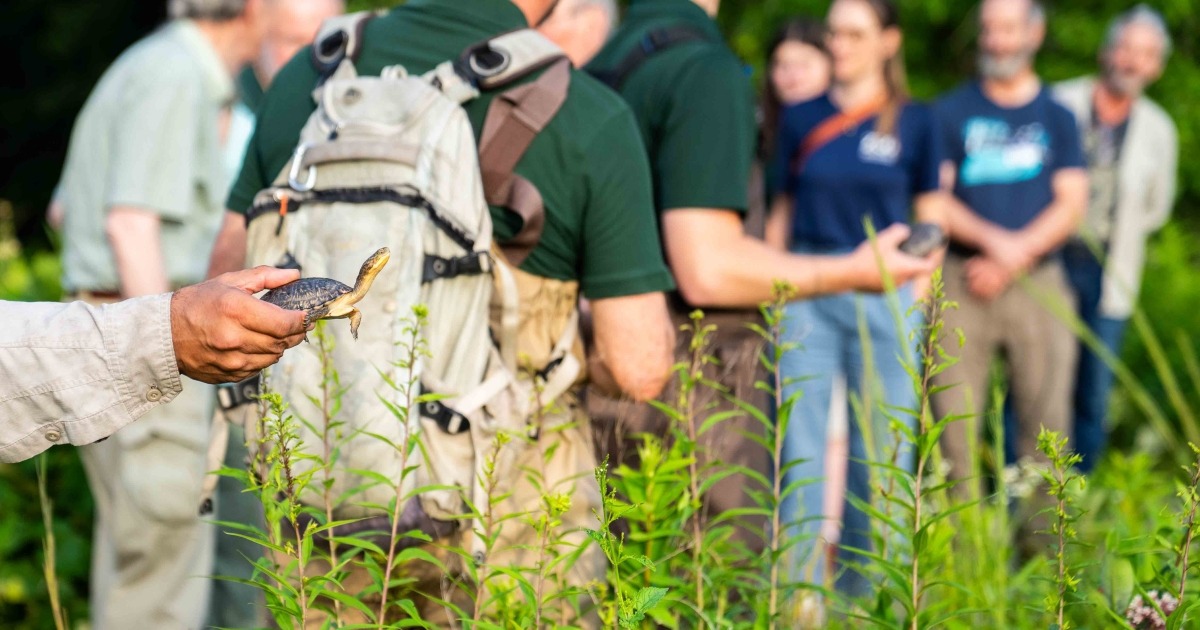
A turtle release in Massachusetts just hit a milestone that took more than two decades to earn. That is how real conservation usually works: slow, patient, local, and easy to miss if all you want are quick headlines.
At Great Meadows National Wildlife Refuge in Concord, partners released young Blanding’s turtles from Zoo New England’s Headstart Program. These turtles are nine months old and spent the winter under care instead of trying to survive in the wild at about the size and weight of a quarter. By spring, the headstarted turtles were much larger, each around a third of a pound, giving them better odds of reaching adulthood.
Since the program began in 2003, more than 800 headstarted Blanding’s turtles have been released at Great Meadows and nearby wetlands. The new milestone is that two of the recently released turtles are known offspring of Ivy, a female turtle that was herself headstarted in 2011. Ivy disappeared from surveys for about a decade, was found again in 2023, and in 2025 produced a nest with seven healthy hatchlings.
That makes this a second-generation success story. Not just animals raised and released, but a released animal surviving long enough to reproduce on the landscape. That is the difference between feel-good activity and conservation that may actually move the needle.
The work involves USFWS, Zoo New England, MassWildlife, the Town of Concord, local schools, volunteers, field technicians, and nearby residents. That community piece matters because Blanding’s turtles move across developed landscapes, nest outside tidy refuge boundaries, and can live for decades if people give them a chance.
Hunters and anglers should recognize the pattern. Habitat, science, local buy-in, enforcement against illegal collection, and long-term patience are what make wildlife recovery possible. Whether it is ducks, deer, fish, turtles, or anything else, conservation is not a slogan. It is work stacked year after year until the next generation proves it was worth doing.
Source & further reading
U.S. Fish and Wildlife ServiceRegulations and conditions change. Check current official guidance before you hunt, dive or travel.