
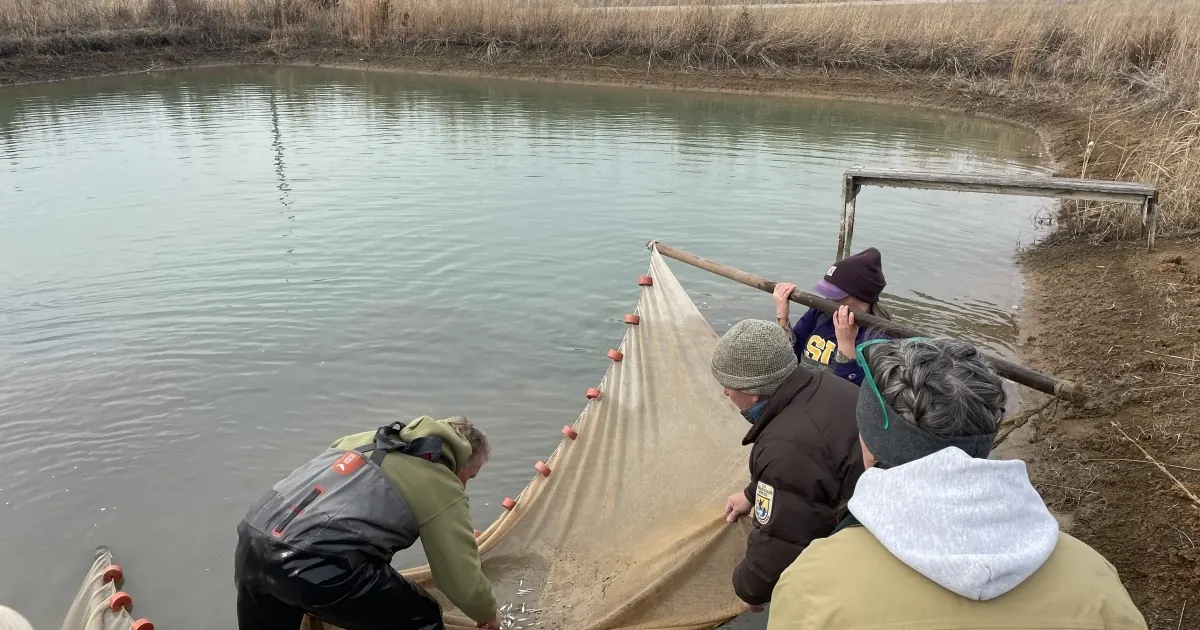
A little native fish in Kansas is a good reminder that conservation work does not always come with antlers or a grip-and-grin photo. Sometimes it means keeping a population alive for decades while the chance to restore it is still on the table.
The U.S. Fish and Wildlife Service has recognized the University of Kansas Field Station Experimental Ponds Team as a 2025 Recovery Champion. For nearly 25 years, that team has maintained the genetically distinct Willow Creek population of endangered Topeka shiners.
The rescue began in 2002 after predatory sportfish were introduced into the creek. This isolated group was considered the last remaining Topeka shiner population on the Western High Plains of Kansas. USFWS says it is now gone from the wild and survives only in captivity at the KU Field Station.
Successive generations have reproduced in the experimental ponds, preserving genetics that otherwise could have disappeared. The work has also improved knowledge of captive rearing and shiner genetics that may help future reintroductions into historical habitat. That is a possibility the team has kept alive, not a claim that the wild population has already recovered.
Being an angler and caring about native fish are not separate things. A sportfish belongs where it can support a fishery without wiping out something that belongs there already. Leave stocking and fish transfers to authorized fisheries managers. Good intentions do not undo a bad introduction.
Source & further reading
U.S. Fish and Wildlife ServiceRegulations and conditions change. Check current official guidance before you hunt, dive or travel.