
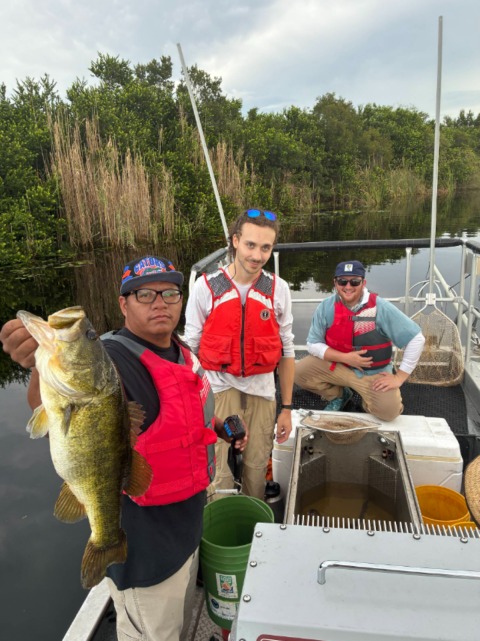
Biologists working with the Miccosukee Tribe have completed wet-season fisheries surveys in the reservation’s canal system, adding a high-water comparison to dry-season sampling conducted in April 2026. The work pairs an inventory of the fish community with health screening, giving Tribal fisheries managers more information about the waters they manage.
The Peninsular Florida Fish and Wildlife Conservation Office carried out the surveys with the Tribe’s Fish and Wildlife Department and Tribal members. Sampling in both seasons matters because high water can change where fish are found and how abundant they appear. A single visit cannot capture that seasonal picture.
Asian swamp eels were among the most prevalent species collected during the wet-season work. Their presence, alongside other nonnative aquatic species, documents a continuing pressure on native fish communities in the Everglades. The update does not give a population estimate or establish whether swamp eel numbers increased between surveys.
Staff from the U.S. Fish and Wildlife Service’s Warm Springs Fish Health Center also collected samples from fish captured during electrofishing. Those samples will be analyzed for systemic bacterial, viral and parasitic infections. With little existing information on wild fish health in the reservation area, this is baseline-building work—not an announcement of a confirmed disease outbreak.
The fieldwork also gives Tribal biologists and members hands-on experience in fisheries sampling and health monitoring. For long-term fishery management, that combination is useful: repeatable surveys, a clearer view of nonnative species and local capacity to keep collecting information. The September 24 report announces no change to fishing access or harvest rules.
Source & further reading
U.S. Fish and Wildlife ServiceRegulations and conditions change. Check current official guidance before you hunt, dive or travel.