
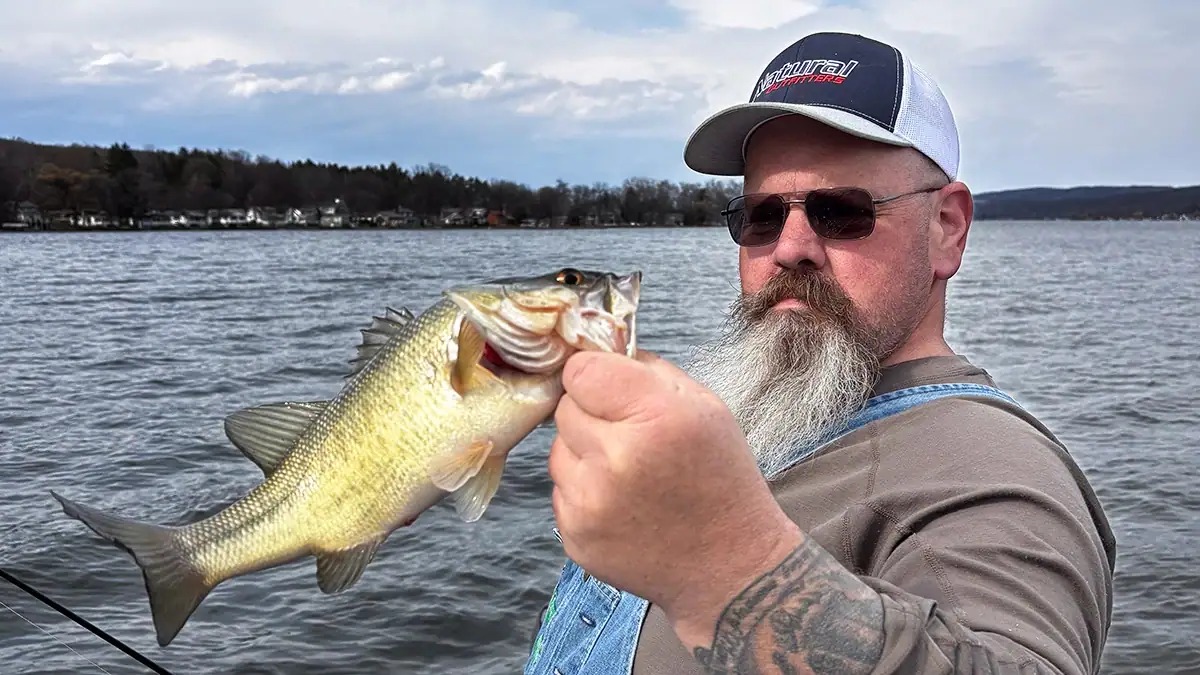
A pond full of 10- to 14-inch bass might feel like a good problem when kids are catching fish every cast, but biologically it is often a warning sign. Stunted pond bass are usually what happens when too many predators are competing for too little forage, and nobody is harvesting enough fish to bring the system back into balance.
The basic problem is carrying capacity. A small pond can only produce so much food, oxygen, cover, and prey. Largemouth bass sit near the top of that little food chain, and one good spawn can load the water with more mouths than the pond can feed. When that happens, bass survive but stop growing well. They stack up in the same size class, hammer bluegill and other forage, and turn the whole pond into a low-growth cycle.
This is where the catch-and-release-only mindset can hurt a fishery. Releasing every bass sounds noble until the pond is packed with thin fish that never get bigger. In many private ponds, selective legal harvest of smaller bass is not just acceptable, it is the fix. Take pressure off the forage base, let the remaining fish grow, and manage the water based on what is actually happening instead of what sounds good on a bumper sticker.
Habitat and fertility matter too. Poor cover, low productivity, weak forage recruitment, and water-quality problems can all make stunting worse. But the lesson is bigger than one farm pond: fish populations are not managed by feelings. They are managed by numbers, food, habitat, harvest, and time.
There is nothing anti-conservation about keeping fish when the rules and the biology call for it. Legal harvest is one of the oldest management tools we have. Used right, it can turn a pond from crowded and skinny back into a fishery worth being proud of.
Source & further reading
Wired2FishRegulations and conditions change. Check current official guidance before you hunt, dive or travel.