
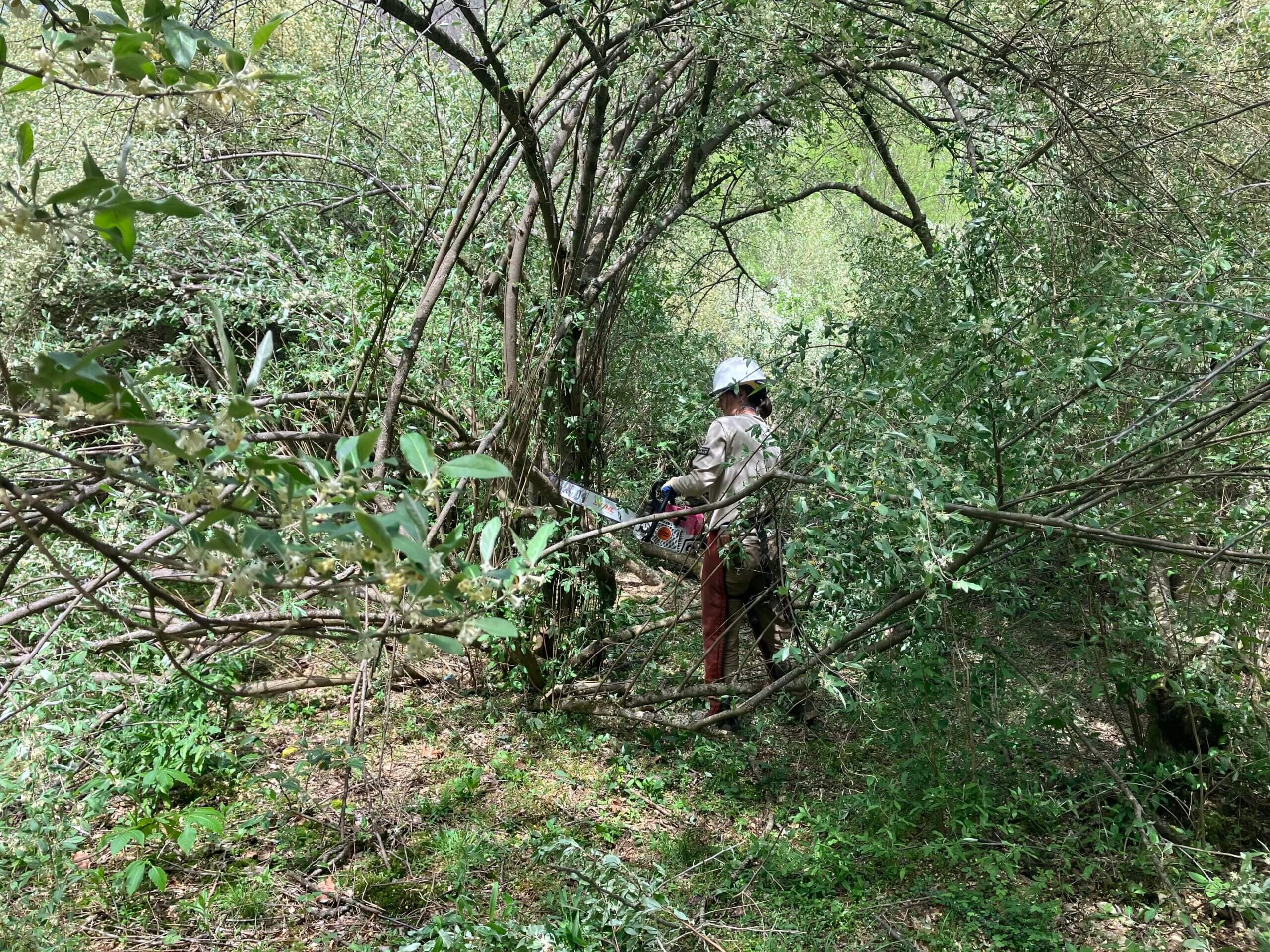
Southwest Virginia elk country just got a practical habitat boost. In the North Fork of Pound Lake area of the George Washington and Jefferson National Forests, invasive plants have been cutting into forage quality for elk, whitetails, grouse, and other wildlife.
The problem species include tree-of-heaven, Japanese honeysuckle, and garlic mustard. A $27,500 RMEF grant helped the U.S. Forest Service treat invasive foliage and cut stumps across 58 acres in 2024 and 2025. Those treatments knocked back invasive plants by 95 percent, giving native vegetation room to recover.
Another RMEF grant of nearly $41,000 helped cover seed, mulch, lime, and fertilizer across 764 acres of forage openings. That work was done by Southwest Virginia Sportsmen from November 2024 through March 2025 in Virginia’s elk management zone, including the War Fork, Southern Gap, and Boyd Ridge areas.
That is real habitat management. Kill the invasives, feed the soil, open the forage, and make the ground better for wildlife instead of pretending animals thrive on neglect. Elk benefit, but so do deer, black bear, wild turkey, grouse, and plenty of smaller species that use the same improved cover and food.
Hunters should take pride in projects like this because this is where license dollars, conservation groups, agency work, and volunteer-minded sportsmen all meet. Better habitat means healthier wildlife, better carrying capacity, and stronger arguments for keeping hunters involved in management instead of pushed to the sidelines.
Source & further reading
Rocky Mountain Elk FoundationRegulations and conditions change. Check current official guidance before you hunt, dive or travel.