The Federal Duck Stamp deserves more attention than the few seconds it takes to add it to a license purchase. For waterfowl hunters age 16 and older, it's a requirement. For the places those birds depend on, it's a source of habitat funding that keeps working after the season closes.
Hunters have a strong story to tell here, and it doesn't require a defensive speech about whether hunting belongs in conservation. Follow the money to the ground. The useful questions are what the stamp pays for, how that differs from permission to hunt, and how to make the connection visible to somebody who has never bought one.
Know what the purchase supports
The U.S. Fish and Wildlife Service's Federal Duck Stamp program says 98 percent of the purchase price goes toward acquiring and protecting wetland habitat and purchasing conservation easements. The agency reports that stamp sales since 1934 have raised more than $1.3 billion and helped conserve more than six million acres within the National Wildlife Refuge System.
Those figures describe a long-running program, not a promise that your individual purchase buys a particular patch of marsh. They also describe a specific job. Acquiring land and securing conservation easements aren't the same as paying every operating expense on a refuge. Keep that distinction when explaining the program; the actual achievement is strong enough without crediting the stamp for everything that happens on public land.
A wetland can look unremarkable from the road and still be worth protecting. The Fish and Wildlife Service identifies benefits beyond birds, including water purification, flood control and reduced soil erosion. A duck stamp helps support places with several jobs to do, whether or not a hunter is standing in them that morning.
Give hunters credit without closing the door
Waterfowl hunters have sustained this program through generations of annual purchases. That's a practical commitment to the resource, tied directly to participation in the hunt. We should be comfortable saying so.
But the stamp isn't a membership card that only hunters can buy. Birders, photographers, collectors and people who simply want habitat protected can purchase one too. Inviting them in doesn't diminish the hunting community's contribution. It gives more people a straightforward way to contribute alongside it.
If a friend enjoys watching migrating birds but doesn't hunt, explain what the purchase does before launching into a broader debate. Send the official program link, not a claim that buying any wildlife-themed merchandise funds the same work. Someone can disagree with you about plenty of things and still help keep habitat on the landscape.
The stamp is also an easy subject to bring into a first hunting season. When helping a new waterfowler sort out licenses, take a minute to explain why this particular purchase exists. The paperwork makes more sense when it connects to a place rather than becoming another unexplained fee.
Separate habitat support from hunting permission
Buying a stamp doesn't open every wetland to hunting. Habitat protection, public entry and permission to hunt a particular unit are different questions. A conservation easement shouldn't be treated as an invitation to walk onto private land, and a refuge boundary isn't a promise that every activity is allowed throughout it.
Before planning a hunt, use the refuge's own current information and the applicable wildlife agency regulations. Confirm the open units, access arrangements, dates, permits and restrictions for the activity you intend. If a map or instruction is unclear, ask the managing office before building a day around an assumption.
The official stamp-purchasing guidance explains that waterfowl hunters age 16 and older need a current Federal Duck Stamp in addition to the appropriate state licenses and permits. For a physical stamp, signing it is part of making it valid for hunting or refuge entry. An authorized E-Stamp is an alternative; an ordinary retail sales receipt is not the same thing.
Choose the purchase route that actually provides the credential when you need it. If ordering a physical stamp by mail, don't build tomorrow morning's hunt around its arrival. If buying electronically, save the authorized credential and follow the issuer's instructions. Check the current official guidance rather than relying on an old description of how long an electronic certificate lasts.
Go see more than the parking lot
A current Federal Duck Stamp also provides free entry to national wildlife refuges that charge an entrance fee. That's a useful reason to visit outside a hunt, while remembering that an entry benefit isn't a blanket waiver of other permits, fees or activity rules.
Pick a refuge you can realistically spend time exploring. Read its visitor information, choose an open trail or viewing area, and give yourself enough time to watch rather than simply drive through. Look at where birds are feeding or resting from an appropriate distance. Bring a field guide, take notes and leave closed areas alone. You don't need a hunting opportunity that day to get something worthwhile out of the visit.
Binoculars make that kind of visit more useful without requiring you to move closer to the birds. If you need a pair, the Vortex Diamondback HD 8x42 binoculars are one option to consider for wildlife observation. Use a serviceable pair you already own if it does the job; buying new optics isn't a condition of participating.
KILLSHOT Life may earn a commission from purchases through this Amazon link.
If you want to understand the local funding history, look for the refuge's own account of how its lands were acquired, or ask staff where that information is available. Don't assume that every acre you see came from stamp revenue. Learning the actual story is more useful than attaching a convenient funding claim to the nearest scenic view.
Keep the connection to the land
The next time the Federal Duck Stamp appears among your hunting purchases, give it more than a passing thought. Get the valid credential you need, understand where the money goes, and use that knowledge when you talk about the places you hunt.
There's room to argue about wildlife policy, access and management while recognizing a program that turns participation into protected habitat. Hunters don't need to apologize for wanting birds to hunt. Keeping places for those birds is part of keeping the hunt itself, and the stamp gives other people a way to help with that work too.
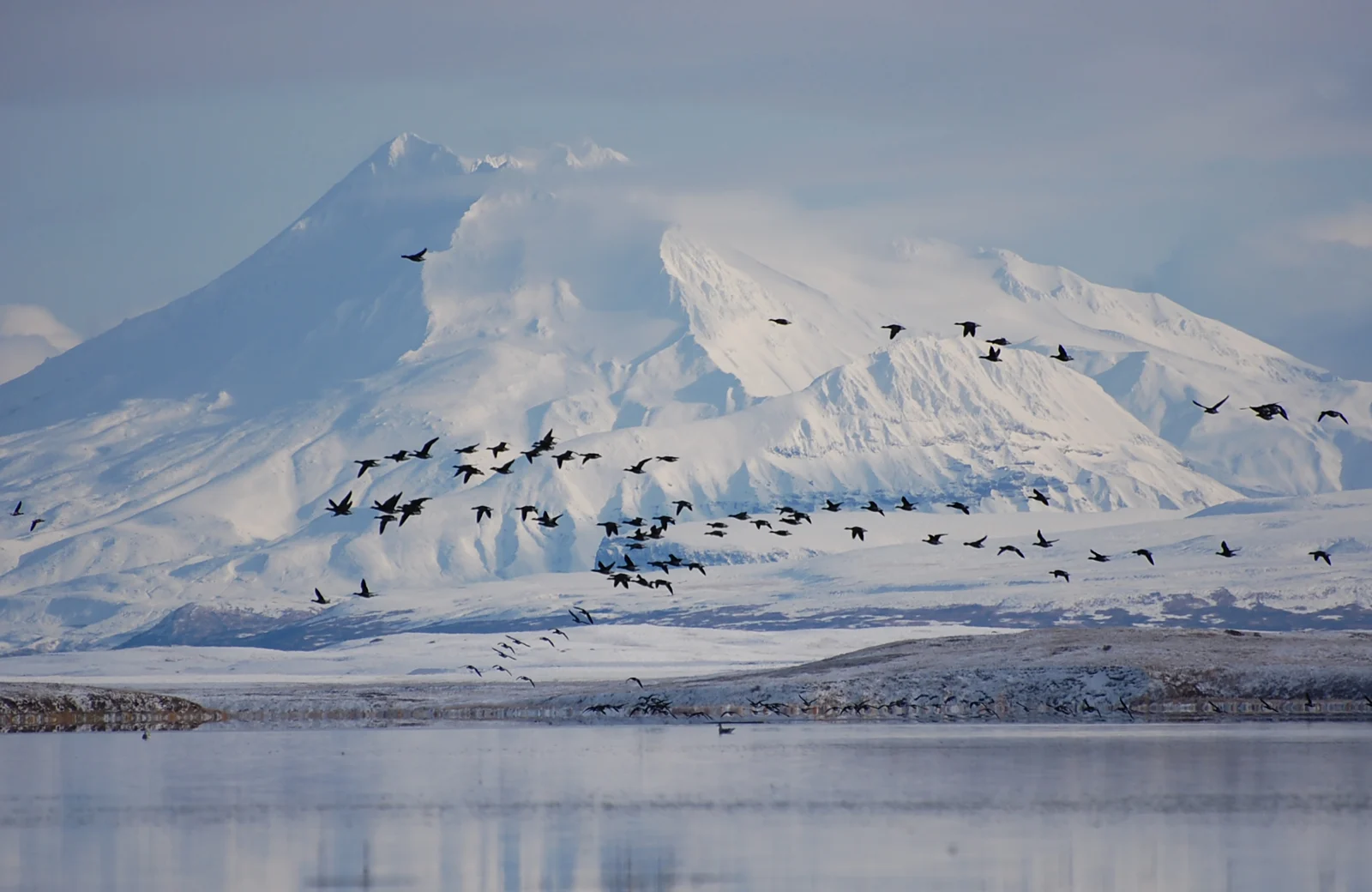
Photo: Kristine Sowl / USFWS, “Brant and Mount Dutton, Izembek Lagoon”. Public domain. Resized and converted to WebP without cropping. Illustrative habitat photograph; no claim is made that the pictured land was purchased with Duck Stamp revenue.
More perspectives →As an Amazon Associate I earn from qualifying purchases.