
A good place to hunt is worth a phone call after the season, not just before it. Once your last hunt on a property is finished, let the landowner know what happened, settle anything still outstanding and say thanks while the details are fresh.
That doesn't need to become a formal meeting. A short conversation can cover whether you're coming back for equipment, anything you noticed around the place and whether your arrangement worked for the person who lives or works there. It finishes the season without leaving the owner to wonder which truck might show up next weekend.
Tell the owner when you're finished
Your season and the legal season may end on different days. You might fill a tag, run out of available weekends or decide to leave a property alone for the rest of the year. Tell the owner when you've made that decision. If other members of your hunting group still have agreed visits planned, make that clear rather than speaking for everyone.
Be equally specific about equipment. A stand, blind or camera still on the property means the job isn't quite finished. Make a list of what remains, where it is and when you propose to retrieve it. Confirm the visit and the route instead of treating a collection trip as permission to come and go indefinitely.
Follow any removal deadlines in your agreement and applicable rules. If weather or ground conditions make the proposed date unsuitable, call before driving in. The useful outcome is a settled plan, not an announcement that leaves the owner to rearrange work around you.
Give a useful account of the hunt
Start with the things the owner actually wants to know. That may be what you harvested, whether you saw deer in a particular field or whether the parking arrangement kept vehicles out of the way. Ask rather than assuming everybody wants a full recounting of each encounter.
Keep observations separate from conclusions. Seeing fewer deer on three visits doesn't establish a population decline. A coyote sighting doesn't establish what happened to missing livestock. Give the location, date and what you directly saw, then leave room for the owner's knowledge of the property and any appropriate professional follow-up.
Property issues deserve the same precision. A photo and a clear location are more useful than “there's something wrong with a fence somewhere along the back.” Report urgent problems promptly when you discover them; don't save an open gate, damaged fence or livestock concern for a polite end-of-season summary. Avoid approaching unfamiliar livestock or attempting a repair you aren't qualified and authorized to make.
If you caused damage, make that a direct conversation. Explain what happened and agree on the next step. Don't quietly improvise a repair or assume a gift will settle it. A small problem is easier to address when both people know exactly what they're dealing with.
Keep the loose ends in one place
Use a short private note for equipment still out, promised work, contact details and the next agreed date. This isn't another hunting journal to maintain. It's a way to avoid discovering in February that you and a partner each thought the other had collected a camera.
Assign a person to each unfinished job. “We'll get it” isn't much of a plan when several hunters share access. Record completion as well as intention, and send the owner the update they asked for. Keep gate codes, permission details and sensitive locations out of public posts and shared folders that don't need them.
If you prefer paper notes in a coat pocket, the Rite in the Rain 3-by-5-inch black top-spiral notebooks, three-pack are an option for recording those field details. The listing specifies a pencil or all-weather pen for writing when the paper is wet. A phone note or notebook you already own may be enough; the important part is keeping one current list and following through.
KILLSHOT Life may earn a commission from purchases through this Amazon link.
Offer help with a real job
“Let me know if you need anything” is friendly, but an offer tied to an actual task is easier to answer. Ask whether there's a suitable job you could help with, then agree on its scope and timing. Be honest about your skills, equipment and available time. An afternoon you can reliably give is more useful than a large promise you won't keep.
Get approval before changing anything. Cutting a shooting lane, moving a gate, taking down wire or clearing vegetation isn't a thank-you project simply because it would make next year's hunt easier. The landowner decides what work belongs on the property. Habitat work deserves a plan suited to that ground, not an uninvited cleanup that removes cover somebody intended to keep.
Keep the offer separate from a demand for another season. Helping with an agreed job can be part of a good relationship without becoming a purchase of future access. If the owner doesn't need help, accept the answer. A sincere thank-you doesn't require inventing a project.
Ask what should change next time
The Minnesota DNR's private-land hunting guidance points out the difference between a hunter looking forward to a day afield and a landowner anticipating vehicles, gunfire and interruptions on the property. Its advice to look at the situation from the owner's point of view is practical. The part of your arrangement that seemed minor may be the part that affected their day.
Ask a concrete question: did the arrival messages work, was the parking spot convenient, or would another approach have kept you farther from livestock or family activity? Listen before offering an explanation. You may be able to solve an inconvenience with a different arrival time or parking location rather than a complicated new agreement.
Confirm future permission separately, including the people, activity, dates and any required documentation. A good season doesn't automatically carry every detail forward. Ownership, farm work, family plans and the owner's preferences can change. Keep the next conversation straightforward even if the answer is that the property won't be available.
There is plenty to enjoy about finishing a hunt: meat put away, equipment sorted and stories worth telling. Include the person who made that place available. Close out the loose ends, pass along useful information and leave them with a clear understanding of what happens next. That's a manageable piece of work, and it belongs on the calendar alongside the hunt itself.
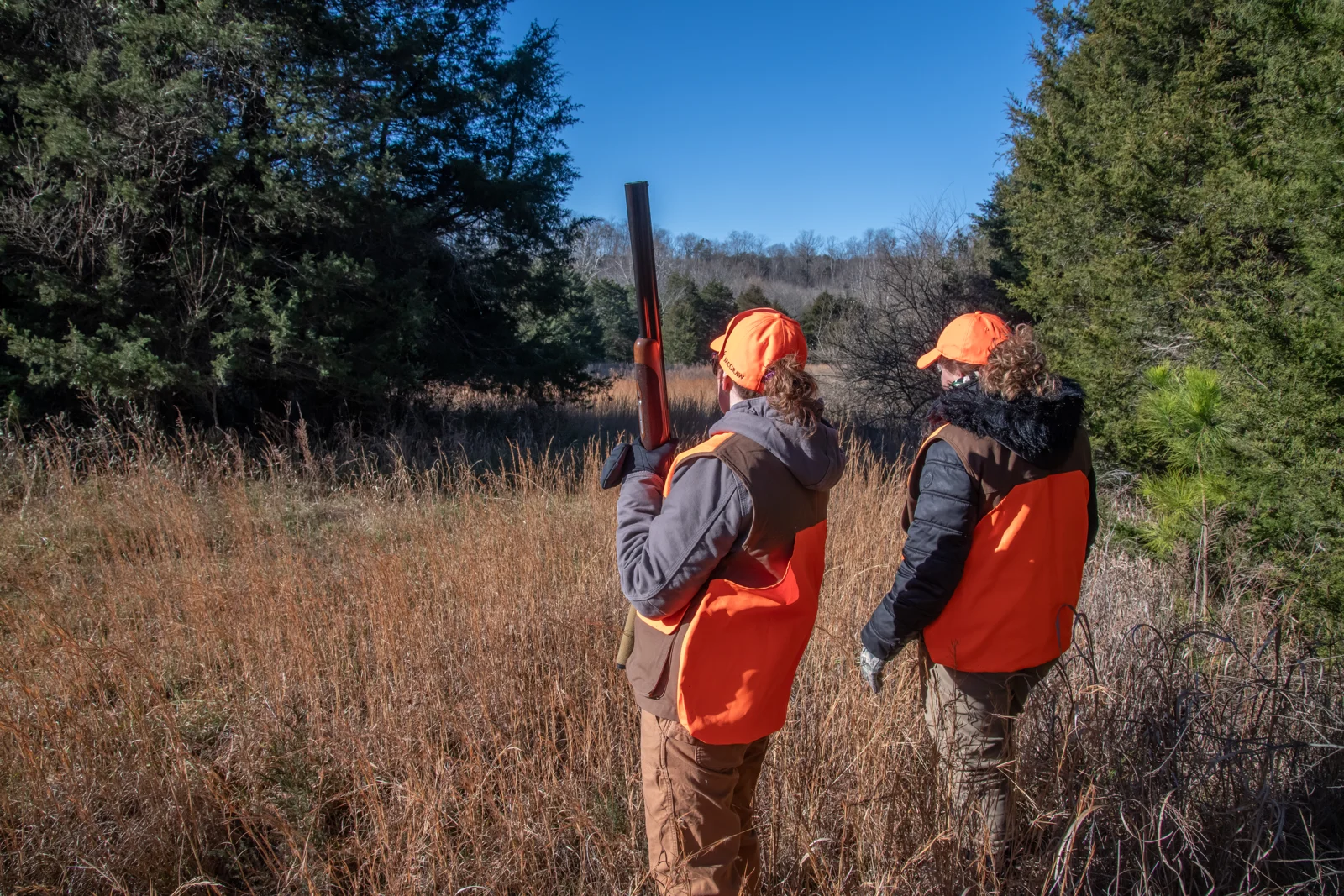
Photo: Brett Billings / USFWS, “Two women upland hunting in fall field with shotgun”. Public domain. Resized and converted to WebP without cropping. Illustrative hunting photograph; no endorsement by the pictured people or agency is implied.
More perspectives →As an Amazon Associate I earn from qualifying purchases.