
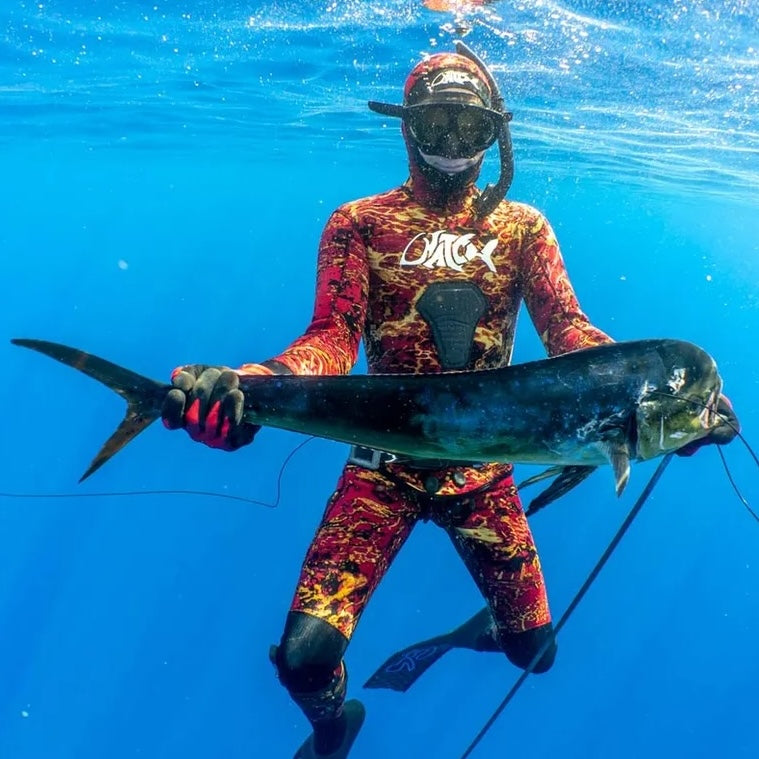
A wetsuit that fits well and keeps you warm lets you focus on the dive instead of shivering or fighting the shoulders. For spearfishing, start with water temperature, fit and freedom of movement. Color comes later.
Want to browse some options? Here's a list of wetsuits for freediving and spearfishing.
1. Neoprene thickness
Thickness affects insulation. A 5 mm or 7 mm suit is generally better suited to colder water than a 2 mm or 3 mm suit. Those are starting points, not a temperature chart. Consider dive duration, conditions and how quickly you get cold.
2. Style and design
Full suits cover the arms and legs and offer more protection than shorties. Shorties may suit warm conditions where that reduced coverage is acceptable. Two-piece suits let you choose a jacket and trousers that fit your needs, though the pieces still need to work together properly.
3. Camouflage
A pattern that matches the water or bottom may help break up your outline. It won't make up for rushed movements or a poor approach. Don't sacrifice fit or warmth for a pattern you like.
4. Fit and sizing
A snug fit limits water flushing through the suit, but it shouldn't restrict breathing or movement. Check the manufacturer's sizing chart and try the suit on when possible. Pay attention to gaps and uncomfortable pressure points rather than relying on the size label alone.
5. Material and construction
Neoprene quality, seam construction and reinforcement affect durability and warmth. Flatlock stitching is common in warm-water suits. Sealed and taped seams reduce water entry in colder conditions. Look closely at the areas that get pulled and rubbed during regular use.
6. Flexibility and mobility
You need room to move through the shoulders, arms and legs. Stretch panels and shaped cuts can help, but the suit has to fit your body. A warm suit that fights every movement isn't the right choice.
7. Hooded or hoodless
A hood adds warmth and coverage around your head. A hoodless suit may be more comfortable in warm water or give you flexibility with a separate hood. Make the choice around your usual conditions rather than appearances.
8. Brands and reviews
Look for manufacturers with a record of making dependable dive suits. Read reviews for details about fit, seam life and durability, especially from divers using a suit in conditions like yours. Another person's perfect fit may still be wrong for you.
Compare quality wetsuit options, but buy for the water you actually dive. The right suit should keep you comfortable without restricting the work you need to do underwater.
More perspectives →