
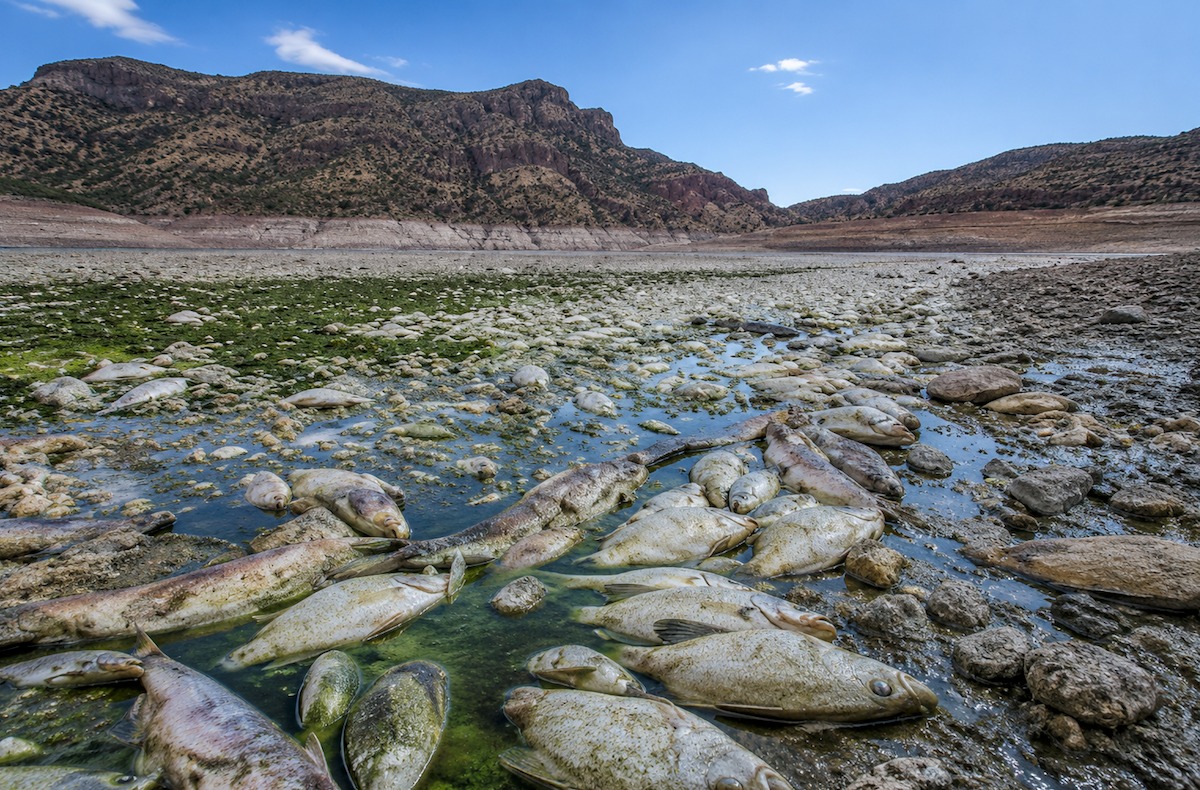
San Carlos Lake in Arizona is closed after a massive fish kill, and it is a rough reminder that a fishery can fall apart fast when drought, heat, and water management all stack up against it.
The San Carlos Recreation and Wildlife Department announced June 5 that San Carlos Lake was closed to fishing and recreational activity after what officials described as a significant fish kill affecting approximately 100% of the fish population. The reservoir sits on the San Carlos Apache Reservation about 120 miles east of Phoenix.
This did not come out of nowhere. Officials had already warned in April that a fish kill was possible. At that point, San Carlos Lake had fallen to only 1.93% of capacity and was still dropping. Prolonged drought and water releases from Coolidge Dam left fish trapped in shrinking, warming water with declining oxygen. Once those conditions get bad enough, fish do not get a vote. They die.
The closure also includes a public health angle. Decomposing fish can create risks for visitors, so fishing, possession, harvest, and fishing-related recreation have been shut down while officials deal with the aftermath.
For fishermen, this is more than a sad lake story from another state. Western fisheries are under pressure from drought, heat, water demand, and old infrastructure decisions that were made long before today’s outdoor pressure existed. Stocking fish and writing limits will not save a lake if the water disappears. Habitat, water levels, oxygen, access, and emergency planning all matter.
Nobody wants to see a lake closed. Nobody wants to see a fishery wiped clean. But ignoring the conditions that caused it will not bring the fish back either. If we want fishing to survive in dry country, water has to be treated like fish habitat, not just a line item to be moved around until the lakebed cracks.
Source & further reading
OutdoorHubRegulations and conditions change. Check current official guidance before you hunt, dive or travel.