
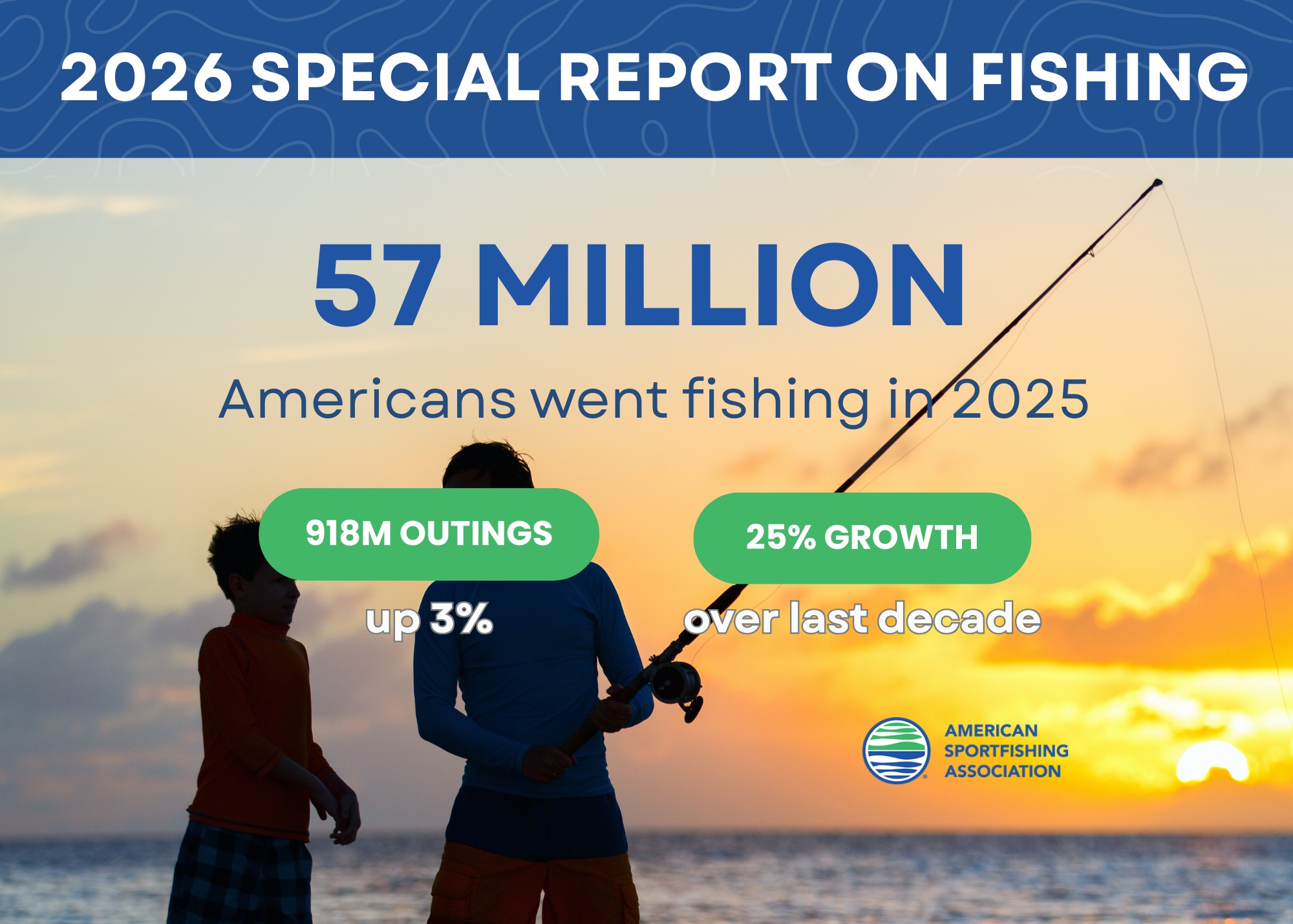
The 2026 Special Report on Fishing says 57 million Americans went fishing in 2025, representing 18% of the U.S. population. That is up nearly 25% from a decade ago, and overall fishing outings were up too.
That is good news, but it is not a reason to coast. The report also says 19 million people who fished in 2024 did not return in 2025. That kind of churn matters because license dollars, tackle sales, conservation funding, boat ramps, habitat projects, and political weight all depend on keeping real people connected to the water.
The youth numbers are the part every outdoorsman should pay attention to. ASA says 86% of current fishing participants fished before age 12, and 15% of kids who did not fish said they thought about going. That is the open door. A kid who learns to cast, handle a fish, read a regulation, respect clean water, and understand where food comes from is a lot harder to sell on the idea that anglers are the enemy.
The report also points to what gets in the way: crowded fishing spots, discomfort outdoors, not catching fish, unclean water, and cost. Some of that is part of fishing. Some of it is a management and access problem. If public places are overcrowded, dirty, expensive, or hard to use, people drop out. Then the same agencies and communities wonder why participation slides.
Fishing is still strong in America because it is simple, honest, and close to home for millions of families. Keeping it strong takes more than nostalgia. It takes access, clean water, good fisheries, fair regulations, youth opportunities, and enough experienced anglers willing to bring someone new instead of guarding every spot like a state secret.
Source & further reading
American Sportfishing AssociationRegulations and conditions change. Check current official guidance before you hunt, dive or travel.