
Old fence can be just as real a wildlife problem as drought, weeds, or bad policy. It does not make speeches. It just sits there catching elk, mule deer, antelope, bears, and anything else trying to move across the country.
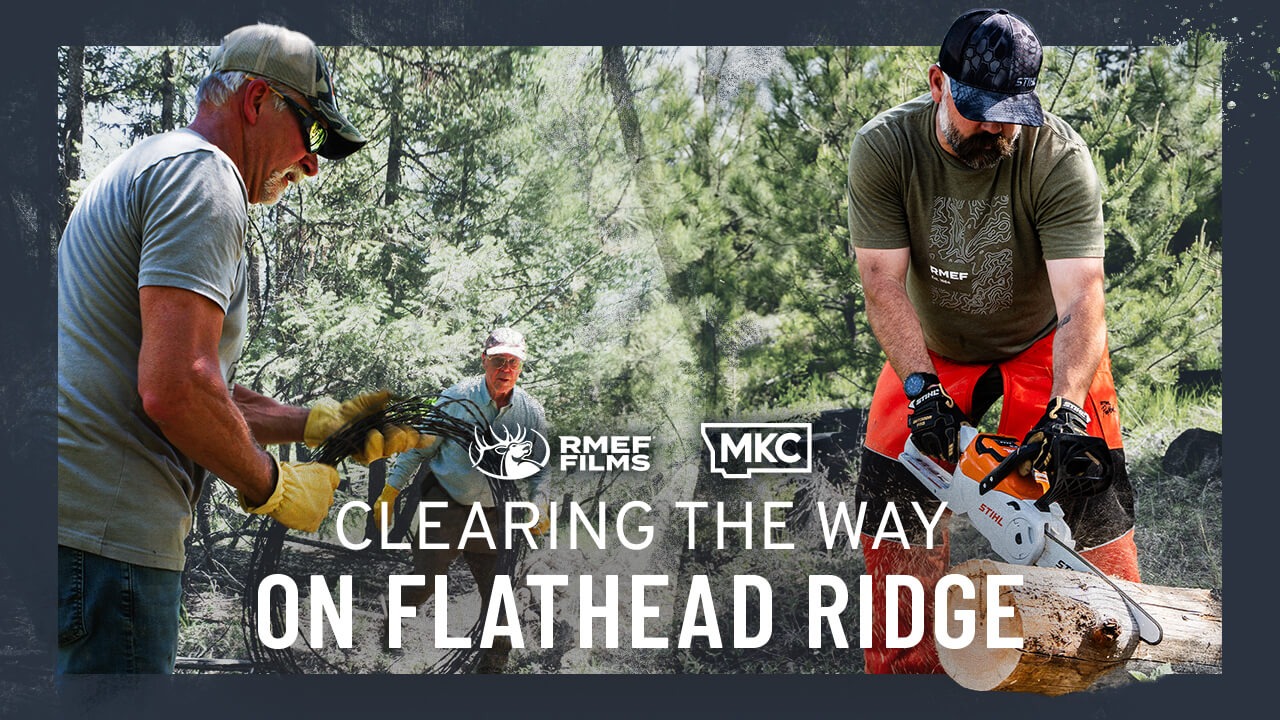
On Flathead Ridge Ranch in northwestern Montana, RMEF volunteers, Montana Knife Company employees, and Montana Fish, Wildlife and Parks teamed up to remove abandoned fencing that no longer serves ranching or grazing needs. The work is featured in RMEF’s new film, “Clearing the Way on Flathead Ridge.”
Fence pulls are not glamorous conservation. You cut wire, free it from brush, roll it into bundles, pull posts, stack scrap, haul it off, and do it again until your hands and back know exactly what happened. But that is the kind of work that actually changes habitat on the ground.
Flathead Ridge Ranch is not some locked-up postcard either. Most of its 126,000 acres are open to public hunting, fishing, and camping through Montana FWP’s Block Management program. The property spans parts of Flathead, Lincoln, and Sanders counties and supports elk, mule deer, black bears, wild turkeys, and other game. When old wire comes out of that country, wildlife movement gets safer and hunters benefit too.
This is what public access and private-land cooperation are supposed to look like. A working landscape can still provide room for wildlife and room for hunters when landowners, agencies, conservation groups, and volunteers pull in the same direction.
Hunters should respect this kind of dirty work because it is the foundation under all the grip-and-grin photos. Better movement corridors, fewer entanglements, less junk on the land, and more usable habitat are not abstract wins. They are the difference between talking about conservation and actually doing it.
Source & further reading
Rocky Mountain Elk FoundationRegulations and conditions change. Check current official guidance before you hunt, dive or travel.