
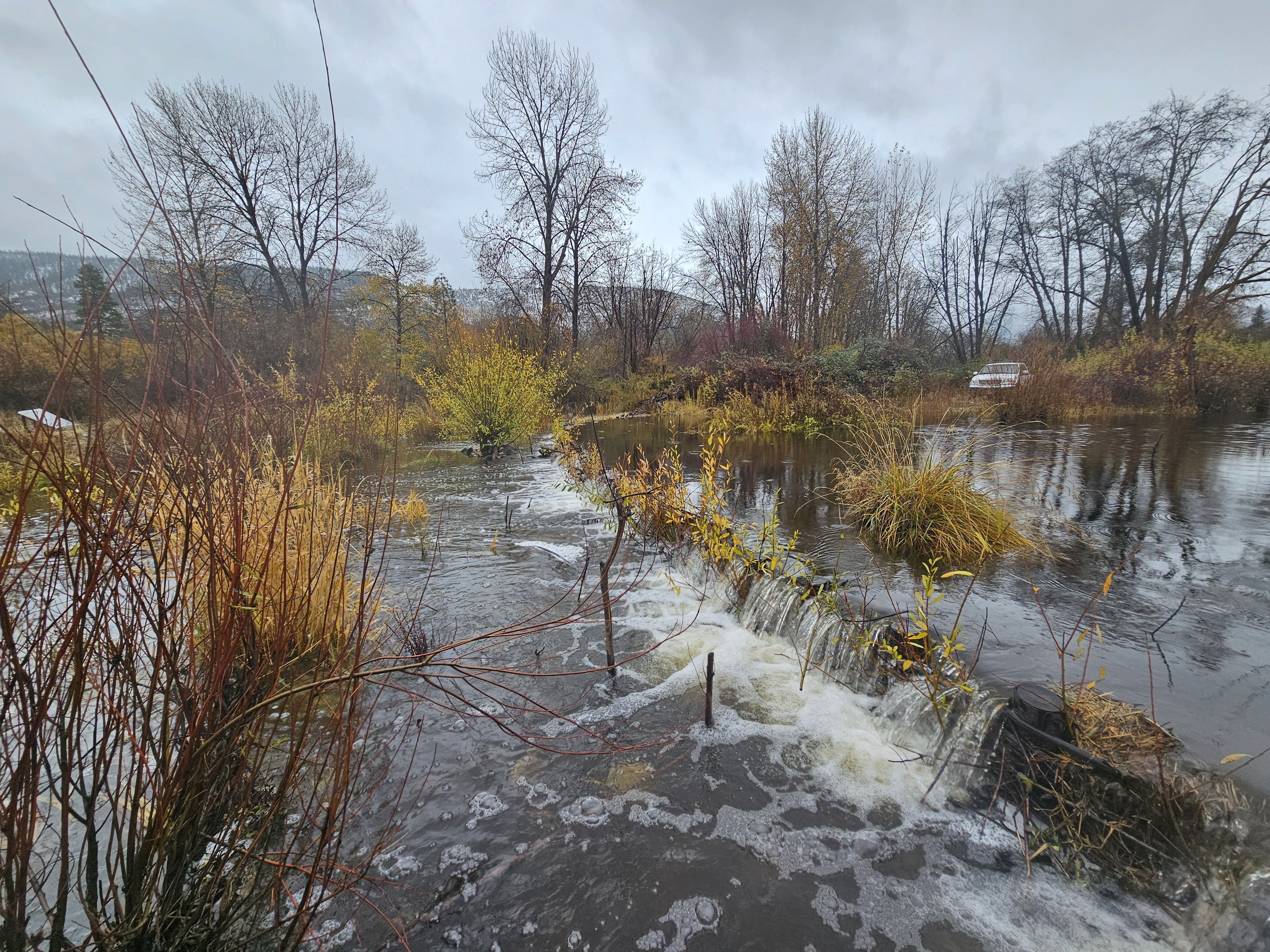
Simple wooden posts and woven willow branches are helping Northern California creeks hold water and support more coho salmon. A September 9 NOAA Fisheries report describes research on beaver dam analogues installed in Scott River tributaries, where juvenile survival improved and adult returns rose after restoration.
The work began in 2014, when NOAA researchers and the Scott River Watershed Council installed the structures across Sugar Creek in the Klamath Basin. Its lower reach had often dried up in summer after a long history of mining, logging and water diversions. The structures slowed the flow much as a beaver dam would, creating conditions for water to soak into the ground and sustain the creek later into the dry season.
Researchers reported more juvenile coho surviving soon after installation and more adults returning within two years. Sugar Creek and nearby French Creek, which also received the structures, improved while coho numbers in other local creeks without them collapsed during drought. The habitat gains were enough to support more than 7,000 additional juvenile coho, according to the agency's account of the research.
Slower water did not produce the feared result of habitat becoming too warm for salmon. Restored creeks had lower temperatures that helped survival, although sufficient snowpack in the preceding winter still mattered for streamflow. Beavers also took over some of the work as the habitat recovered.
This is evidence for a restoration approach, not a claim that wooden structures can solve every salmon problem or a notice opening these creeks to harvest. The results support carefully planned work that rebuilds wetlands and slow-water habitat in drought-prone watersheds. For fisheries managers, the useful finding is that relatively simple improvements can help young salmon survive the freshwater stage that comes before any future fishing opportunity.
Source & further reading
NOAA FisheriesRegulations and conditions change. Check current official guidance before you hunt, dive or travel.