
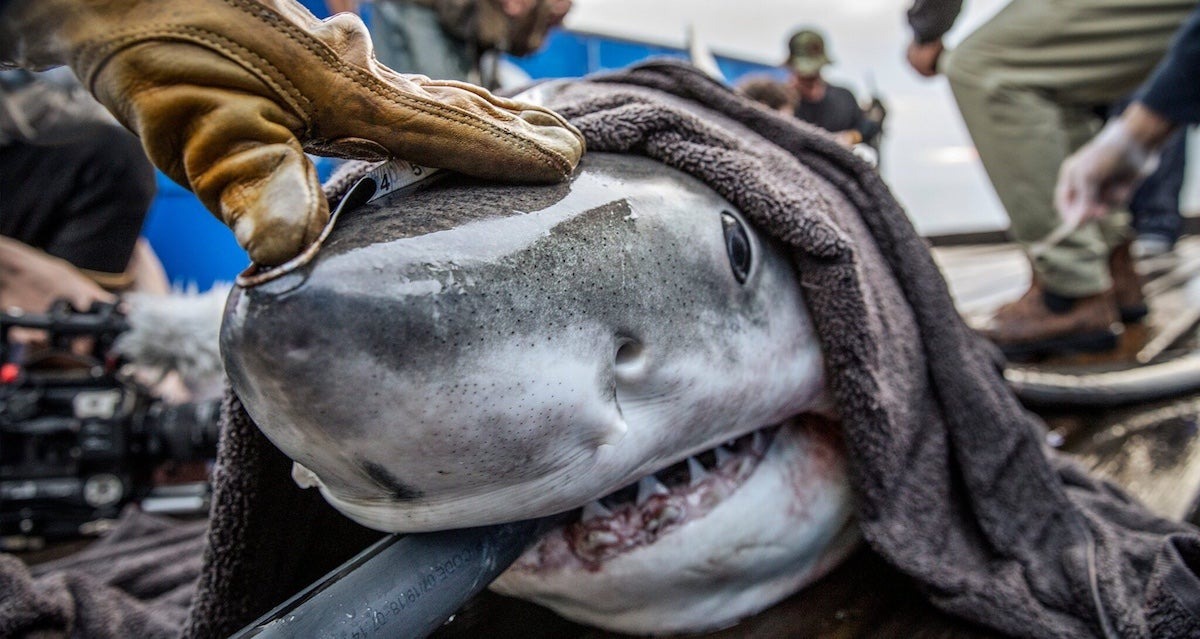
A new shark-tracking study is a good reminder that the Gulf is not just a vacation backdrop. It is working marine habitat, including for one of the ocean’s top predators.
Researchers analyzed satellite and acoustic tracking data from 92 white sharks tagged between Nova Scotia and Jacksonville, Florida, from 2012 through 2023. The study found that 57 of those sharks spent significant time in the Gulf or the Straits of Florida, mostly from December through May.
That is not a random pass-through. Many sharks stayed for weeks or months, and some returned to the same offshore areas in multiple winters. The strongest activity showed up along the outer edge of the West Florida Shelf, including areas near Pulley Ridge, DeSoto Canyon, and the Florida Keys, with some sharks also using the western Gulf and Mexican coastal waters.
Researchers documented sharks from multiple life stages using the Gulf during annual migrations. Tracking data showed they spent much of their time in the upper 650 feet of the water column while also making deeper dives likely tied to feeding.
For anglers, divers, and boaters, the takeaway is not panic. Most documented activity was well offshore, and sharks belong in the system. The real point is management. If white sharks are using the Gulf as regular winter habitat, then fisheries managers and researchers need that fact on the table when they talk migration routes, prey, bycatch, and critical habitat.
Predators make some people nervous, but healthy oceans have predators. You do not have to worship sharks to respect their role, and you do not have to be afraid of the water to understand that the Gulf is a wild place. Good marine management starts with knowing what actually lives there and when.
Source & further reading
OutdoorHubRegulations and conditions change. Check current official guidance before you hunt, dive or travel.