
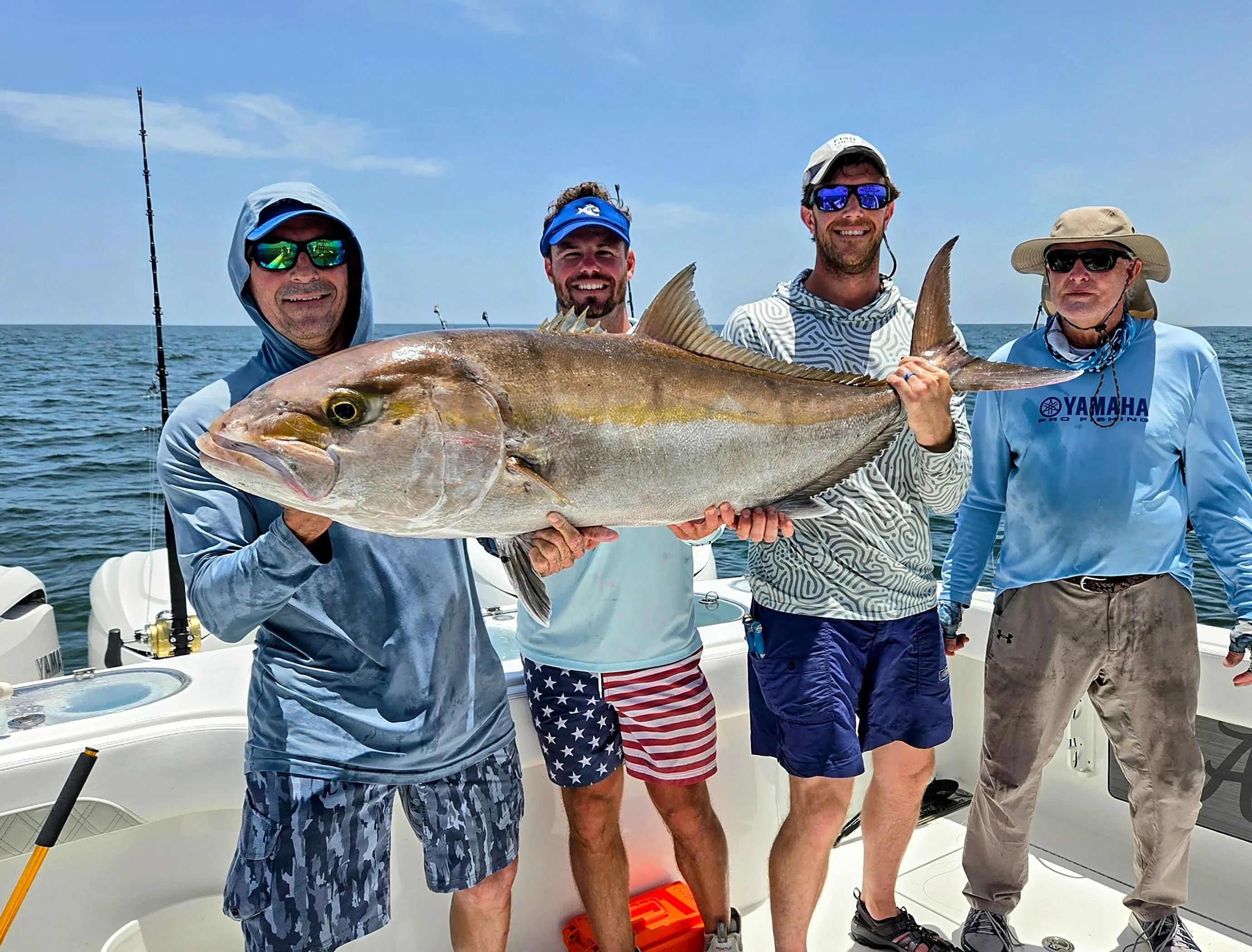
The Greater Amberjack Count is raising the same kind of question the Great Red Snapper Count raised before it: are federal fishery managers working with population estimates that are too low? Dr. Sean Powers with the University of South Alabama helped lead a multi-year study using independent sampling methods across the Gulf and South Atlantic, and the early message is that there may be far more greater amberjack in the Gulf than traditional assessments have suggested.
That matters because greater amberjack have been managed for years under the weight of overfished and overfishing determinations. Anglers and captains have lived with tight seasons, closures, and rules built around stock assessments that Powers said leaned heavily on catch data. Congress put $5 million through NOAA Fisheries and another $5 million through the National Sea Grant College Program to support the work.
Independent data does not mean every limit disappears tomorrow. Amberjack are slow-growing, hard-pulling reef fish that need serious management. But if the numbers are wrong, the regulations built on those numbers can be wrong too. Recreational fishermen have heard this song before with red snapper: people on the water see fish, the model says something else, and access gets squeezed while trust takes another hit.
Good science should make management better, not just more restrictive by habit. If a fishery needs protection, protect it. If a stock is stronger than the old data showed, managers should have the backbone to update seasons and access accordingly. Conservation is not supposed to be a one-way ratchet.
The Gulf deserves rules based on the best information available, not stale assumptions. Better counts, better sampling, and honest updates are how you protect the resource without punishing anglers for bad math.
Source & further reading
Outdoor AlabamaRegulations and conditions change. Check current official guidance before you hunt, dive or travel.