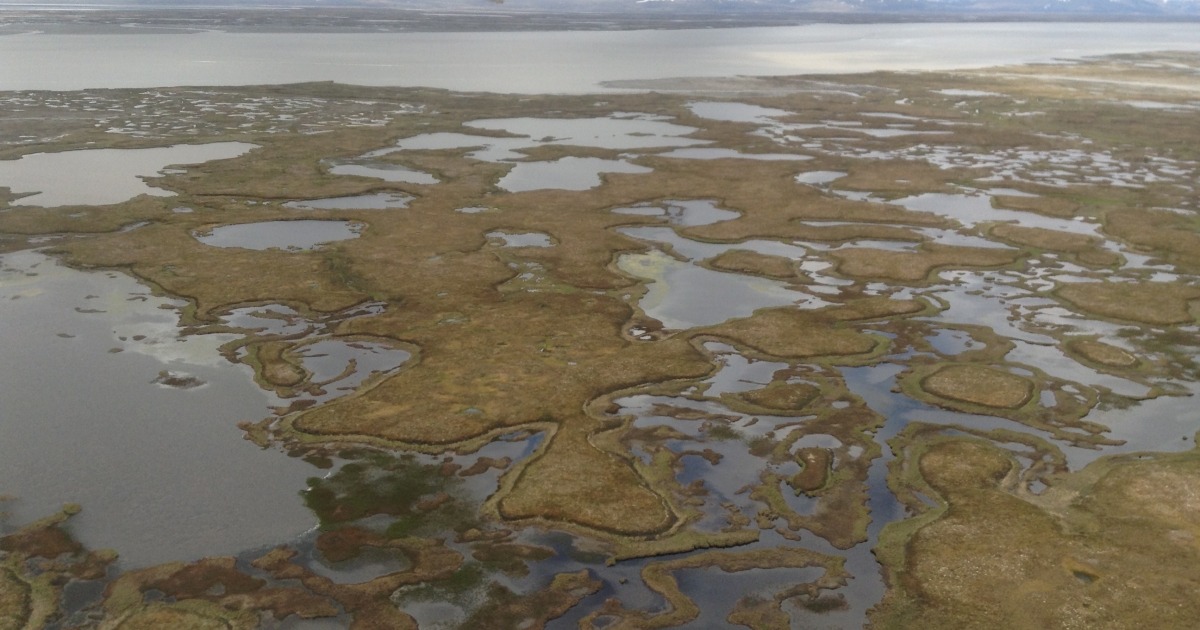
The Kuskokwim River is getting limited salmon fishing opportunities, and this is a good reminder that harvest rules are not just words on paper when fish, food, and culture are all on the line.
The Yukon Delta National Wildlife Refuge in-season manager announced additional fishing opportunity for federally qualified subsistence users only in federal public waters of the Kuskokwim River main stem. On June 22, drift and set gillnets will be allowed from 7 a.m. to 7 p.m. in the Lower Kuskokwim opportunity. Nets are restricted to 6-inch or smaller mesh, no more than 45 meshes deep, with total set and drift gillnet length capped at 50 fathoms below the Johnson River and 25 fathoms above it. All salmon species may be retained during that opening.
Upstream of the Kalskag Line to the lower boundary of the Aniak Box, drift and set gillnets are allowed starting June 19 at 12:01 p.m. until further notice, again with 6-inch-or-smaller mesh, 45-mesh depth, and a 25-fathom aggregate length limit. All salmon species may be retained there too.
But this is not wide-open fishing. Salmon-bearing tributaries remain closed to all gillnets, and the Aniak Box remains closed to gillnets, fish wheels, beach seines, and dip nets until further notice. Rod-and-reel fishing is allowed in the Aniak Box under specific bag limits, including no bag or possession limit for Chinook under 20 inches and a 2 per day, 2 in possession limit for Chinook over 20 inches.
The reason for the tight structure is protection of Chinook and chum salmon. When the Lower Kuskokwim opening expires, federal public waters downstream of the Kalskag Line to the mouth go back to being closed to gillnets by all users for that conservation purpose.
That is the hard part of real fisheries management. People need fish. Families depend on salmon. Subsistence is not a weekend hobby in western Alaska; it is food, tradition, and a way of life. At the same time, if Chinook and chum runs are weak, pretending harvest has no consequence does not help anybody in the long run.
Good management has to make room for legal harvest where the resource can take it and close the door where the fish need protection. Nobody is going to love every line in a rule like this, but the goal should be a river that can still feed people next season, next decade, and beyond.
Source & further reading
U.S. Fish and Wildlife ServiceRegulations and conditions change. Check current official guidance before you hunt, dive or travel.