
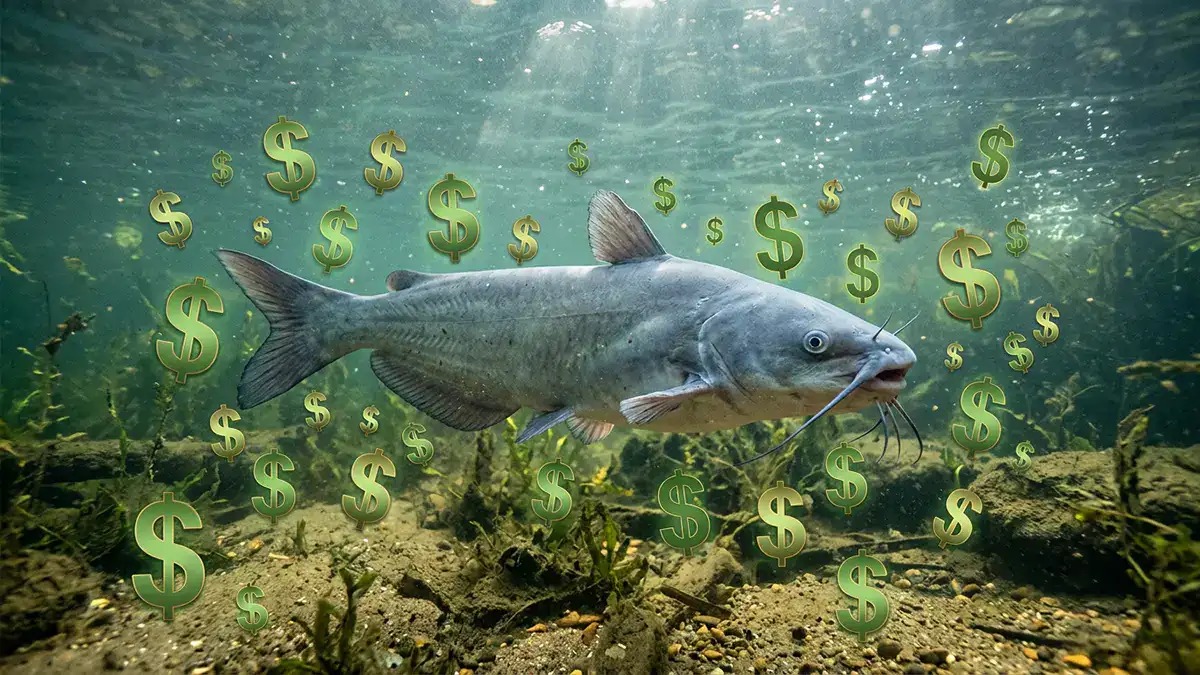
Maryland is putting money behind invasive fish removal, and this is one of those rare cases where catching a pile of fish lines up perfectly with conservation.
The Maryland Department of Natural Resources is pushing anglers to target invasive blue catfish in the Chesapeake Bay watershed. Blue cats are nonnative predators in Maryland waters, and they eat important native species including blue crabs, white perch, and menhaden. They can also get big. Maryland’s state-record blue catfish weighed 82 pounds.
Recreational anglers have no size limit, no harvest limit, and no closed season for blue catfish in Maryland. That is not an accident. Managers want these fish removed, and anglers have a chance to fill coolers while helping reduce pressure on native fish and the bay ecosystem.
Maryland is also launching a pilot program called Reel in the Blues Bonanza. Charter captains and guides can be reimbursed up to $1,500 per trip for free blue catfish trips awarded to randomly selected members of the public during summer and fall 2026. Interested captains have to submit an interest form by June 22, and public registration for the trip drawing opens June 24. Operators must meet licensing and reporting requirements, including electronic harvest reporting through Maryland’s FACTS system.
That reporting piece matters. If the state is going to spend money on invasive fish removal, it needs harvest data, not just grip-and-grin photos. The goal is to remove fish, support the charter fleet, and learn more about how much pressure anglers can put on the population. State officials have said similar programs could continue in 2027 and 2028 depending on funding and participation.
There are also invasive species tournaments on the calendar, including events targeting blue catfish, flathead catfish, and Chesapeake Channa. Some of these events have already shown what motivated anglers can do. The 2022 Sharptown Catfish Tournament removed nearly 1,000 pounds of invasive blue catfish.
This is practical conservation. It is not locking people out. It is not wasting fish. It is telling anglers to go catch a hard-fighting, good-eating invasive predator and put it to use. That is the kind of management most fishermen can get behind.
If you fish Maryland waters, know the rules, harvest what you legally can, report what needs reporting, and take somebody with you. Sometimes helping the resource looks like a full cooler and a hot grease pan.
Source & further reading
Wired2FishRegulations and conditions change. Check current official guidance before you hunt, dive or travel.