
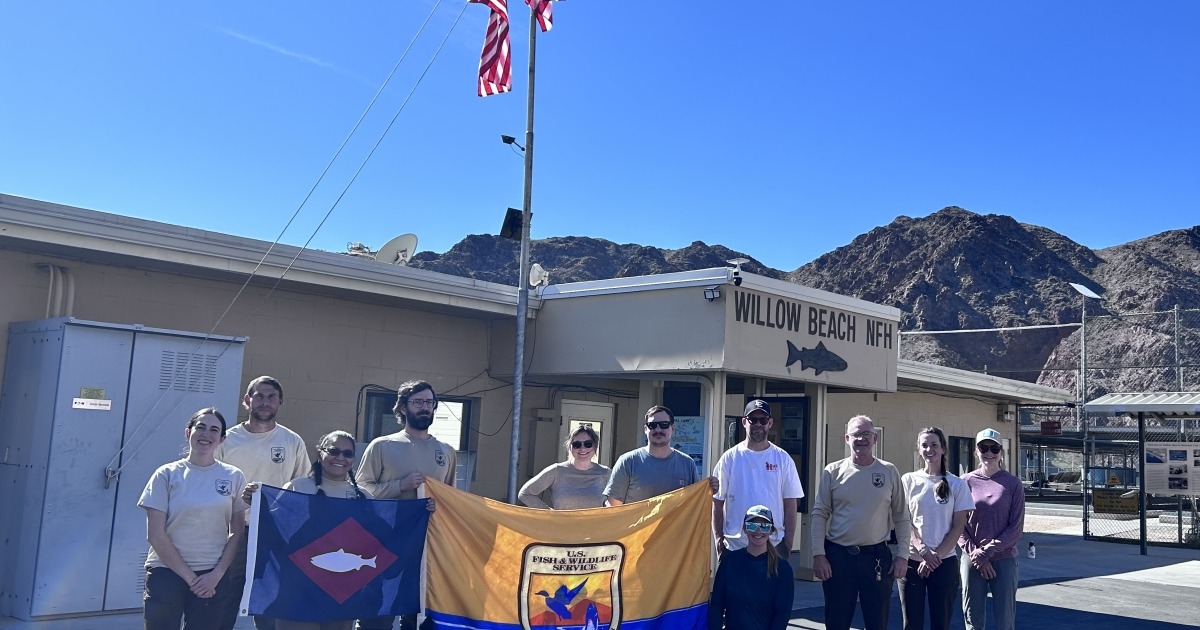
A good hatchery is not just a fish factory. It is a working piece of conservation infrastructure.
Willow Beach National Fish Hatchery in Arizona raises at least 100,000 rainbow trout every year for waters in the Lower Colorado River Basin, including tribal lands and areas below Hoover and Davis dams. Those fish are grown to about 10 to 12 inches before stocking, giving anglers real opportunity in a system shaped heavily by dams, cold-water releases, and public demand for fishing.
That matters. Stocked trout are not some fake part of the outdoor world. In the right places, they create family fishing, license sales, local spending, food, memories, and a reason for people to care about water. The U.S. Fish and Wildlife Service points to 71 national fish hatcheries across the country raising millions of fish each year, while state hatcheries stock more than a billion fish annually. A lot of that work is paid for by anglers through licenses and gear taxes.
Willow Beach also has another job that deserves attention. Since 1995, the hatchery has raised endangered native fish, including razorback sucker and bonytail chub. Those species belong to the Colorado River system, and they have taken a beating from altered flows, dams, habitat changes, and nonnative fish.
That is the balance serious conservation has to find. We can support angling opportunity and still protect native fish. We can stock trout where they make sense and still be careful about where stocked fish might harm wild or native populations. We can build fisheries for people while also admitting that some waters need recovery work, genetics, monitoring, and restraint.
The easy crowd wants every issue turned into a bumper sticker: stock everything, or stock nothing. Kill every nonnative, or never touch a fish. Real management is harder than that. It looks at the water, the species, the users, the habitat, and the long-term goal.
Anglers should care because this is our money and our future on the line. Hatcheries, surveys, habitat work, stocking trucks, genetic monitoring, and native fish recovery do not happen by magic. They happen because sportsmen fund the system and because enough people still believe fish and fishing are worth investing in.
Source & further reading
U.S. Fish and Wildlife ServiceRegulations and conditions change. Check current official guidance before you hunt, dive or travel.