
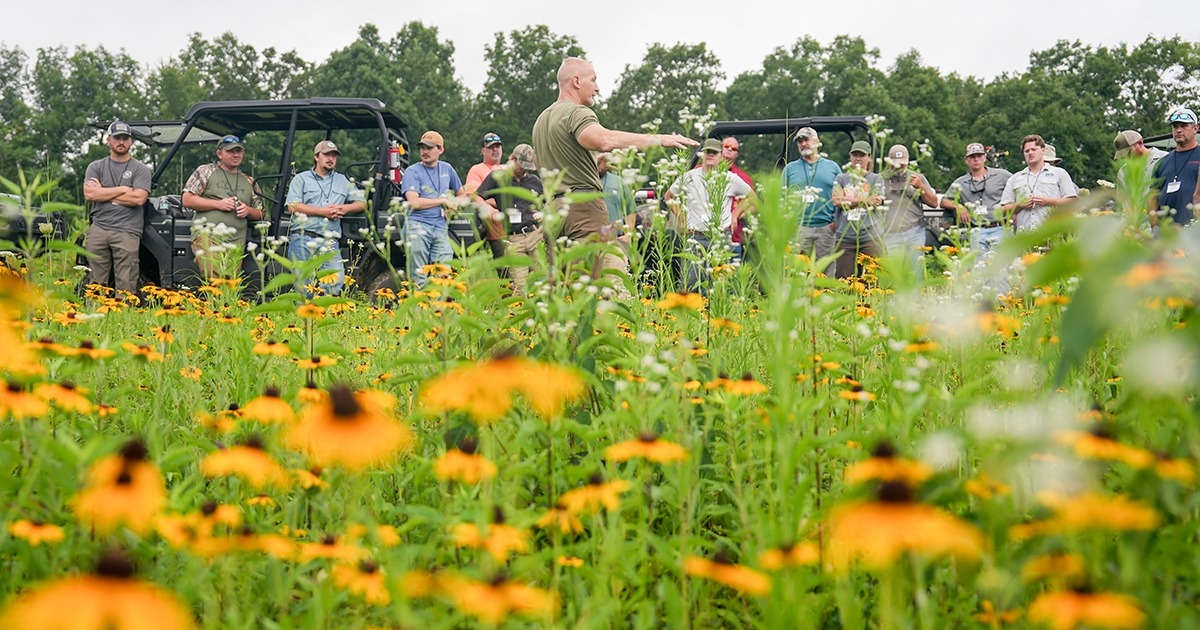
Good deer habitat does not happen by accident, and Buffalo Ridge Refuge in western Tennessee is a solid reminder of what active public-land management looks like.
The National Deer Association wrapped up its last public in-person Deer Steward course of 2026 with a habitat module at the Tennessee Wildlife Resources Agency WMA on July 10-12. The class was sold out with 30 attendees from seven states, including nine TWRA staff members. Speakers included NDA staff, Dr. Craig Harper from the University of Tennessee, and refuge manager Clint Borum.
The reason that location matters is the habitat on the ground. Buffalo Ridge has examples of early successional cover, thinned woodlands, fallow fields, and prescribed-fire work. That is the kind of management that grows deer, turkeys, songbirds, rabbits, pollinators, and a healthier landscape instead of letting every acre turn into closed-canopy shade and empty understory.
Hunters talk a lot about conservation, but this is the nuts-and-bolts side of it. Fire, thinning, field management, native cover, and educated land managers do more for wildlife than slogans ever will. Public land needs that work just as much as private ground does.
If you want more deer and better hunting, you have to care about habitat before opening day. The best wildlife agencies and conservation groups are the ones willing to put chainsaws, drip torches, seed, science, and sweat on the same piece of ground.
Source & further reading
National Deer AssociationRegulations and conditions change. Check current official guidance before you hunt, dive or travel.