
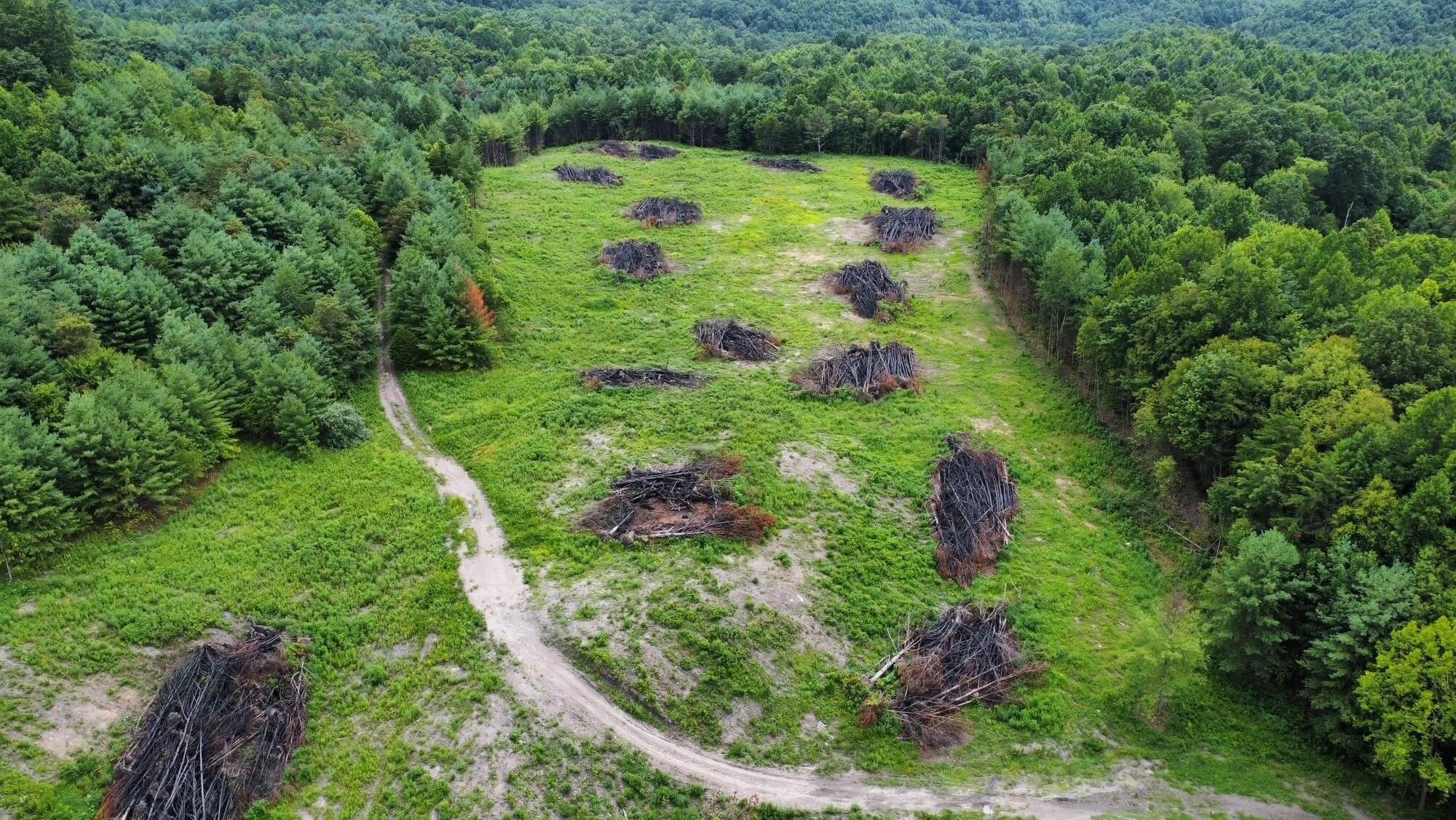
Tennessee elk country is getting some hands-on habitat work where it matters. On the Ed Carter Unit of North Cumberland Wildlife Management Area, RMEF and the Tennessee Wildlife Resources Agency cleared a 30-acre plot that had been choked out by invasive trees and vegetation.
That unit covers about 46,000 acres of forested mountains and reclaimed mine lands in northeast Tennessee. It currently has three elk hunt zones and six elk tags. When openings grow shut and forage quality drops, elk, deer, turkeys, black bears and grouse all feel it. Good habitat does not maintain itself just because we want wildlife on the mountain.
TWRA used RMEF grant funding to hire a contractor for mechanical clearing at Leach Mountain in spring 2025. Slash piles were burned later that summer. In April 2026, TWRA staff followed up with a prescribed burn across roughly 63 acres, including part of the new opening and an adjacent unit, to knock back undesirable vegetation and restart better growth.
Part of the clearing will be planted in summer annuals like cowpeas, while the rest is planned for a two- to three-year burn rotation to encourage native forage and keep invasive growth in check. That is the kind of unglamorous work that makes a wildlife area actually produce.
Hunters who want elk, deer and turkeys on the landscape should support this kind of management. Habitat is not built by slogans. It is built by chainsaws, fire, seed, planning and partnerships that understand wildlife needs open ground as much as it needs timber.
Source & further reading
Rocky Mountain Elk FoundationRegulations and conditions change. Check current official guidance before you hunt, dive or travel.