
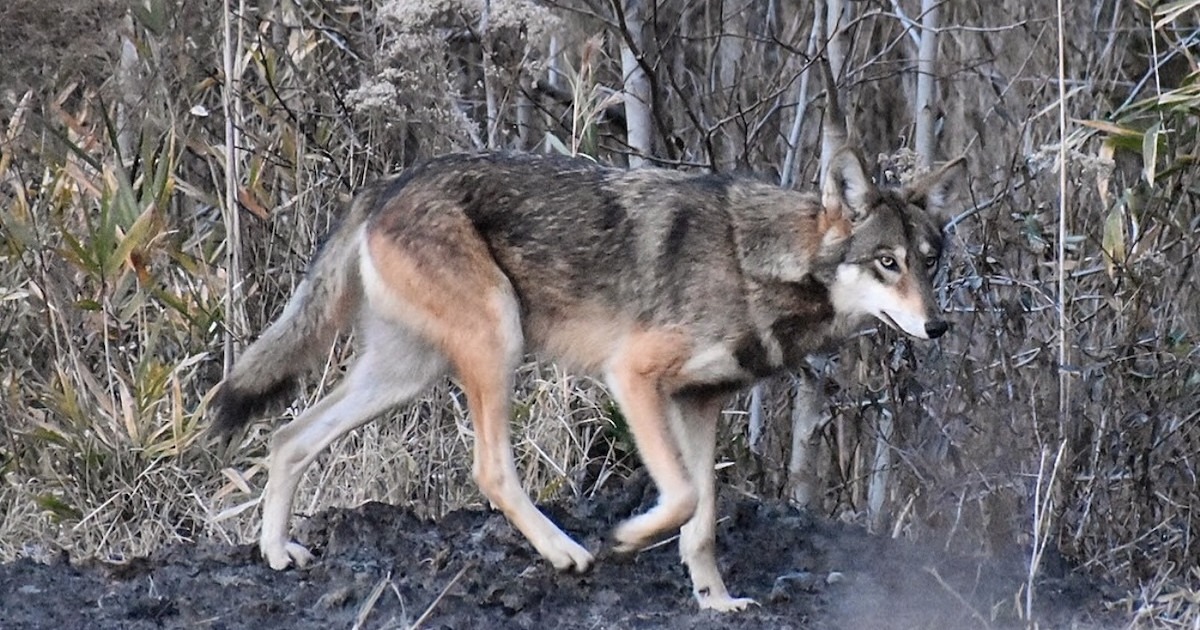
The Texas coast may still be carrying a piece of wildlife history most people thought was gone.
On Galveston Island, unusual wild canids have been drawing attention for years. They look mostly like coyotes, but biologists and residents noticed something different: longer legs, different build, and behavior that did not fit the usual backyard-coyote explanation. Genetic testing later showed why. Some of those animals carry meaningful red wolf ancestry, including genetic material that may not exist in today’s managed red wolf population.
That matters because the red wolf is one of the most endangered canids in North America. Red wolves once ranged across much of the Southeast, but habitat loss, predator control, and hybridization with coyotes pushed them to the edge. By 1980, the species was declared extinct in the wild. The modern recovery program traces back to just 14 founding animals captured from coastal Texas and Louisiana, and today fewer than 25 red wolves are believed to remain in the wild, all in a managed population in coastal North Carolina.
That is a thin genetic deck to build a recovery program from. When a species is reduced to that few founders, every bit of useful genetic diversity matters. The discovery of red wolf DNA still hanging on in Gulf Coast canids does not magically solve the problem, but it gives managers and researchers something real to study. Those animals may hold old Gulf Coast red wolf genetics that could help future recovery work, if the science and management can be handled carefully.
This is where predator management gets more complicated than slogans. Some people hear wolf and immediately want total protection. Others hear coyote or wolf hybrid and want them gone. Neither reaction is enough. Predators belong on the landscape, but recovery work has to be grounded in facts, genetics, conflict management, habitat, livestock concerns, public tolerance, and the reality that wild canids do not care about neat labels on a government chart.
Hybridization was once treated only as a threat to red wolf recovery. In some cases, it still is. But in this case, old hybrid ancestry may have preserved genetic material that would otherwise be lost. That does not mean every coyote with wolf DNA becomes sacred. It means wildlife management has to be smart enough to recognize when the messy reality on the ground carries value.
Hunters and landowners should pay attention to stories like this because predator policy often gets written by people who never have to live with the animals. Recovery has to be honest about both sides: the value of saving a native predator and the responsibility to manage conflict when predators share space with people, livestock, pets, and game populations.
Conservation is not always clean. Sometimes it looks like a coyote on a Texas beach carrying the last traces of a wolf everyone thought was gone.
Source & further reading
MeatEaterRegulations and conditions change. Check current official guidance before you hunt, dive or travel.