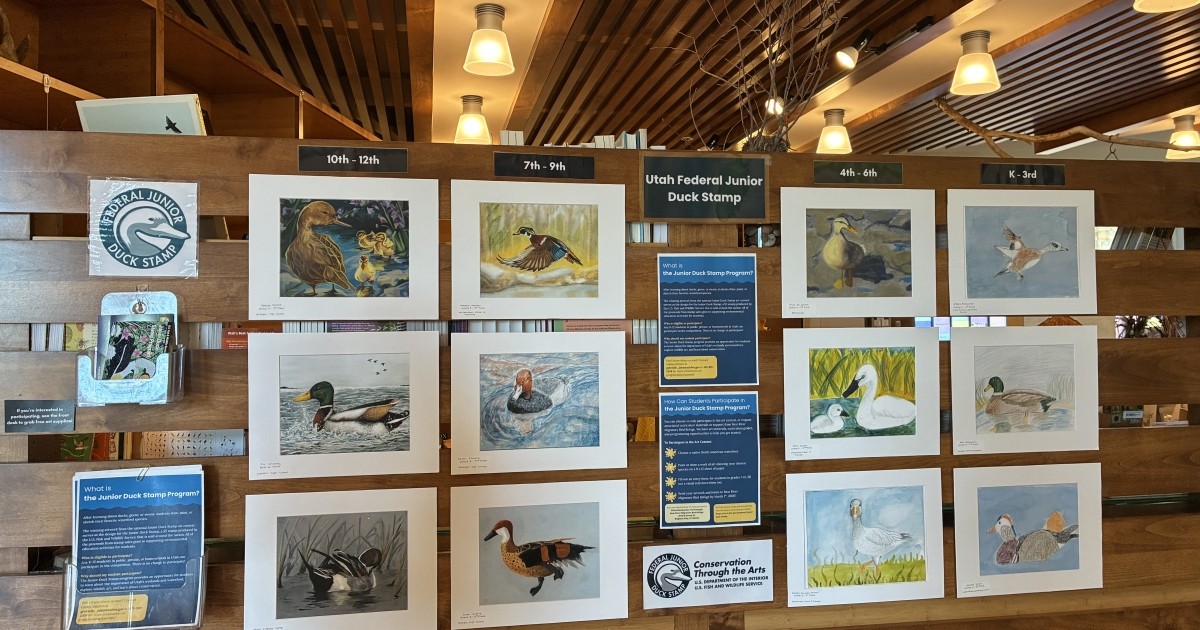
Utah’s Junior Duck Stamp contest drew 524 student entries in 2026, up from 78 the previous year, after Bear River Migratory Bird Refuge interns took the conservation education program into classrooms and community organizations across the state. The U.S. Fish and Wildlife Service detailed the outreach results in a September 23 update. The contest itself was judged in March; this is a report on that work, not a new entry deadline.
The effort started in September 2025, when refuge interns contacted educators and offered resources for participating. Classroom visits introduced students to the program and supplied art materials. Visitor services specialist intern Gabrielle Johnson’s work took her from Brigham City to St. George, extending the refuge’s reach well beyond its immediate neighbors.
Between September and March, interns also attended events at partner sites and built relationships with nature centers and universities. Utah State University and Southern Utah University helped display winning artwork, putting the students’ work in front of people who might not visit the refuge. Johnson continued that outreach with a June appearance on Utah Public Radio’s “Wild About Utah.”
For conservation education, the useful result is concrete: more kindergarten-through-12th-grade students participated after staff made the program easier to find and join. The entry totals show increased participation, not a measured increase in wetland acreage or waterfowl populations. Keeping those outcomes distinct gives the education work credit for what it actually accomplished.
The practical lesson for refuges and local conservation groups is straightforward. Contact teachers, provide materials, show up in classrooms and give the finished work a public home. At Bear River, that steady work brought hundreds more young people into a program centered on waterfowl and conservation.
Source & further reading
U.S. Fish and Wildlife ServiceRegulations and conditions change. Check current official guidance before you hunt, dive or travel.