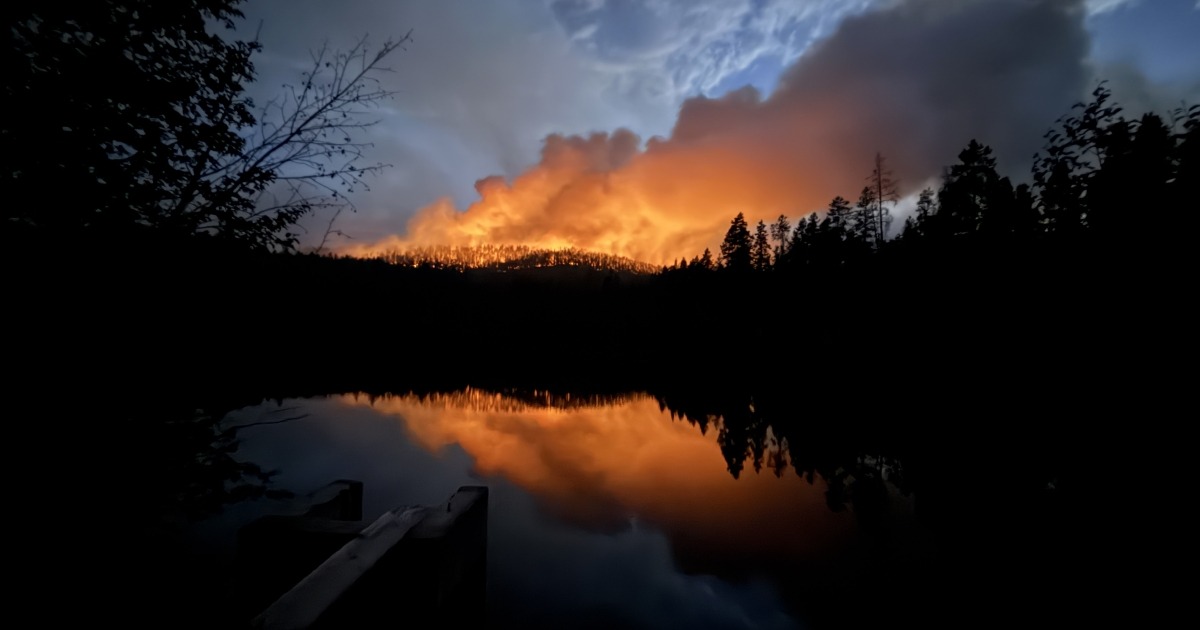
When the Willow Fire pushed toward the Leadville National Fish Hatchery, hatchery crews and Colorado Parks and Wildlife had to make a fast call: move the fish or risk losing years of native trout work.
The fire started about two miles northwest of the hatchery on June 29. Burning pine needles were falling while U.S. Fish and Wildlife Service hatchery manager Josh Homer and CPW’s Bryan Johnson worked through evacuation plans for rare cutthroat trout. By the next morning, CPW aquatics trucks were headed to Leadville, and federal and state crews were moving fish by hand with dip nets.
That is the part of conservation most people never see. It is not always a press conference or a pretty sign at a trailhead. Sometimes it is disinfected hatchery trucks, smoke in the air, people forming a line, and native fish getting carried out before the fire takes the place down.
Leadville is Colorado’s oldest national fish hatchery, operating since 1889. Facilities like that are not just buildings with tanks. They are insurance policies for native fish, recovery programs, and coldwater fisheries that can be wiped out fast by fire, drought, disease, or bad water.
Wildfire is part of the West, but the scale and timing can still hammer wildlife work. This rescue shows why agencies need practical funding, trained staff, and cooperation before a crisis hits. You cannot build that capacity after the smoke is already over the ridge.
Source & further reading
U.S. Fish and Wildlife ServiceRegulations and conditions change. Check current official guidance before you hunt, dive or travel.