
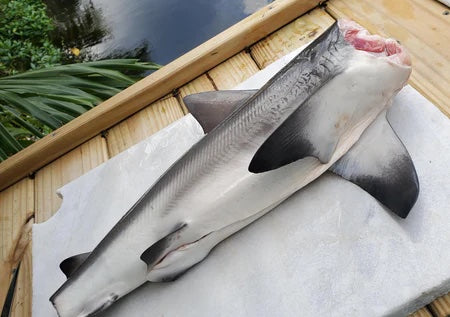
Whether shark is a sustainable food choice depends on the species, population and fishery. A shark's abundance in one place doesn't establish its status elsewhere, and a species name alone isn't enough to judge a catch. The four examples below explain why a regional assessment matters; they are not a current list of approved shark fisheries.
Blue Shark (Prionace glauca)
Location: Blue sharks are widely distributed and can be found in both coastal and open ocean waters, ranging from temperate to tropical regions worldwide.
Blue sharks have slender bodies and blue coloration. Check dated conservation assessments and fishery-specific evidence before deciding whether a catch is sustainable. A broad status label or reproductive trait alone is not enough to recommend eating a particular catch.
Spiny Dogfish (Squalus acanthias)
Location: Spiny dogfish are found in temperate and cold waters of the North Atlantic and North Pacific Oceans.
Spiny dogfish have distinctive spines ahead of their dorsal fins. The source’s claims of a short lifespan, high reproductive capacity and a universal “Least Concern” status should not be relied on. Assess the specific population and managed fishery before treating dogfish as a sustainable option.
Mako Shark (Isurus oxyrinchus and Isurus paucus)
Location: Mako sharks are pelagic and can be found in oceans worldwide, particularly in temperate and tropical waters.
Mako sharks are known for speed and agility. Distinguish Isurus oxyrinchus from Isurus paucus using reliable identification guidance; do not assume the same conservation status or harvest rules apply to both. Species identification and current regional rules are essential.
Porbeagle Shark (Lamna nasus)
Location: Porbeagle sharks inhabit temperate and cold waters of the North Atlantic and Southern Hemisphere.
Porbeagles are robust sharks found in temperate and cold waters. Consult current conservation assessments and the relevant fishery authorities; a general species description is not approval to harvest.
Conclusion
Any case for eating shark must identify a legally harvested species and a population that can support the catch. Use selective methods and avoid unintended catch, but recognize that good technique alone cannot make an overharvested population sustainable. Ask which species, which population and which management evidence supports the choice. Without those answers, this article should not be used as a shopping or harvest recommendation.
More perspectives →