
The next lake shouldn't get a sample of the last one. When you trailer a fishing boat, drag a kayak ashore or load a duck boat after a morning in the marsh, water and vegetation can leave with you. Getting the rig ready for another outing means dealing with that load before it travels.
This is practical conservation that fits into an ordinary fishing or hunting day. You don't need to identify every plant hanging from the trailer to remove it. You do need a routine that reaches beyond the obvious weed on the propeller, and enough time between waters to finish the job.
Plan the change of water before the trip
If you're fishing one lake Saturday and another Sunday, check both destinations before leaving home. Look for the managing agency's aquatic invasive species requirements, inspection arrangements and decontamination instructions. Find out whether a station has operating hours, whether an inspection is required and what documentation you need to keep. Don't assume an empty inspection station means you're cleared to launch.
The same applies to a duck-hunting road trip. A boat and decoy bag that worked one marsh can carry material to the next. Build cleaning and drying into the itinerary rather than discovering at the second access that your plan depends on wet equipment being ready immediately.
Rules and recommendations aren't interchangeable. Minnesota DNR's Clean In Clean Out guidance, for example, describes legal requirements to remove visible aquatic plants and prohibited species, drain equipment before leaving the access, and keep drain plugs out while transporting watercraft. It separately lists additional precautions such as drying for at least five days. Those are Minnesota's instructions, not a universal rulebook for every state or every organism.
Give the whole rig a look
Once the boat is safely out of the water, use the designated cleaning area where one is provided. Keep clear of the active launch lane. Make the walk around the rig a regular job rather than something everyone assumes the other person handled.
Start with the hull, motor and trailer, then inspect the equipment that actually touched the water. Check the anchor and rope, landing net, paddles and footwear. Remove visible plants, animals and mud before leaving the access, following the site's disposal instructions. Don't carry a pile of wet vegetation down the highway because you intend to hose the trailer off at home.
For waterfowl hunters, Minnesota DNR specifically calls out waders, decoy lines, anchors, pushpoles and the hunting dog as well as the boat, motor and trailer. That's a useful reminder of how much of a hunt happens outside the hull. A clean boat doesn't finish the job if the muddy decoy lines go straight into a bag and then into another marsh.
Use methods suited to the equipment. A brush appropriate for a boot sole may be too aggressive for a delicate surface. Keep hands clear of sharp hardware and follow the boat and motor manuals when inspecting or working around machinery.
Drain the places you don't photograph
A hull can look clean while water remains inside the rig. The U.S. Fish and Wildlife Service's Clean, Drain, Dry guidance includes the motor, bilge, livewell and other water-containing equipment. Draining matters because small organisms, including zebra mussel larvae, can travel in water even when there is nothing obvious to pick off.
Know your own boat's compartments and draining procedures before the end of the day. Include bait containers and any other gear holding water. Follow local requirements and the manufacturer's instructions rather than improvising with the motor or assuming one removed plug empties everything.
Sort out the bait plan too. USFWS advises putting unwanted bait in the trash and never moving live fish or other organisms from one waterbody into another. Check the local bait and fish-transport rules before deciding what comes home. Releasing leftover minnows at the next ramp isn't a harmless way to avoid wasting them.
Leave room for drying and proper decontamination
Don't confuse getting the visible mud off with completing every necessary precaution. USFWS explains that cleaning removes visible organisms, draining addresses organisms carried in water, and drying is necessary because organisms can survive in standing water. The steps do different jobs.
At home, arrange equipment so it can actually dry rather than leaving it bundled in a closed bag. Open and position gear as its care instructions allow. Check the hidden wet places before repacking. If your next outing doesn't leave the drying time the relevant agency recommends, get its instructions for an appropriate decontamination option instead of treating the schedule as an exception.
Hot-water treatment isn't a reason to invent your own temperature and exposure time. Follow the applicable agency protocol and equipment limits, or use the designated service. USFWS warns about skin contact with hot water and checking manufacturers' recommendations. It also advises against routine chemical treatments of watercraft and recreational gear because they can harm people, equipment and the environment and may not work against the organisms involved. A splash of bleach isn't a substitute for a proper plan.
Keep the cleaning kit simple and reachable
Put the supplies where you'll use them: a suitable brush, cleanup cloths and a way to collect removed debris for proper disposal. Keep this kit separate from food-handling equipment. Clean and dry the cleaning tools afterward too; putting a wet, dirty brush back into a sealed box defeats the organization.
KILLSHOT Life may earn a commission if you buy through this Amazon link. If you need a hand brush for removing visible material from sturdy footwear, the OXO Good Grips All-Purpose Scrub Brush is one option to consider. Match the bristles to your gear's care instructions. This is an ordinary cleaning tool, not a decontamination system or a guarantee that equipment is free of invasive species. A suitable brush you already own can do the job.
Before loading for the next waterbody, check the boat and loose gear again and confirm that any required inspection or treatment is complete. If you find a suspected new invasive species, USFWS recommends noting the exact location, taking a photo if possible and reporting it to the appropriate authorities.
We put plenty of work into finding fish and ducks. Keeping the water and equipment from the last outing from becoming the next place's problem belongs in that work. Make it part of packing up, with clear jobs and enough time, and the next trip starts with a rig that's actually ready to move.
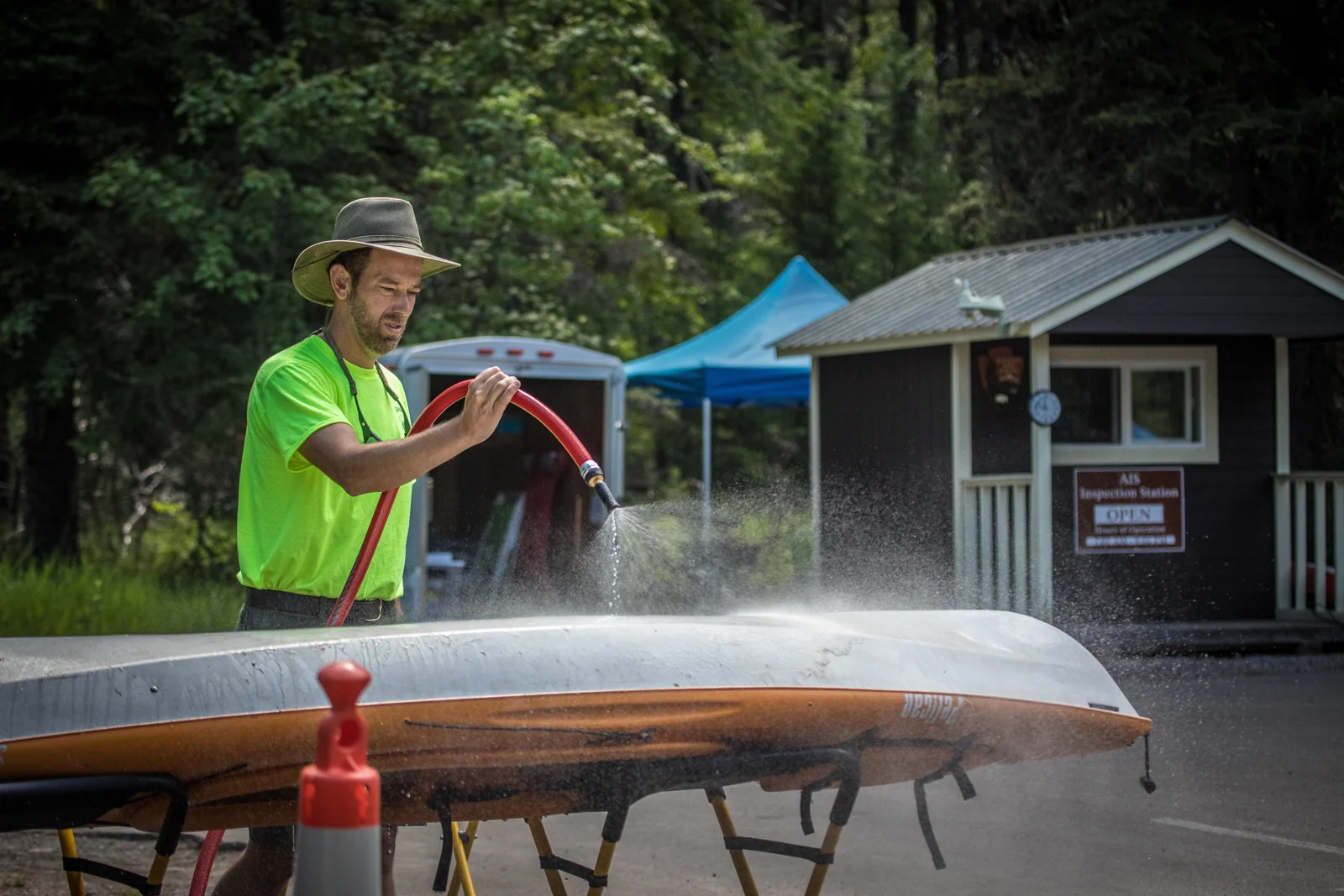
Photo: National Park Service, via U.S. Fish and Wildlife Service, “Clean, Drained, Dry!” Public domain. Resized and converted to WebP without cropping. Illustrative photograph of a kayak being rinsed; no endorsement by the agencies or pictured person is implied.
More perspectives →As an Amazon Associate I earn from qualifying purchases.