
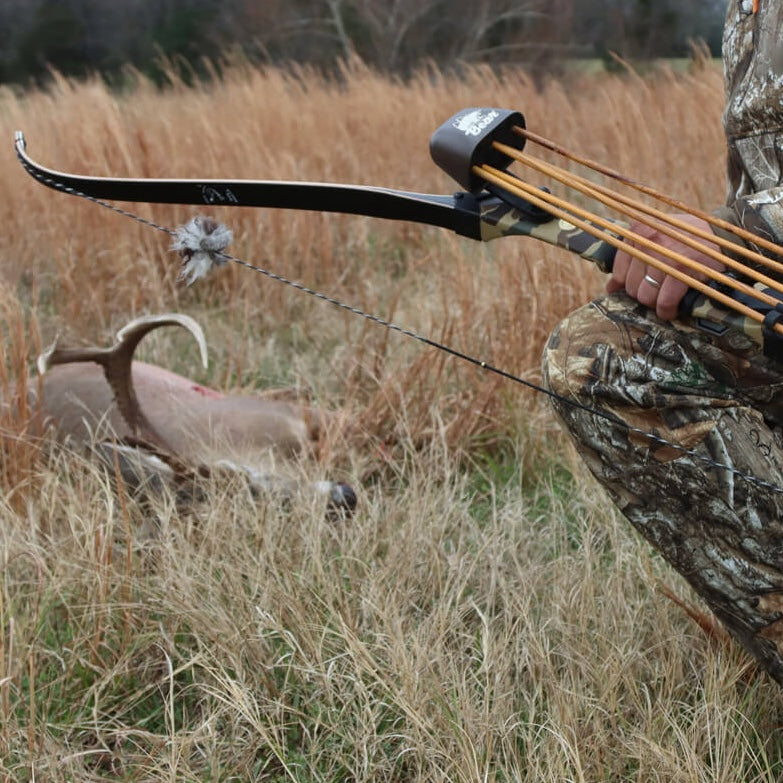
A recurve and a compound can both be effective hunting bows, but they ask different things of the archer. The recurve keeps the equipment simple and puts more of the work on your form. The compound adds mechanical assistance and adjustability. Your experience, strength, budget and hunting ground should guide the choice.
The Recurve Bow
Simplicity and Elegance: The recurve bow, with its classic design, is a symbol of simplicity and elegance in archery. It features limbs that curve away from the archer, offering a straightforward design that has stood the test of time.
Compact and Lightweight: Recurve bows can be light and simple to carry, but compare actual dimensions rather than assuming they are more compact than compounds. Maneuverability matters in dense woods and difficult terrain.
Skill and Technique: Using a recurve bow requires a higher level of skill and technique. Archers need to master proper form, consistent anchor points, and a smooth release. While this learning curve can be steep, many archers appreciate the sense of accomplishment and connection to the roots of archery.
The Compound Bow
Mechanical Advantage: The compound bow stands out for its mechanical advantages, featuring cams and pulleys that provide a let-off at full draw. This allows the archer to hold less weight at full draw, making it easier to aim and maintain accuracy over an extended period.
Adjustability: Compound bows are highly adjustable, allowing archers to customize draw length, draw weight, and other settings to fit their individual preferences. This adaptability makes compound bows accessible to a wide range of archers, from beginners to experienced hunters.
Speed and Power: Compound bows are known for their impressive arrow speeds and kinetic energy. The mechanical components contribute to a more powerful shot, providing a flatter trajectory and increased penetration, which can be advantageous in certain hunting scenarios.
Choosing the Right Bow for You
Skill Level: Consider your skill level and experience as an archer. Recurve bows demand a higher level of proficiency, making them suitable for archers who enjoy the challenge of mastering traditional techniques. Compound bows, with their let-off and forgiveness, may be more appealing to beginners.
Hunting Environment: Evaluate the hunting environment you frequent. Check bow length and clearance for the places you stalk or sit; a recurve is not automatically the better fit in a tight space. If your hunting grounds offer longer shots in open areas, the speed and power of a compound bow may be advantageous.
Personal Preferences: Your personal preferences as an archer play a crucial role. Some hunters are drawn to the nostalgia and simplicity of the recurve bow, while others appreciate the precision and technological advancements of the compound bow.
Neither design is right for everyone. Choose around the bow you can handle and shoot consistently, the ground you hunt and the amount of practice you will put in. Compare the costs and maintenance demands below before deciding.
Comparing Costs: Recurve Bows vs. Compound Bows
When it comes to cost, recurve and compound bows fall into different price ranges, primarily influenced by their complexity and technology.
Recurve Bows
Entry-level recurves can cost below $200; check current models and prices before budgeting. They tend to be more affordable because they have a simpler design and require fewer materials and technologies to manufacture.
Compound Bows
Around $400 is a starting budget to consider for a compound bow; check current models and prices before buying. These bows are typically more expensive due to their intricate pulley systems, cams, and advanced materials that enhance performance.
Key Points to Consider
Budget: If you're looking for a cost-effective option for casual use or entry-level archery, a recurve bow is likely your best bet.
Investment: For those willing to invest more for advanced features and better performance, spending extra on a compound bow could be worthwhile.
Maintenance Differences: Compound vs. Recurve Bows
When it comes to maintenance, recurve bows are simpler and generally more cost-effective to care for compared to compound bows. This distinction is particularly evident if you use a takedown recurve bow. Takedown models allow you to replace components such as limbs and strings even while in the field, without needing a visit to a professional shop. Carrying a few spare parts like strings and limbs in your gear can keep you shooting with minimal downtime. One of the most frequent issues you may encounter with recurve bows is a broken string. Fortunately, replacing a string on a recurve bow is a straightforward process that can be done on-site with the appropriate method and equipment specified by the bow manufacturer. Compound bows, on the other hand, require more specialized maintenance. If the string or cables on a compound bow need replacing, you'll need a bow press to do so safely. Additionally, the intricate pulley system and cams on compound bows can demand more frequent, professional adjustments and tune-ups to ensure optimal performance.
Key Differences:
Tool Requirements
Recurve Bows: Minimal tools needed, quick field replacements possible.
Compound Bows: Requires a bow press and often professional service.
Component Complexity
Recurve Bows: Simpler design, easier self-repair.
Compound Bows: Complex system needing regular adjustments.
Overall, if ease of maintenance is a priority, recurve bows may offer you a more user-friendly experience. However, the complexity of compound bows can be managed effectively with the right tools and occasional professional maintenance.
How Does Physical Condition or Strength Impact Your Choice of Bow?
Understanding the Importance of Bow Weight
When selecting a traditional bow, your physical condition and strength play a crucial role. Many beginners often choose bows that are too heavy for them. This can lead to frustration and poor shooting form. It's essential to start with a bow you can handle comfortably to ensure a positive experience and proper technique development.
Finding the Right Draw Weight
Here are some guidelines to help you select the appropriate draw weight:
Assess Your Physical Strength: Consider your upper body strength and endurance. Drawing a bow repeatedly during practice sessions can be exhausting if the bow is too heavy.
Seek Professional Advice: Archery shops and professionals can measure your draw length and recommend a bow that matches your current strength levels.
Start Light, Then Progress: It’s better to begin with a lighter draw weight and gradually increase as your muscles strengthen. This approach helps in avoiding injuries and improving accuracy over time.
Tips for a Comfortable Shooting Experience
Practice Consistently: Regular practice will improve your strength and technique, allowing you to progress to heavier draw weights smoothly.
Pay Attention to Form: Proper form is more manageable with a bow that matches your strength. It also helps prevent strain and injuries.
Listen to Your Body: If you experience discomfort or fatigue quickly, it might be a sign that the bow is too heavy for you.
Is it Beneficial for Beginners to Start with a Traditional Bow Before Moving to a Compound Bow?
A traditional bow can be a useful way to learn, but beginners do not have to start there. A longbow or recurve gives you practice with the fundamentals discussed below.
Mastering the Fundamentals
Traditional bows compel beginners to grasp the essential skills of archery. This foundational knowledge includes key elements such as:
Grip: Understanding the correct way to hold the bow.
Posture: Maintaining a stable and consistent stance.
Aiming: Learning to aim without the aid of advanced sighting mechanisms.
Release: Perfecting the technique of releasing the arrow smoothly.
These fundamentals are crucial and apply across all types of archery, including when using a compound bow.
Building a Stronger Knowledge Base
One of the notable advantages is that a traditional bow requires an in-depth understanding of the bow and arrow dynamics. This encompasses:
Arrow Selection: Knowing how to choose an arrow that complements the specific bow.
Nocking Point Placement: Understanding where to place the nocking point and why it matters.
Brace Height Adjustment: Learning how to set the brace height for optimal performance.
Arrow Spine: Gaining insights into both static and dynamic arrow spine and how to tune it.
Understanding those details gives a beginner useful knowledge to carry into compound shooting too.
Emphasis on Skill Development
With fewer technological aids, traditional bows demand a greater emphasis on personal skill and consistency. Beginners learn to rely on their abilities, rather than on the advanced features of a compound bow, which can mask improper technique.
Postscript: The Importance of Bow Tuning and Its Impact on Shooting Performance
Tuning your bow is essential for achieving optimal shooting performance. Without a properly tuned bow, even the most experienced archer will struggle to hit their target consistently. Here's why bow tuning is so crucial:
Improve Accuracy
A well-tuned bow helps arrows fly consistently. When your bow and arrows are aligned correctly, you minimize the chance of erratic shots. This alignment takes into account factors like arrow spine, length, and point weight. The payoff is a significant improvement in your shooting accuracy.
Enhance Consistency
Consistency is key in archery. A tuned setup supports repeatable shooting, though it cannot guarantee the same result every time. Inconsistent setup leads to varying shooting patterns, making it difficult to predict where your arrows will land. Regularly check your bow's tune to maintain that dependable shot pattern.
Build Confidence
Knowing that you have checked your equipment can build confidence. When you're confident in your gear, your focus shifts entirely to your shooting form and technique, improving overall performance. A poorly tuned bow can cause doubts and second-guessing, which can be detrimental during competitive shooting.
Avoid Equipment Fatigue
Poor setup can put unnecessary strain on equipment. Check the bow and arrows against the manufacturer’s specifications rather than assuming every accuracy problem is harmless. Tuning and inspection belong alongside regular maintenance.
Steps to Tune Your Bow
Assess Your Gear: Start by evaluating your current setup. Identify your bow type, the draw weight, and the arrows you're using, including their spine and length. This information is crucial for making the necessary adjustments.
Consult Professionals: Sometimes, local shops may offer incorrect advice. Seeking guidance from experienced archers or professional technicians can be invaluable. Ensure they have a good track record with traditional bows.
Initial Adjustments: Begin by making basic tuning adjustments such as setting the correct nocking point and adjusting the brace height. These foundational tweaks can solve many alignment issues.
Fine-Tuning: Once the basics are set, move on to fine-tuning your bow. This can involve paper tuning, where you shoot arrows through a paper sheet to analyze the tear patterns and make precise adjustments.
Regular Maintenance: Bow tuning is not a one-time task. Regularly check and adjust your setup to account for any changes in your shooting style or equipment wear.
Take time to check the tune and keep practicing with the setup you intend to hunt. Equipment confidence should come from repeatable results, not from the price or complexity of the bow. Follow KILLSHOT Life for hunting, fishing and responsible harvest, or share your own hunts with the community. Click here to find KILLSHOT Life on Instagram. Click here to find KILLSHOT Life on Facebook. Click here to join our Facebook Group and share your hunts.
More perspectives →