There’s a truth at the heart of nature, one that many of us in the modern world go to great lengths to ignore.
Life requires death.
Every creature on this planet survives by consuming the life force of another, whether plant or animal. The cycle is ancient, raw, and inescapable. But in our sanitized, shrink-wrapped society, we’ve distanced ourselves from that hard fact. We walk grocery store aisles under sterile lights, choosing neatly packaged meat without ever having to think about the blood, the breath, or the life that was taken.
Hunters choose to face that cost themselves.
The Blood Price of a Steak
There’s a peculiar hypocrisy in the judgment some people cast on hunters. It often comes from folks who consume meat on a daily basis—steak on Saturdays, chicken salads at lunch, bacon with their eggs. And yet when they see a photo of a hunter with a harvested animal, they recoil. They call it “barbaric,” “violent,” or “cruel.”
Every bite of meat required an animal to die. The question is who took responsibility for it.
As hunters, we take full ownership. We put in the effort to stalk, harvest, process, and prepare our own food. We feel the weight of the animal’s life in our hands. We’re not blind to the cost. It humbles us, season after season. And it reminds us to respect what’s on our plates.
Compare that to the factory-farmed beef sitting under plastic wrap at the local supermarket. Most people never see the conditions those animals live in or how they die. They’re removed from the process, and in that distance, they’re able to ignore the blood cost of their consumption.
But just because you don’t see the death doesn’t mean you aren’t complicit in it.
For the Vegetarians and Vegans
Now let’s talk about plant-based eaters, those who believe they’ve opted out of the death cycle altogether. Many vegans and vegetarians proudly state that no animals died for their meals. They’re doing the right thing, they say, by not contributing to animal cruelty.
But again, life requires death.
Industrial farming, even when it’s growing vegetables, has a body count. Mice, snakes, rabbits, birds, and countless other creatures are killed by combines, poisoned by pesticides, or displaced by monoculture fields. Insecticides wipe out entire ecosystems of bugs, many of which are the foundation of the food chain.
And let’s not forget the deforestation caused to grow your almond milk, or the carbon cost of shipping your quinoa from the Andes.
No one eats without a footprint.
The difference is that hunters are aware of theirs, and we do everything we can to make sure our footprint is meaningful, respectful, and as ethical as it can be.
The Honesty of Hunting
There’s nothing more honest than standing in front of an animal, heart pounding, and deciding that you will take its life to feed your family. It is difficult, personal work that makes the cost of the meal impossible to ignore.
Hunting strips away the illusion that food magically appears on our plates. It replaces distance with connection, and convenience with responsibility. We earn that meat through time, patience, skill, and respect for the animal.
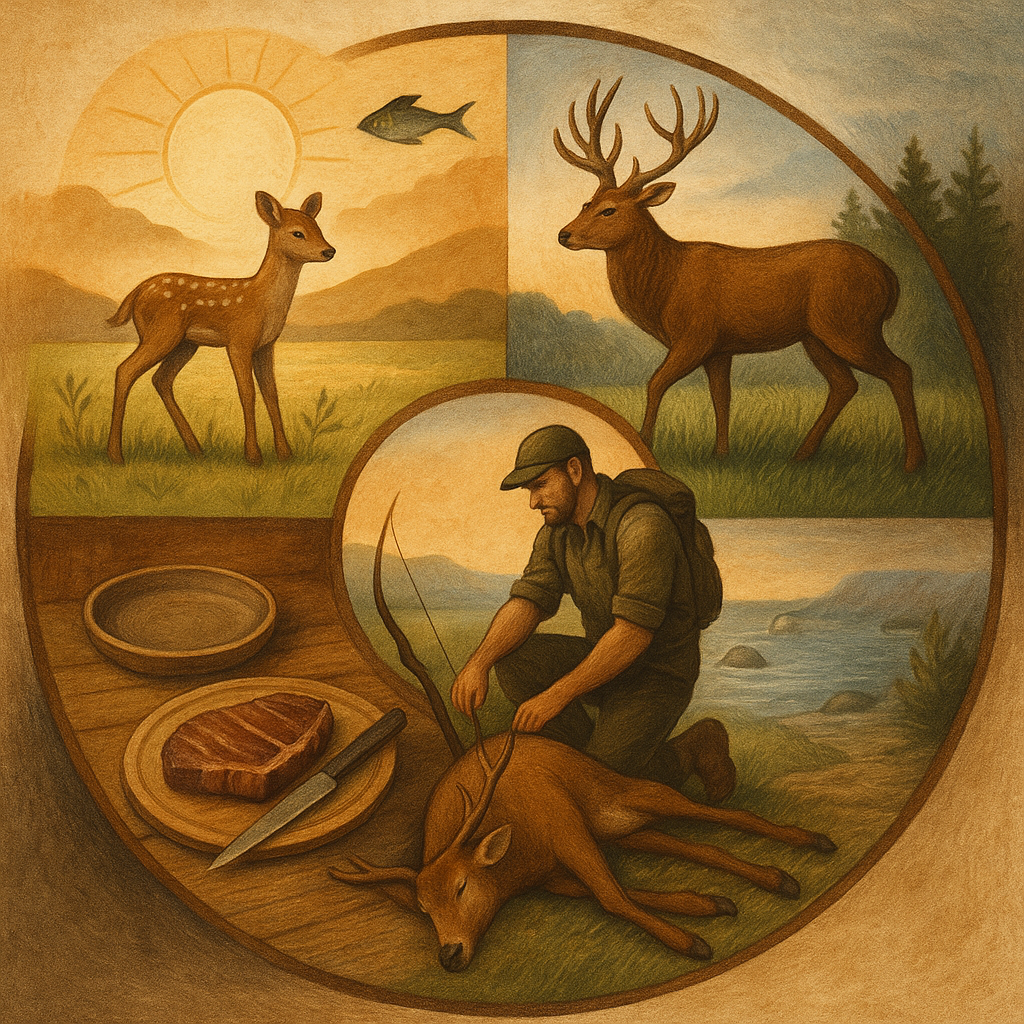
We walk the same forests as the deer. We dive the same waters as the fish. We choose to enter the food chain as participants, not just consumers.
Gratitude and Responsibility
Every hunter knows this: when you take a life, you owe something back.
Ethical hunters avoid waste, train, practice, and learn the seasons, limits, and population conditions that govern the hunt. We teach our kids about conservation, clean our kills carefully, cook with respect, and give thanks for the meal.
Because hunting isn’t just about taking life. It’s about honoring it.
In Closing: Own Your Footprint
The modern world makes it easy to forget the cost of living. But at KILLSHOT Life, we choose to remember.
Whether you’re eating elk tenderloin you packed out yourself or a store-bought burger, something died so you could live. Hunting doesn’t hide from that reality. It faces it with integrity, reverence, and grit.
So to those who eat meat but condemn hunting: ask yourself what part of the process you’re really uncomfortable with. Is it the kill itself, or the fact that someone else is willing to do what you won’t?
And to those who believe their plant-based life is free from death: dig deeper. Life doesn’t come without sacrifice.
The question isn’t whether something died for your dinner, but whether you are willing to take responsibility for the process.
More perspectives →