
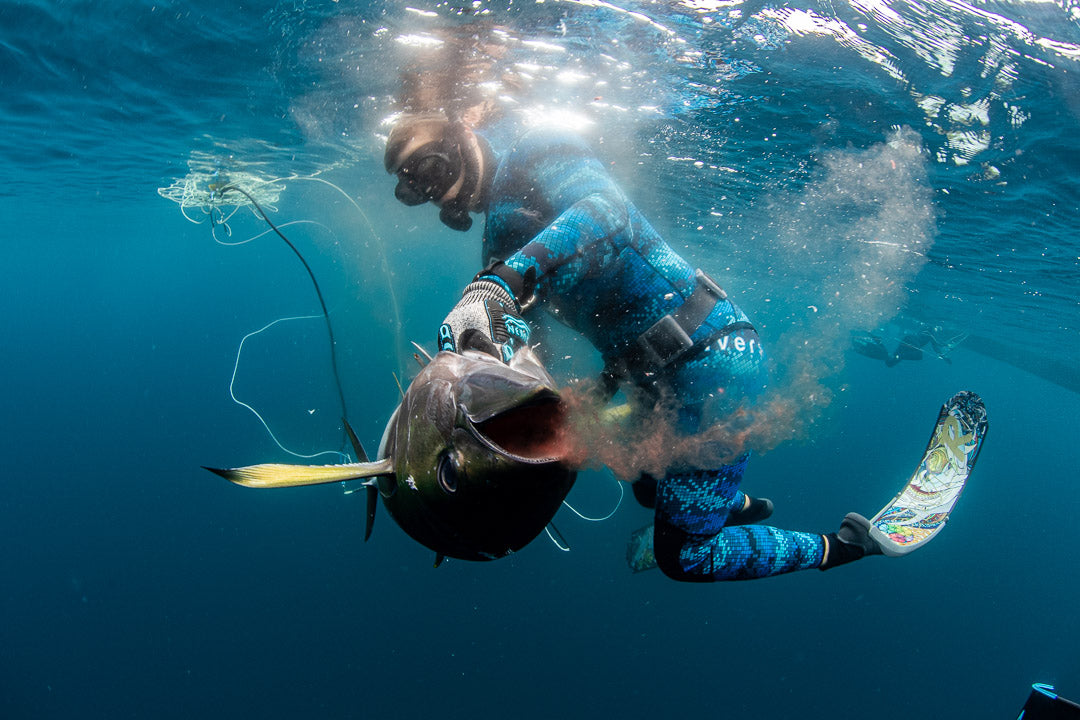
Spearfishing lets a hunter see and identify a fish before choosing whether to take it. That selectivity can reduce unintended catch and is a strong reason to support responsible spearfishing. Sustainability still depends on the species, population, harvest level and care taken around habitat.
Select fish before shooting
First, a spearfisherman can identify a fish before taking the shot. Passing on an undersized, protected or unwanted fish avoids harvesting it in the first place. That is the useful comparison with less selective gear; shooting a fish and then releasing it is not a conservation strategy.
Make a clean harvest
Second, a well-placed shot followed by prompt dispatch can provide a quick harvest. That depends on skill and restraint: a poor shot can wound a fish or lose it. The goal is a clean kill and recovery, not a claim that speared fish have better survival when released.
Respect habitat
Third, spearfishing does not require nets, and careful divers can avoid damaging sensitive habitat. It is not impact-free, however: boats and other equipment can contribute to a trip’s environmental footprint. Judge the actual trip and harvest rather than assuming the method has no environmental footprint. Selectivity and low unintended catch make a strong case for responsible spearfishing. Protect those advantages by identifying fish before shooting, obeying harvest rules, avoiding habitat damage and using what you take. Sustainable fishing is a practice, not a label that excuses every catch. Ready to gear up? We've put some spearfishing gear lists here to get you started.
More perspectives →