
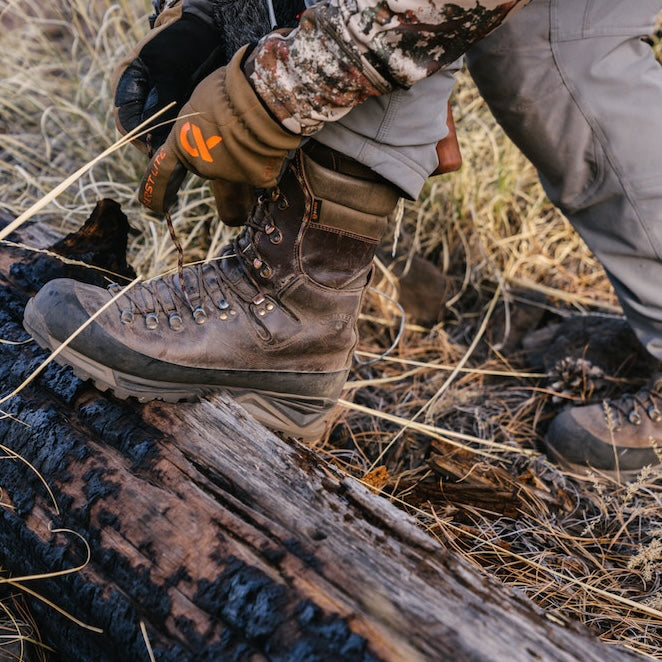
Bad boots can end a hunt before you ever see game. The right pair depends on where you're walking, how much you're moving and how long you'll be sitting still. Shop for those conditions first, then decide which features are worth the weight and money.
1. Material and durability
Full-grain leather can stand up well to abrasion and offer water resistance with appropriate care. Synthetic boots with waterproof membranes, including Gore-Tex, are another option. Look at construction and likely wear points, not just the material named on the box.
2. Insulation
A cold stand hunt and a hard uphill stalk ask different things of a boot. Thinsulate is one common insulation option. Choose the amount around weather, activity and your own cold tolerance; more insulation isn't automatically more comfortable if you're walking all day.
3. Waterproofing
Wet grass, mud and creek crossings make moisture protection worth considering. Waterproof membranes, sealed seams and water-resistant treatments can help keep water out. They have limits, and water entering over the top can still leave you with wet feet.
4. Traction and soles
Match the tread to your terrain. Mud, loose rock and steep slopes demand different things from an outsole. Vibram makes soles used on many hunting boots, but the specific design and conditions matter more than the logo alone.
5. Height and support
An 8-inch or 10-inch boot offers more coverage against debris than a lower boot. Height alone doesn't guarantee ankle stability; construction and fit also matter. Think about whether you'll be stalking, still hunting or sitting in a tree stand before choosing the weight and coverage you need.
6. Fit and comfort
Pay attention to the heel, arch and room around the toes. Padded collars, cushioned insoles and moisture-wicking linings can help, but they won't fix a poor fit. Try boots with the socks you intend to hunt in and make sure the fit works when you're moving.
7. Weight
Lighter boots can reduce fatigue during active hunts. Heavier insulated boots may make sense when warmth matters more than covering ground. Choose around the hunt instead of assuming either the lightest or toughest-looking boot is best.
8. Break-in time
Many boots need wear time before a long trip. Give yourself time to find pressure points and decide whether the fit works. Don't count on breaking in a badly fitting pair on opening day.
The useful balance is durability, protection and a fit you can live in all day. A boot that works for someone else's hunt may be the wrong tool for yours.
More perspectives →