
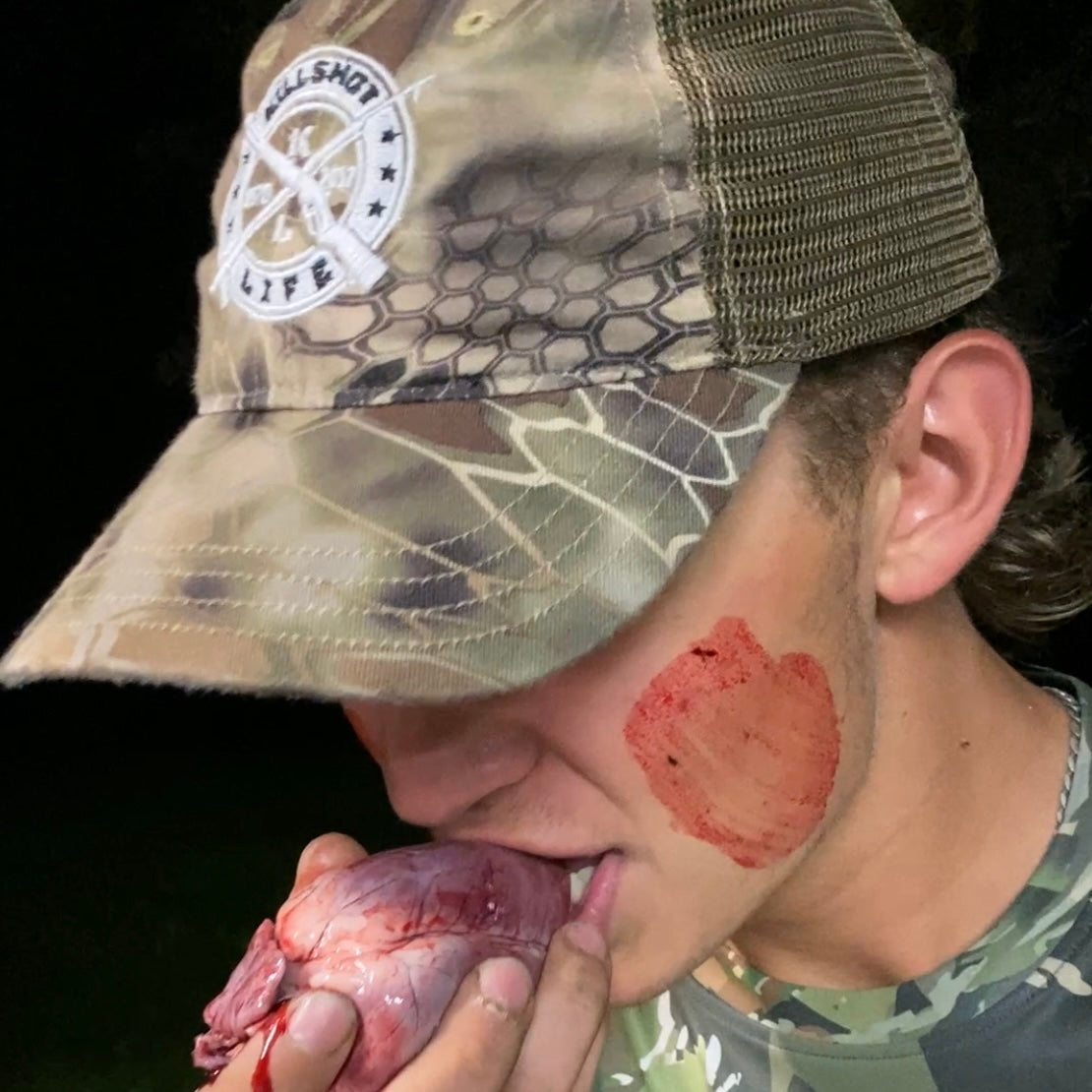
Some hunters mark a first kill by putting a little of the animal's blood on their face. To them, it can mark a first successful hunt, welcome a newcomer or acknowledge the weight of taking a life. Other hunters don't do it at all. It's a tradition in some families and hunting circles, not a requirement for being a hunter.
Historical and cultural context
Hunting has long been tied to food provision, community life and spiritual beliefs. Rituals around a successful hunt can recognize the hunter's ability to provide, thank the animal or mark a change in responsibility.
It's tempting to give blooding a single ancient origin, but that would oversimplify it. Native American and African cultures are not interchangeable, and a specific custom deserves a specific history rather than a borrowed explanation.
What the blood can symbolize
For hunters who practice it, blooding can express gratitude for the animal and the food it provides. The point is acknowledgment, not taking pleasure in suffering.
Another interpretation is a bond between hunter and animal. Some explanations describe the symbolic transfer of qualities such as strength, agility or wisdom. These are beliefs attached to a ritual, not a literal effect of blood or a meaning every participant shares.
The visible blood can also confront something modern food buying often hides: meat comes from a living animal. A first kill brings that home. The responsibility is to make a clean shot, recover the animal and use it well, whether the hunter takes part in a ceremony or not.
How hunters view it today
In some hunting circles, the custom continues as family tradition or an initiation into the group. A newcomer may see it as a meaningful connection with older hunters. Someone else may be uncomfortable with it, and there is no reason to pressure them.
Respect also means taking health risks seriously. Wild-animal blood can carry pathogens; keeping it off your face, eyes, mouth and broken skin is the safer choice. You can mark a first hunt without blood exposure.
A ritual is only one way to recognize a harvest. The more important signs of respect are how you treat the animal, how you handle the meat and what you teach the next hunter.
More perspectives →