Predator Management Is Not About Hating Predators
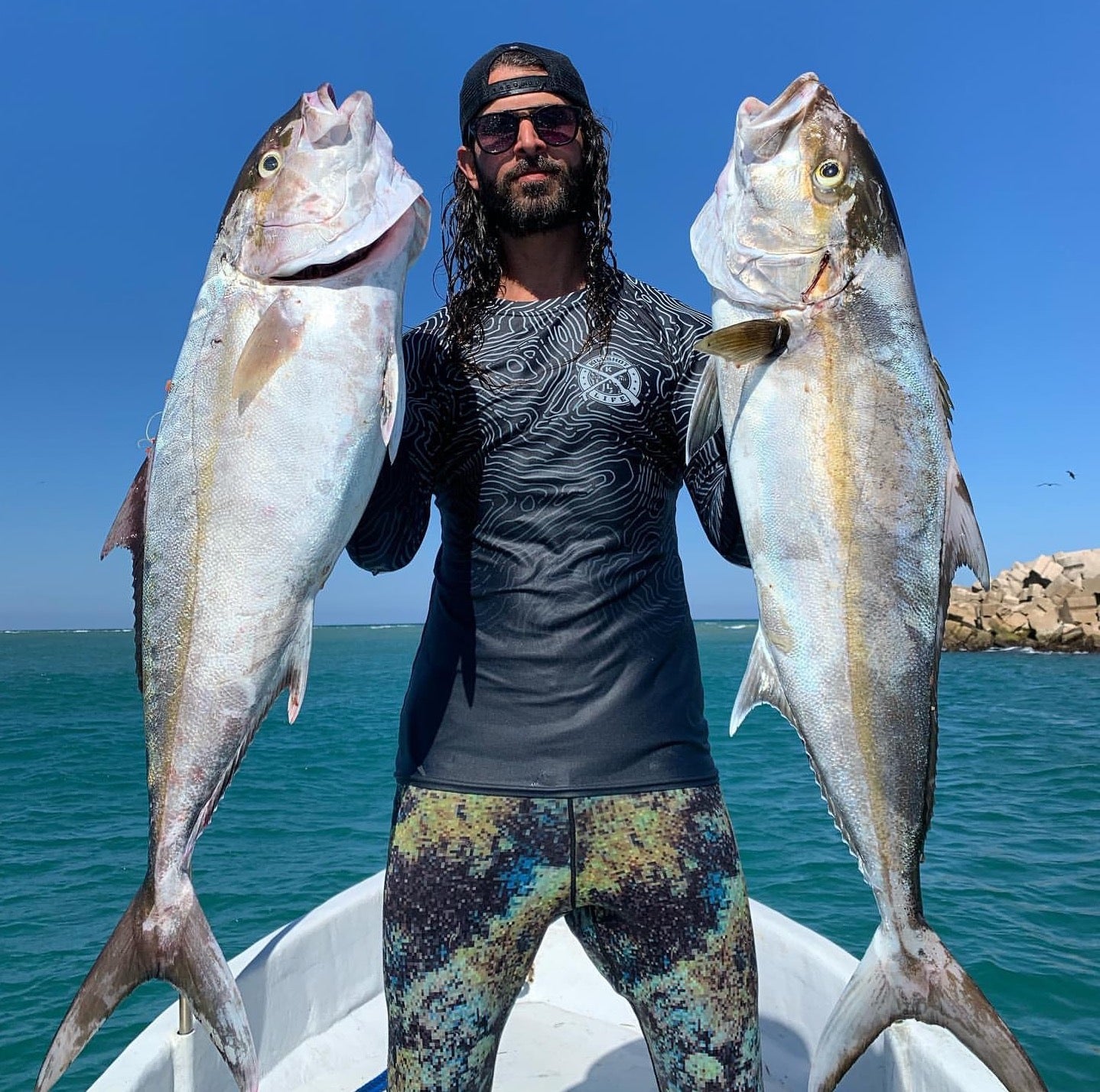
 Left: @bouldercreekoutfitters | Right:@serranoyader
Predator management is hard for a lot of people to understand, including some hunters. I know because I used to be one of them.
When I first became interested in spearfishing and hunting, I saw their value almost entirely through food. If an animal wasn't going to be eaten, I had a hard time understanding why anyone would kill it. Predator hunting was especially difficult for me to get behind.
My perspective began to change underwater.
As goliath grouper recovered in Florida, I watched these massive predators become increasingly common on the same wrecks and reefs where we hunt. A goliath can weigh hundreds of pounds, take ownership of a piece of structure and consume fish and crustaceans that are also part of the surrounding ecosystem and our fisheries.
Goliath grouper are native predators. They belong in Florida's waters, and their recovery after decades of protection is a conservation success. But none of that means their population should be placed beyond management forever. Protection is a management decision. So is monitoring. So is a limited harvest when the population can support it.
Florida now makes 200 permits available each year for an extremely limited recreational harvest of goliath grouper. The legal slot is 24 to 36 inches, the season runs from March through May, and permitted anglers must report harvest information and submit a fin clip for genetic analysis. The program creates a tightly controlled opportunity while also producing information for fisheries managers.
Goliath grouper are also excellent food. That matters because a regulated harvest can produce recreational opportunity, biological data and meat for the table. Management does not always mean killing an animal simply to reduce a number. Sometimes the predator being managed is itself a valuable renewable food source.
Once I understood that in the ocean, it became much easier to understand it on land.
Predators belong here, but they do not exist outside the system
Wolves, mountain lions, coyotes and bears all belong on the landscape. They play important ecological roles, and the historic effort to wipe predators out was not good conservation. A healthy ecosystem should include predators where suitable habitat can support them.
But protecting predators and managing predators are not opposites. Management is how we maintain viable predator populations while also considering prey herds, livestock, habitat and the people who live alongside them.
That distinction is often lost in public debate. One side may talk as if every wolf is a threat to be eliminated. The other may talk as if every additional wolf is automatically good for an ecosystem. Neither position is serious wildlife management.
The effect of a predator depends on where it lives, how many are present, the health and abundance of its prey, the quality of the habitat and the goals established for that particular population. The same species can be beneficial in one ecosystem and devastating to a vulnerable prey population in another.
Hunting is an essential management tool
Hunting is an important part of the predator-management toolset. It is not the only tool, and it is not appropriate for every species in every location. Managers may also use habitat work, nonlethal deterrents, compensation programs, relocation and targeted removal of individual problem animals. But automatically rejecting hunting removes one of the most practical and adaptable options wildlife managers have.
A regulated hunting season can reduce or stabilize predator numbers without threatening the overall population. Managers can change quotas, seasons, hunt areas and tag numbers as conditions change. Hunters provide biological samples, harvest information and observations from the field. They also help fund the agencies responsible for wildlife research and management.
Hunting can accomplish these objectives across a broad landscape without requiring government agents to perform every removal at public expense. It also gives people who bear the real costs of living with predators a stake in their continued presence. A predator that is legally managed as a valued game animal can generate food, license revenue and a constituency committed to keeping healthy populations on the landscape.
Mountain lions are a good example. Many hunters consider lion meat excellent table fare and compare it to lean pork. It must be handled properly and cooked thoroughly because of the risk of Trichinella. Montana Fish, Wildlife & Parks advises treating all mountain lion and bear meat as potentially infected and cooking it to at least 165 degrees Fahrenheit. With proper preparation, however, a mountain lion is absolutely a food animal.
The claim that predator hunting is always just killing for sport ignores both the management purpose and the hunters who value and use the meat.
Appreciation and hunting are not opposites
There is something deeper here that many nonhunters struggle to understand: we can admire an animal and still hunt it.
A spearfisherman can watch a powerful wahoo move through blue water and marvel at its speed, beauty and absolute command of its environment. We can respect that fish, feel fortunate simply to encounter it and still experience the excitement of hunting it. In many cases, the hunt deepens that appreciation. It requires us to enter the animal's environment, study its behavior and confront just how capable it is.
The same can be true of a mountain lion slipping through the timber, a wolf working with its pack or a bear moving across a mountainside. Hunters can appreciate the beauty, intelligence and power of these predators while also supporting their regulated harvest.
Wanting the opportunity to hunt an animal does not mean wanting it gone. More often, it means wanting healthy, huntable populations to remain for generations. Hunters understand that the existence of the animal is what makes the encounter, the pursuit and the entire experience possible.
We can revel in the power of a predator and still recognize our own place as hunters within the natural world. Those ideas are not contradictory.
What Isle Royale teaches us
The history of wolves on Isle Royale National Park shows why predator management cannot be reduced to a slogan such as “leave them alone” or “add more wolves.”
By 2017, only two highly inbred wolves remained on the island. Moose had no other major predator there, their population had grown and heavy browsing was placing increasing pressure on balsam fir and other vegetation. Wolves had historically reached the island across ice bridges on Lake Superior, but changing conditions made natural immigration less dependable. The National Park Service decided to intervene and began relocating wolves to Isle Royale.
Even that decision was controversial. Opponents argued that introducing wolves violated the principle of leaving a federally designated wilderness alone. In their view, the existing wolves should have been allowed to disappear and the ecosystem should have been left to respond without deliberate human intervention. Supporters countered that the system was no longer untouched and that doing nothing would still have consequences for the moose and forest.
The decision illustrates an important truth: choosing not to manage is still a management choice. It simply means accepting whatever consequences follow.
It would also be a mistake to turn Isle Royale into a universal argument for adding predators. Introducing predators does not automatically restore some perfect natural balance. In certain circumstances, it can cause more harm than good, especially when the prey population is already small, isolated or vulnerable.
Some of the wolves relocated to Isle Royale came from nearby Michipicoten Island in Ontario. Wolves reached Michipicoten while the island was home to threatened woodland caribou. As wolf numbers increased and prey declined, the caribou population fell so severely that managers feared it would be eliminated. Fifteen caribou were moved to predator-free islands, and eight wolves were later relocated to Isle Royale.
The contrast is striking. Wolves may help regulate an abundant moose population on Isle Royale while helping drive a vulnerable caribou population toward local extinction on Michipicoten. The predator did not change. The ecological circumstances did.
That is why “wolves are good for ecosystems” is not a management plan. Neither is “wolves are bad for game herds.” Wildlife decisions have to be made population by population and place by place.
Where reducing predation has made a measurable difference
Alaska offers another example. In some areas, long-term research found that wolf and bear predation was holding moose or caribou at chronically low levels. The Alaska Department of Fish and Game has used intensive management in selected areas where ungulates are important to rural residents and where managers concluded that predation was preventing population recovery.
In Game Management Unit 13, the department reported that wolves were killing an estimated 1,000 to 4,000 moose per year, most of them young animals, while human hunters harvested 468 adult moose in 2001. Managers established a predator-control program with safeguards intended to maintain wolves in the unit. By 2012, the estimated moose population had reached the state's management objective, and moose harvest had doubled between 2001 and 2010.
Another Alaska management plan reported that, in a portion of Unit 19D, predators killed 66 percent of monitored moose calves during the two years before combined wolf and bear control. During the years following predator treatments, the reported predation rate fell to 36 percent and average annual calf survival rose from 30 percent to 45 percent.
These results do not prove that predator reduction is the right answer everywhere. Weather, habitat, disease, hunting pressure and other variables also affect prey populations. Alaska has declined to implement predator control in areas where the biological conditions did not support it. That is precisely the point. Science-based management means using intervention where the evidence supports it and restraint where it does not.
Recovery and conflict management can happen at the same time
The federal Mexican wolf program demonstrates another form of predator management. The U.S. Fish and Wildlife Service works to recover and sustain the wolf population while also responding to livestock conflicts.
Managers use tools such as range riders, fencing and flagging, human presence, carcass removal and other nonlethal methods intended to prevent wolves from preying on livestock. When repeated conflicts continue, individual wolves may ultimately be removed from the wild. The agency describes removal as a last but effective tool for reducing recurring livestock depredations while continuing to promote wolf recovery.
That is not an effort to eliminate wolves. It is an acknowledgement that successful recovery requires more than putting predators on the landscape and demanding that ranchers and rural communities absorb every consequence.
People are more likely to tolerate and support predators when management agencies respond credibly to real conflicts. Refusing to manage a recovered or growing population can erode that support and make long-term conservation harder.
“They managed themselves before we came along”
One of the most common arguments against predator management is that predators managed themselves just fine before humans came along.
That sounds reasonable until we look honestly at the world in which they now live. Humans have changed habitat, divided migration corridors with highways and development, altered prey populations, introduced livestock, suppressed fires and removed or restored predators in ecosystems that have changed in countless other ways. We manage deer, elk, fisheries, habitat, disease and human access. Pretending predators are the one part of this altered system that must remain completely untouched is not a return to nature. It is selective management based on which species people find most emotionally compelling.
It is also worth asking what “managed themselves” actually means.
In an unmanaged system, predator populations can rise, reduce available prey and later decline through starvation, disease, territorial conflict or reduced reproduction. Prey populations can crash or disappear locally. Nature may eventually produce a new balance, but that process can involve severe swings, local extirpation and immense suffering.
That may be natural, but “natural” is not automatically the same thing as a responsible management outcome on a fragmented landscape filled with farms, roads, towns and heavily managed wildlife populations.
Humans are already part of the system. The relevant question is not whether we will influence wildlife. We already do. The question is whether our decisions will be deliberate, evidence-based and accountable.
The goal is the ecosystem, not a single species
None of this means every predator should be hunted everywhere. It does not mean every decline in deer, elk or reef fish can be blamed on predators. It does not mean habitat loss, disease, weather and human harvest can be ignored.
Good management requires real population data, defined objectives and the humility to change course. Sometimes the right decision is protection. Sometimes it is reintroduction. Sometimes it is habitat improvement, nonlethal deterrence or the targeted removal of a problem animal. And sometimes the right answer is a regulated hunting season.
Hunting should not be treated as a failure of conservation. When applied to a secure population under scientifically established seasons and quotas, hunting is conservation in action. It is one of the most flexible tools wildlife managers possess.
I still believe deeply in hunting for food. What changed is my understanding of what conservation sometimes requires. Managing wildlife means making difficult decisions for the health of the whole system, even when food is not the primary reason for the action. When the predator itself provides excellent meat, as goliath grouper and mountain lions can, that is another meaningful benefit.
We can admire predators, defend their place in the ecosystem and still hunt them. That relationship is more honest and more complicated than declaring an animal beautiful and therefore untouchable.
Predator management is not about hating predators. It is about valuing the entire ecosystem enough to make difficult decisions for all of it.
Sources and further reading
-
Florida Fish and Wildlife Conservation Commission: Goliath Grouper Harvest Program
-
Alaska Department of Fish and Game: Intensive Management Stories of Success
-
Alaska Department of Fish and Game: Unit 19D Intensive Management Operational Plan
-
U.S. Fish and Wildlife Service: Managing Mexican Wolf-Livestock Conflict