
The future of bass fishing is not just boat ramps, electronics, and tournament jerseys. It is also the young fisheries people who will be making habitat, access, and management decisions long after today’s arguments cool off.
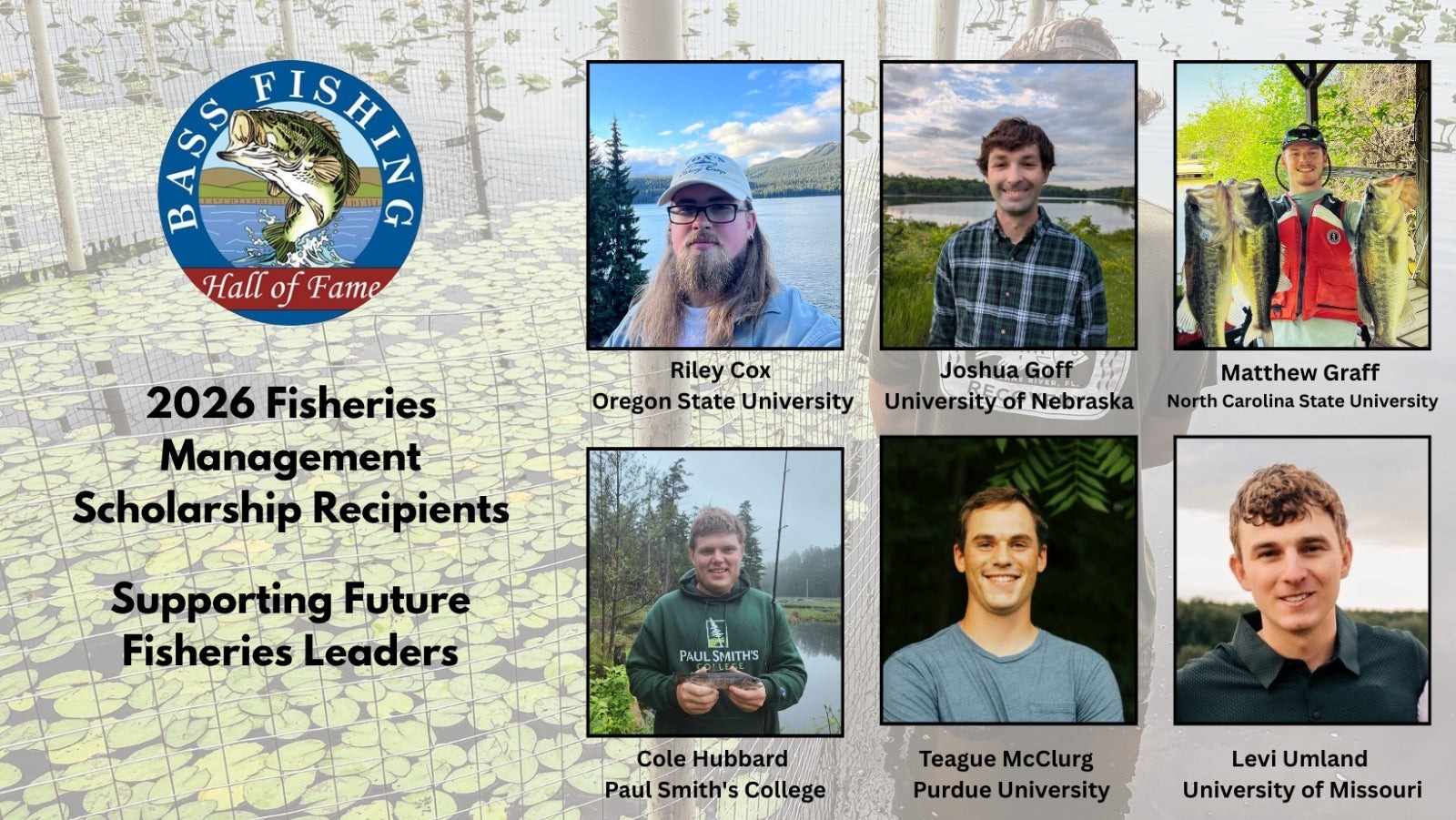
The Bass Fishing Hall of Fame announced its 2026 Fisheries Management Scholarship recipients, awarding six students $4,000 each for a total of $24,000 in educational assistance. The students named were Riley Cox of Oregon State University, Joshua Goff of the University of Nebraska, Matthew Graff of North Carolina State University, Cole Hubbard of Paul Smith’s College, Teague McClurg of Purdue University, and Levi Umland of the University of Missouri.
The point of the program is simple: support high school and college bass anglers who are pursuing fisheries and natural resource management careers. That matters because healthy fisheries do not happen by accident. Somebody has to understand habitat, harvest, stocking, water quality, invasive species, public access, and the pressure modern anglers put on good water.
Bass fishermen can be hard on each other over gear, methods, tournaments, live sonar, and who is doing it right. Fine. Debate is part of the sport. But every serious angler ought to agree on this much: we need competent people managing the resource, and we need them to understand fishing from the inside, not just from a desk.
A $4,000 scholarship will not fix every lake in America. But it can help keep a sharp young person in the field, and that is an investment worth making.
If we want legal harvest, catch-and-release opportunity, public access, and good bass fishing to survive the next round of pressure, conservation cannot just be something we post about when a favorite lake starts slipping. It has to include building the next generation of people who know how to keep fisheries alive.
Source & further reading
OutdoorHubRegulations and conditions change. Check current official guidance before you hunt, dive or travel.