
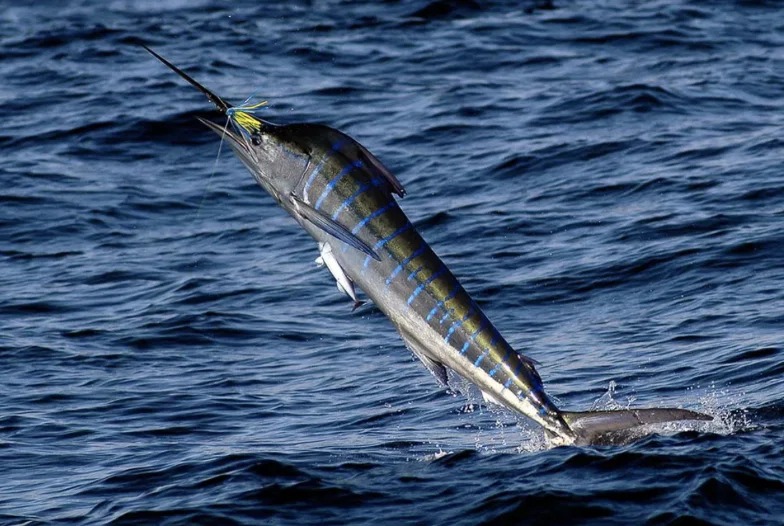
Billfish management depends on knowing what fish are actually being counted. A new research publication highlighted by The Billfish Foundation looks at a faster way to identify marlin species using portable X-ray fluorescence technology, known as pXRF.
The study, “Rapid Elemental Profiling for Species Identification of Marlin,” examined the elemental makeup of marlin anal fin spines to see whether black, blue, and striped marlin could be separated without relying only on genetic testing. Researchers found each species showed its own elemental fingerprint, with blue marlin standing out especially clearly.
That matters because misidentification is not a small problem in fisheries work. Bad species ID feeds bad stock assessments, and bad stock assessments lead to bad management. If managers, researchers, and tournament-side sampling crews can identify fish faster and more accurately, everybody who cares about healthy offshore fisheries benefits.
pXRF is portable, non-destructive, and can produce results within minutes. It is not being pitched as a magic replacement for genetic testing, and more research is still needed before it becomes a broad field tool. But as a complement to genetics, this is the kind of practical science worth watching.
Anglers who tag, report, release, and participate in research are part of this same chain. Conservation is not anti-fishing. Real conservation is better data, honest harvest and release numbers, and management that keeps billfish in the water for the next generation.
Source & further reading
The Billfish FoundationRegulations and conditions change. Check current official guidance before you hunt, dive or travel.