
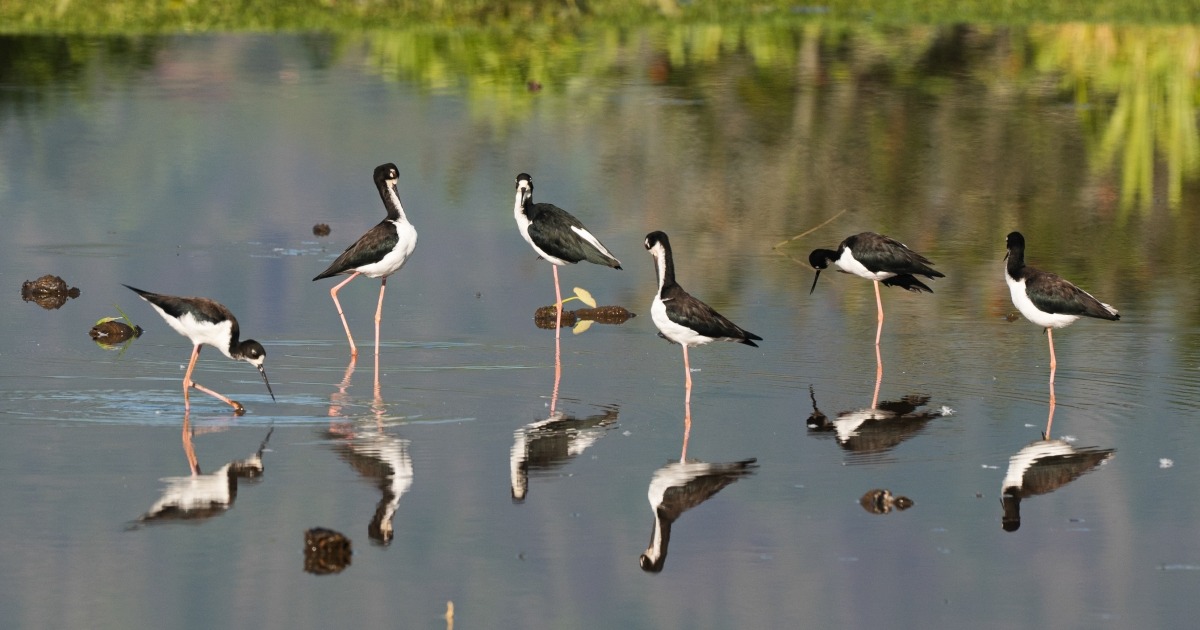
The aeʻo, also called the Hawaiian stilt, is being moved from endangered to threatened under the Endangered Species Act. That is good news, but it is not a finish line. It is proof that long-term habitat work and predator control can move a species in the right direction.
USFWS says the downlisting comes with a 4(d) rule that gives more flexibility for conservation and management while reducing conflicts. The bird was first listed as endangered in 1970 because of habitat destruction and alteration, hunting, introduced predators, nonnative birds, and disease.
The recovery work has been built around wetland management across the main Hawaiian Islands, with partners including the State of Hawaiʻi, military lands, private landowners, local groups, and the National Wildlife Refuge System. Survey data and population analysis now show the species has been stable to increasing for several decades on the eight islands where it exists.
The threats are still real. Mongooses, cats, rats, habitat loss, botulism, and future sea-level rise can all knock a wetland bird backward fast. USFWS says continued management like predator control, vegetation work, and water-level control will be needed to keep stable population trends going.
This is what conservation is supposed to look like: set a goal, do the dirty work, measure the result, and adjust the rules when the biology supports it. Wildlife does not recover because somebody framed a regulation. It recovers because people manage habitat, control predators, monitor populations, and stay after it year after year.
Source & further reading
U.S. Fish and Wildlife ServiceRegulations and conditions change. Check current official guidance before you hunt, dive or travel.