
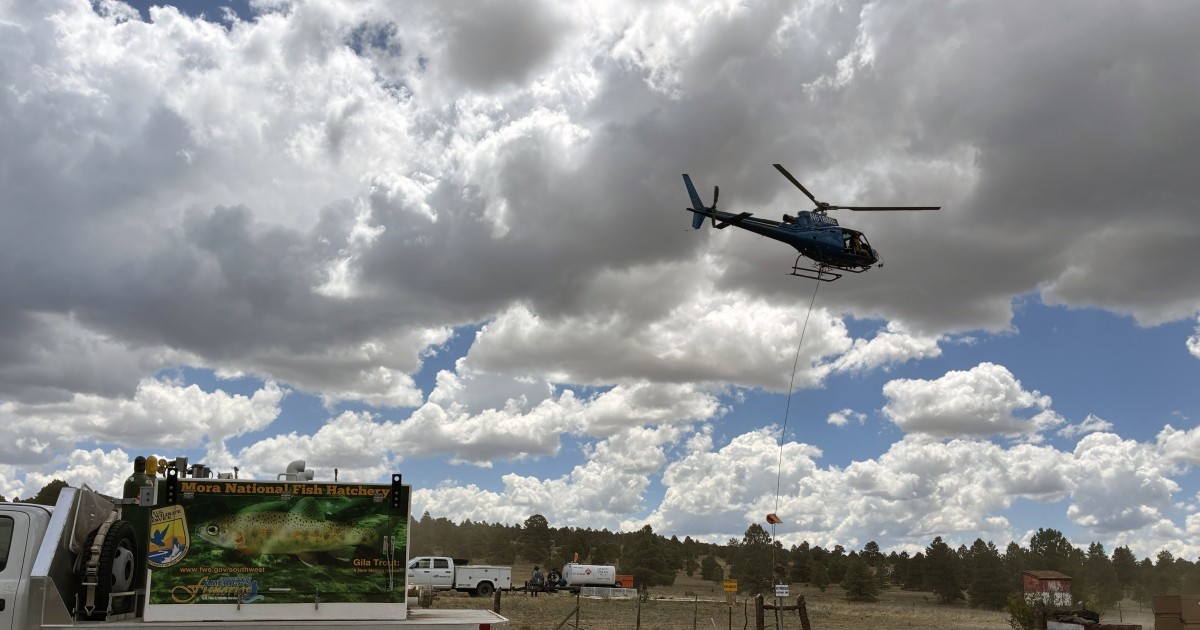
Biologists rescued 78 threatened Gila trout from New Mexico's Iron Creek after wildfire left the population exposed to a second danger: rain washing ash, mud and debris into the stream. The U.S. Fish and Wildlife Service's September 15 account reports that all of the rescued fish survived the move and were being held in an isolated tank at Mora National Fish Hatchery.
The rescue protected a distinct wild lineage, not just a count of fish. Iron Creek trout carry genetic characteristics different from the other four Gila trout lineages described by the agency. Losing that population would mean losing diversity that the recovery team is working to retain in captivity and return to the wild.
The Hummingbird and Sacaton fires damaged access to the creek, and storms forecast after the Sacaton Fire narrowed the time available. Three biologists with wildland firefighter training flew into the area, hiked to the creek and collected the trout using electrofishing equipment. The fish went into an oxygenated aluminum tank for an airlift out of the canyon, followed by a truck trip to the hatchery with repeated checks on their condition.
That fast response rested on work done well before the emergency. The recovery team had a written evacuation plan, and hatchery staff had prepared an isolation system in May in anticipation of bringing in wild Iron Creek fish. The operation brought together federal and state fisheries and wildfire personnel.
The next step is genetic testing to guide breeding. The plan is to use offspring to rebuild populations in New Mexico and Arizona, primarily for recovery, with angling opportunity also part of the longer-term goal. This is a rescue and recovery report, not a new fishing opening or a change in harvest rules. For anglers, the connection is direct: keeping a native trout lineage alive preserves the possibility of future fishing that cannot exist without healthy fish populations.
Source & further reading
U.S. Fish and Wildlife ServiceRegulations and conditions change. Check current official guidance before you hunt, dive or travel.