
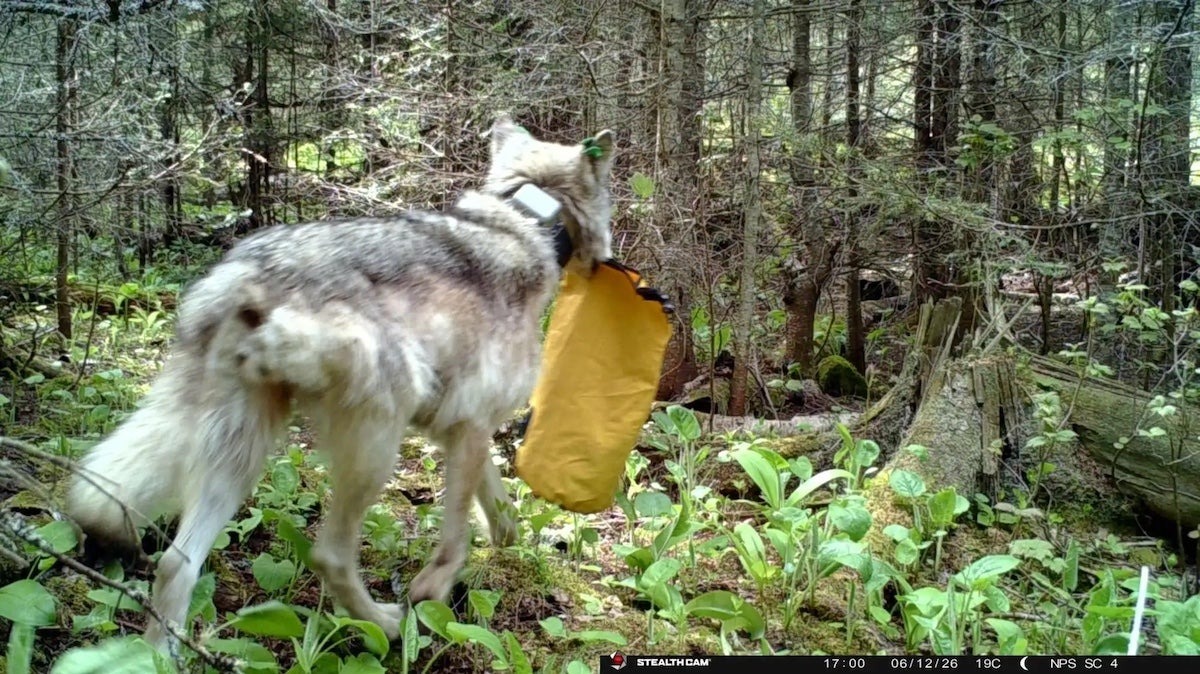
Isle Royale National Park has closed the Duncan Narrows and Three Mile campgrounds through at least July 31 after wolves repeatedly moved into developed camping areas, sniffed and pawed at tents, dragged backpacks away, and in one reported case entered a tent. Park staff say the closures could be extended if the behavior keeps spreading.
This is exactly why predator problems need to be handled early, clearly, and without fairy-tale thinking. Wolves are wild animals, not campground mascots. When they start connecting people, packs, tents, and campsites with food or easy opportunity, the risk changes fast. The National Park Service says at least one wolf appears habituated to people and may be relying more on human food. Officials are not yet sure whether the incidents involve one wolf or several.
Rangers are stepping up hazing with shouting, stomping, clapping, air horns, paintball guns, and motion-activated noise devices to push wolves back out of developed areas. Food storage rules are already in place, requiring campers and boaters to secure food, trash, and scented items in approved hard-sided containers or designated lockers. Even backpacks without food can draw attention because they carry human scent.
The bigger picture matters too. Isle Royale’s wolf population was estimated around 37 animals this winter, the highest level there since the late 1970s, while moose numbers have dropped hard. That kind of predator-prey pressure does not stay on a postcard. It shows up in behavior, movement, and conflicts at the edge of human use.
Nobody who respects wildlife should want wolves destroyed because campers got careless. Nobody with sense should ignore bold predator behavior until somebody gets hurt either. Good wildlife management means keeping wild animals wild, protecting people, and making hard calls before a bad situation turns worse.
Source & further reading
OutdoorHubRegulations and conditions change. Check current official guidance before you hunt, dive or travel.