Jones Hole National Fish Hatchery in northeastern Utah has completed a remediation project targeting New Zealand mudsnails, an invasive species that had reached its fish-rearing units. The U.S. Fish and Wildlife Service announced the completion on November 9, describing facility-wide treatment, infrastructure improvements and new monitoring to protect a hatchery that supplies regional recreational and Tribal fisheries.
The work matters beyond the hatchery fence. According to the Service’s announcement, Jones Hole raises up to 1.2 million fish annually for waters in Utah, Wyoming and Tribal trust fisheries. Flaming Gorge, Steinaker Reservoir and Red Fleet Reservoir are among the destinations it stocks. Those figures describe the hatchery’s broader role, not a newly announced stocking increase.
The snails were first detected on hatchery grounds after a flood in the early 2020s, then found in fish-rearing units in 2025. The response involved removing and transferring fish, pressure washing, hot-water disinfection and leaving treated raceways dry for an extended period before returning fish to them.
Crews also upgraded water-control systems, modified raceway bypasses, rehabilitated springs and used copper treatments at critical locations. Environmental DNA monitoring locations were established for continuing invasive-species surveillance. The Service says the changes improve the facility’s ability to isolate water systems, sanitize equipment and respond to future threats.
The project brought together the Service’s Fish and Aquatic Conservation program, its National Wildlife Refuge System Infrastructure and Maintenance Division, Utah Division of Wildlife Resources and Wyoming Game and Fish Department. Completion of the work does not mean every regional waterbody is free of mudsnails, and the announcement does not establish a new fishing season, harvest limit or public-access opening.
For anglers, the practical connection is keeping organisms from traveling with the next trip’s equipment. The Service’s Clean, Drain, Dry guidance calls for removing visible plants, animals and mud before leaving the access, draining water-containing equipment and drying gear before reuse. Check the destination agency’s requirements and any species-specific decontamination instructions; ordinary cleaning alone is not proof that mudsnails have been eliminated. The hatchery’s copper and disinfection work is not a do-it-yourself treatment recipe for fishing gear.
Optional gear: if you need a hand brush to remove visible mud from durable boot soles, the OXO Good Grips All-Purpose Scrub Brush is one option. Check your footwear’s care instructions first, and clean the brush afterward. This is an ordinary scrubbing tool, not a mudsnail-killing treatment or a replacement for required decontamination. A suitable brush you already own may be enough.
KILLSHOT Life may earn a commission from purchases through this Amazon link.
Protecting fish production and keeping invasive species out of the next waterbody serve the same end: maintaining fisheries people can responsibly use. At Jones Hole, the completed work adds safeguards to that job; at the access, anglers still have their own equipment to check.
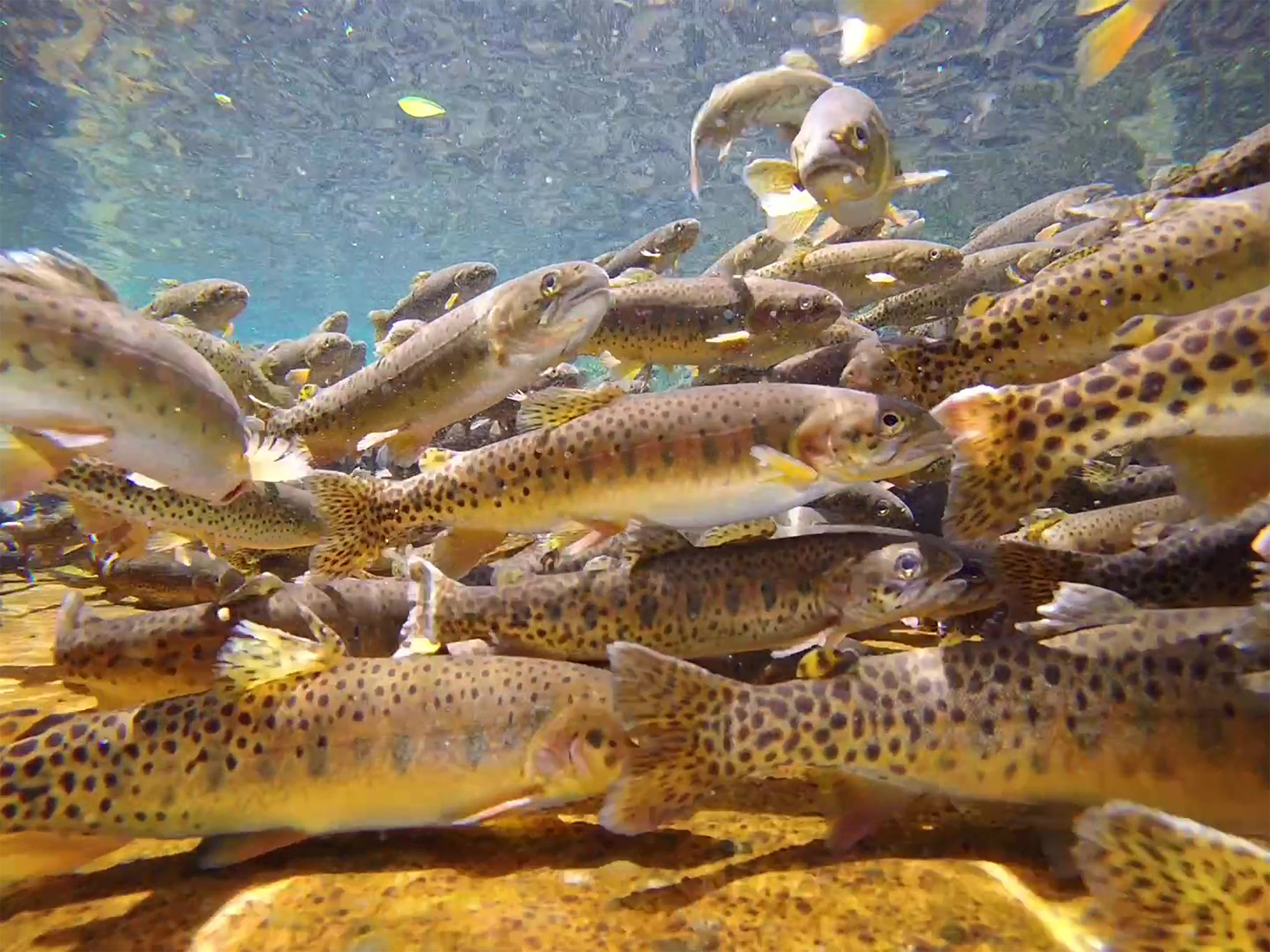
Photo: Matthew Wipf / U.S. Fish and Wildlife Service. Cutthroat trout in a raceway at Jones Hole National Fish Hatchery. Original image and rights: Public domain. The photograph shows hatchery fish, not the treatment process.
Source & further reading
U.S. Fish and Wildlife ServiceRegulations and conditions change. Check current official guidance before you hunt, dive or travel.
As an Amazon Associate I earn from qualifying purchases.