
A cooler photo tells you what came home. It doesn't tell you how long the crew fished, how many fish were released, what got eaten before it reached the boat or why you finally left a spot. If you want to understand your fishing instead of just remember the best parts, keep a trip log.
It doesn't need to be a captain's autobiography. A few consistent notes can help you choose the next weather window, stop repeating an unproductive approach and put something more useful than a complaint behind the problems you see on the water. The trick is recording the ordinary days as carefully as the exceptional ones.
Record the work, not just the catch
Start with the date, general area, target species and method. Add the number of people actually fishing and the time spent fishing. Keep travel time separate. A long run and a short bite can produce a very different day from several hours working nearby water, even when the cooler looks the same afterward.
Use the same definitions each time. If your fishing time includes moving between nearby drifts, say so. If you record only time with lines in the water, keep doing that. Consistent rough notes are more useful for comparison than precise-looking numbers that mean something different on every trip.
Then separate fish kept, fish released and fish lost. Identify species only as confidently as you can. Record measured lengths as measurements and estimates as estimates. If you're summarizing the whole boat, make that clear rather than letting everyone's catch become your personal tally.
Include the trips with no fish. A blank page makes an unsuccessful outing disappear from the record. An entry with no catch still tells you where you tried, what you tried and how much effort it took.
Write down what you actually saw
Predation belongs in the log when it happens. A shark taking a hooked fish beside the boat is an observation. A line parting out of sight is a lost fish with an unknown cause unless you have more evidence. Keep those entries separate.
For a witnessed loss, note the fish species if known, the predator if you could identify it, the general location and what happened. Was the fish taken during the retrieve? Did you recover part of it? Did the same thing happen again before you moved? Those details are worth more than turning every break-off into a shark story.
The same distinction helps spearfishermen. Write the notes after the diving is finished and everyone is safely back aboard or ashore. Describe an observed fish theft, damaged gear or the reason the crew left a spot without guessing at everything happening beyond your view. A record of encounters is useful; it isn't a count of every predator on the reef.
None of this weakens the practical case for managing predators where conditions warrant it. Accurate observations give that case something solid to work with. They also let you separate a recurring problem from a single rough afternoon.
Keep enough context to make a better decision
Add the conditions that might change your next trip: wind direction, sea conditions, water clarity, current, depth and the tide information you actually used. You don't have to fill every box. Leave unknowns blank rather than borrowing a number from a different time or place and presenting it as a measurement from your boat.
Record changes in method too. Switching bait, moving from a wreck to open bottom or changing the depth you're fishing can matter when you look back. If you caught more fish after a change, you've found something worth trying again, not proof that the change alone caused the improvement.
Finish each entry with one practical note for next time. Bring a different rig. Allow more time for the run. Try the earlier tide. Stop spending the whole morning on a spot that hasn't produced across several comparable trips. The point is to make the next decision easier, not to build a spreadsheet you never open.
A private notebook isn't a stock assessment
Fishermen should have a serious voice in fisheries management. We spend the time, pay the fuel bills and see things that deserve investigation. But a record from one crew describes that crew's fishing. It doesn't automatically establish the condition of an entire fish population or represent anglers using different methods elsewhere.
NOAA Fisheries' description of its recreational fishing surveys shows why catch and effort are distinct parts of the job. Dockside interviews collect information including species, numbers and whether fish were harvested or released. Other surveys collect trip activity to help estimate fishing effort. The system involves more than adding up photographs of landed fish.
A personal log can help you recall your own trips when answering a survey. Follow the survey's definitions and reporting period rather than substituting your preferred categories. Where separate mandatory reporting applies, a notebook is preparation, not a replacement for submitting the required report.
If you want an agency to investigate a recurring local problem, ask what information it can use and where to submit it. Keep the dates and observations intact. Explain what you know, what you estimated and what you couldn't identify. You can argue firmly for better access and practical management without asking your evidence to prove more than it does.
Make it easy enough to keep doing
Use a small notebook kept dry, a phone note or a simple file you can back up. Pick whichever you can update reliably after the boat and catch are taken care of. A short entry made while the details are fresh beats a perfect template reconstructed weeks later.
Keep precise fishing locations private. You can share a useful summary without posting coordinates, another captain's numbers or a partner's information. Store photos with the trip date if they help, but don't let the photo album become the entire record.
Before your next run, read the last few entries from similar trips. Look at the empty-cooler days as well as the good ones. Over a season, that gives you a better account of your own time on the water and a clearer idea of what to change. You already paid for the trip. Keep what it taught you.
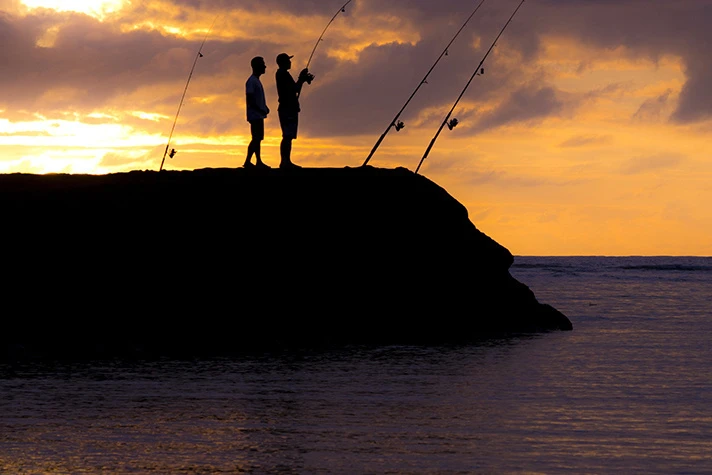
Photo: NOAA Fisheries, “Evening fishing in the Pacific Islands.” Courtesy: National Oceanic and Atmospheric Administration. Original photograph; public domain in the United States. Converted to WebP without cropping. Archival illustration, not an endorsement by NOAA or the pictured anglers.
More perspectives →