
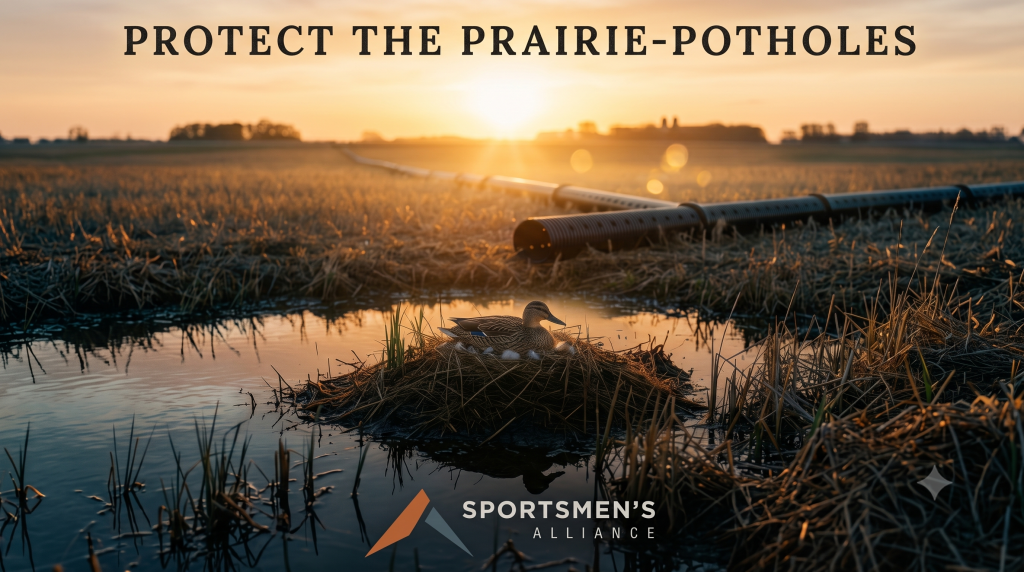
A quiet-sounding federal rule fight over drain tile setbacks has real consequences for ducks, wetlands, and hunter-funded conservation in the Prairie Pothole Region. The issue is how close agricultural drainage systems can be installed to federally protected wetlands.
Drain tile is underground perforated pipe that pulls excess water out of farm fields. Used in the right place, it is a normal farming tool. Put too close to a wetland, it can draw water away from the very habitat that waterfowl, shorebirds, and other wildlife depend on. That is why setback distances matter.
The Sportsmen’s Alliance Foundation submitted formal comments to the U.S. Fish and Wildlife Service urging the agency to keep strong, science-based buffers around protected wetlands. Their argument is straightforward: weakening setbacks could dry out habitat, undermine conservation easements, and put decades of public and sportsman-funded wetland work at risk.
This is exactly the kind of conservation fight that does not always make big headlines but matters on the ground. Prairie potholes are not just pretty little wetlands. They are one of North America’s most important duck production engines. If those basins lose water because drainage gets pushed too close, the damage shows up in nesting success, brood habitat, migration, and eventually in the blind.
Good wildlife management has to balance agriculture and habitat, but balance does not mean pretending hydrology is optional. If a setback is there to keep a protected wetland wet, then weakening it should take hard science, not convenience. Duck hunters know this better than most: no water, no habitat; no habitat, no ducks.
Source & further reading
Sportsmen's AllianceRegulations and conditions change. Check current official guidance before you hunt, dive or travel.