
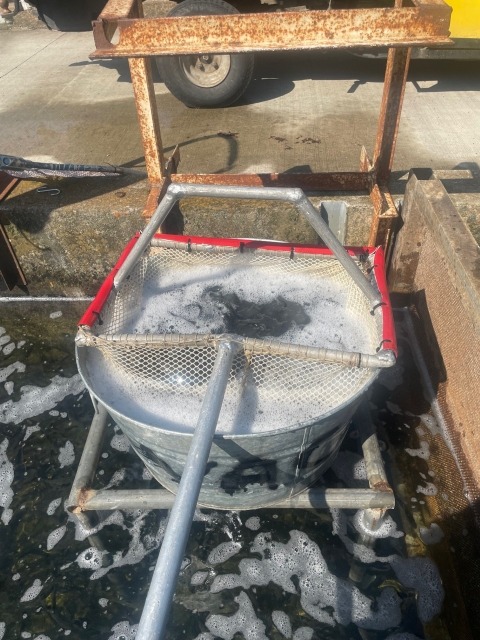
A lot of people see a stocked trout and never think about what it took to put that fish in the water.
The U.S. Fish and Wildlife Service highlighted work at Norfork National Fish Hatchery, where hatchery staff and volunteers vaccinated roughly 300,000 rainbow trout this spring before those fish are transferred to Arkansas’s Jim Hinkle State Fish Hatchery. Norfork raises about 550,000 rainbow trout for that hatchery each year, with most moved at about six inches and another group moved at eight inches.
The vaccine targets Enteric Redmouth disease, a bacterial infection known to occur in the Jim Hinkle water supply. The process is simple but not small. Nets full of young trout are dipped in a protective solution for 30 seconds, then returned to the raceways. The fish handled during the recent effort were only about four inches long, but together they weighed nearly 7,500 pounds.
That is fisheries management most anglers never see. Stocking a trout stream or lake is not just backing a truck down a ramp and dumping fish. It is broodstock, water quality, disease prevention, hatchery crews, volunteers, transport schedules, survival rates, budgets, and a pile of unglamorous work that has to happen before a kid or an old-timer ever feels a fish hit a spinner.
Sportsmen should care about that. Hatcheries are not a replacement for healthy natural habitat, but they are an important tool in many fisheries. They create opportunity, support license sales, keep families engaged, and take pressure off certain systems when used correctly. Like every management tool, they work best when the people running them are dealing with real biology instead of guesswork.
This is also a reminder that conservation is not always dramatic. Sometimes it looks like workers dipping thousands of small trout in a vaccine bath so they can survive the next step. That is not the kind of story that usually gets loud attention, but it is exactly the kind of work that keeps fishing alive for regular people.
If you fish stocked water, remember there is a whole chain of people and funding behind that tug on the line. License dollars matter. Hatcheries matter. Disease prevention matters. The fish do not just appear.
Source & further reading
U.S. Fish and Wildlife ServiceRegulations and conditions change. Check current official guidance before you hunt, dive or travel.