
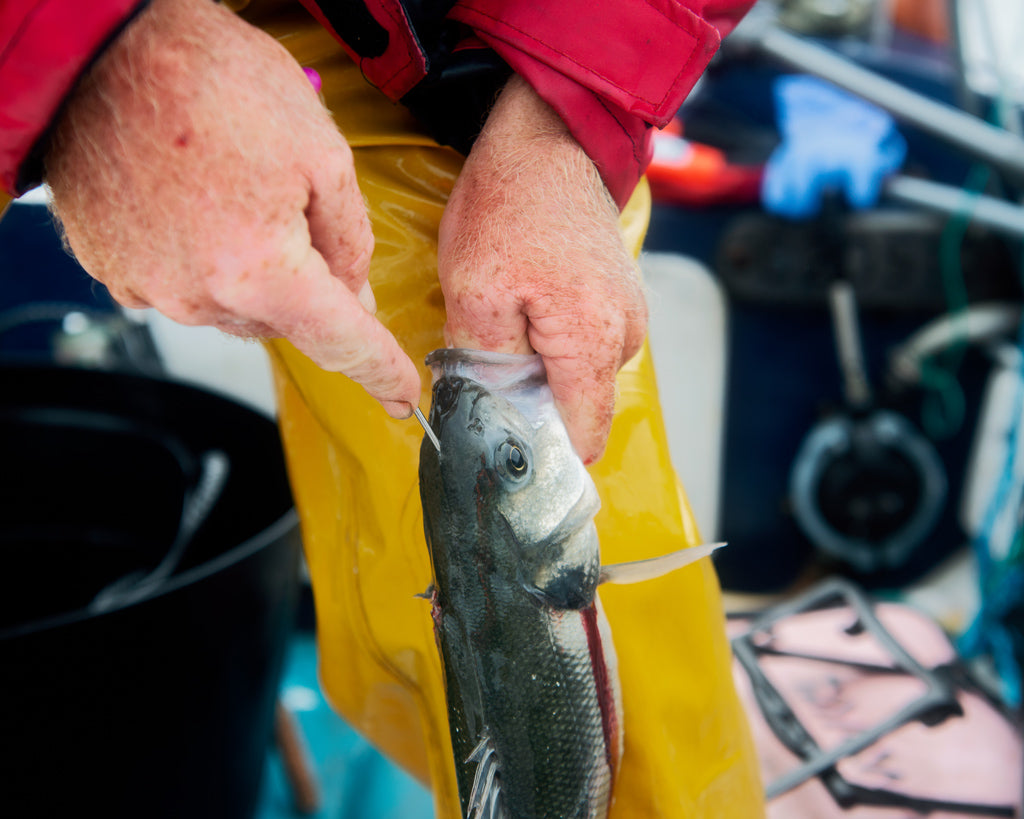
Ikejime is a Japanese approach to dispatching fish that aims to reduce suffering and preserve eating quality. It is often described as a spike-and-bleed method, but accurate dispatch, bleeding and chilling are separate tasks. Learn the anatomy and technique for the species you catch before trying it on a live fish.
The Ikejime Technique
The aim is rapid dispatch with minimal avoidable suffering, followed by careful handling. The process involves distinct tasks:
Dispatch: Accurate brain destruction with the appropriate tool is intended to produce rapid loss of consciousness. Learn the anatomy for the fish in hand rather than assuming one location or technique fits every species. Bleeding: Brain spiking does not itself perform a complete bleed-out. Use a species-appropriate bleeding method after dispatch. Brain spiking is a dispatch step, not a method of removing lactic acid. Chilling: Chill promptly in a suitable ice or ice-water setup and maintain clean handling. Cold storage slows spoilage; it does not prevent all bacterial growth or make fish automatically safe to eat raw.
Benefits of Ikejime
Enhanced Flavor and Texture: Prompt dispatch and good handling can help preserve flesh quality. Results depend on capture stress, accurate technique, bleeding, cleanliness and storage, not the method’s name alone. Prolonged Freshness: Proper handling and chilling can improve keeping quality. There is no universal extension of shelf life, and spoiled fish cannot be restored by the dispatch method. Reduced Post-Catch Stress: Quick, accurate dispatch aims to reduce prolonged struggling after landing. It does not undo stress experienced during capture. Spinal-cord disruption may affect the timing of rigor, not eliminate it indefinitely. Economic Benefits: Better-quality fish may command a better price where buyers value the handling method. A premium is a market possibility, not a guaranteed return. Ethical Considerations: The point is to reduce avoidable suffering. That depends on competence and accurate technique, not a blanket promise of a painless result.
Popular Variations of Ikejime
Several variations of the Ikejime technique have developed over time, each tailored to different types of fish. For instance:
Ikejime terminology: Do not treat the spelling “Iki-Jime” as a separate large-fish technique. Learn the appropriate method and anatomy for the species you handle. Shinkeijime: This term concerns spinal-cord disruption, not simply severing blood vessels in small fish. Learn the correct route and equipment for the species from a qualified source before attempting it.
More perspectives →