
A promising piece of public ground isn't much use until you know how you're getting onto it. The same goes for permission on a farm: knowing where the deer feed doesn't settle where you can park, which gate to use or how you'll get an animal back to the truck.
Access planning deserves some of the attention we give scouting. It turns a place you'd like to hunt into a hunt you can actually carry out. Before putting another pin on the map, trace the whole trip: road, parking spot, approach, hunting area and return. Then work through what changes if you're coming out with meat instead of an empty pack.
Separate the hunting ground from the route
Start with two questions: can you hunt the parcel, and can you legally reach it by the route you've chosen? They aren't the same question. A public-land label doesn't establish permission to cross the neighboring property, and a visible two-track doesn't tell you whether you may drive it.
The Bureau of Land Management's hunting guidance says its lands are generally open to hunting unless specifically prohibited, but directs hunters to the local office for closures and restrictions. It also makes clear that crossing private land to reach public land requires permission. Hunters still need the required state licenses. That's a useful starting point for BLM ground, not a substitute for the rules governing a particular refuge, state property or private access program.
Check the managing agency's current information alongside the state hunting regulations. Find the named access point, road or trail you intend to use. Ask about anything unresolved before you leave: a seasonal gate, a disputed-looking approach, vehicle restrictions or a closure that isn't clear on the map. Describe the actual route when you call. “Can I hunt around there?” is a different question from “Can I reach this trailhead from this road on these dates?”
Save the answer and its date with your trip notes. If your plan depends on somebody's permission, keep that permission and the person's contact information where you can find them.
Make private-land permission specific
A good permission conversation leaves both sides with the same picture of the day. Agree on who is coming, what you're hunting, the dates and the boundaries. Ask where to park, how to handle gates and whether the owner wants a message when you arrive or leave. Follow any required permission form or other local legal requirements.
Work out the recovery arrangements too. Permission to walk in shouldn't be treated as permission to drive across a field afterward. Ask before the situation arises, including whether there are areas or conditions where vehicles are out altogether. If access is walk-in only, build the hunt around that.
Keep guests within the agreement. If a friend joins the trip, confirm that change instead of introducing an extra truck at dawn. Clear expectations let you spend the day hunting rather than wondering what the landowner meant.
Scout the return as carefully as the approach
When looking over a route, don't stop your planning at the stand or glassing point. Walk through the return in your head with less daylight, more fatigue and whatever load a successful hunt would produce.
Where does the route get steep? Is there a longer but more manageable way back? Where will you stop to sort gear without blocking a road or gate? If an animal runs toward a boundary, do you know whom to contact? Learn the applicable recovery and trespass rules before hunting near that line; don't assume a hit animal gives you permission to follow it anywhere.
For a meat hunt, connect that route to the rest of the job. Have the equipment, help and meat-care plan ready before taking the shot. A shorter hunt with a workable recovery plan can be a better use of a day than pushing into country you haven't figured out how to come out of. That decision belongs in the planning, when you have time to change it.
Pick an alternative access point or another legal hunting area before departure. The backup doesn't need to be as exciting as the first choice. It needs to be real: somewhere you've checked, can reach and are prepared to hunt if the original approach is unavailable.
Put the useful information in one place
Build a simple trip note you can use without searching through messages. Include the parking location, planned route, boundaries, permission details, relevant restrictions and contact numbers. Save the maps you need for offline use and check that you can actually open them without a connection. Carry a suitable paper map as a backup and know how to use it.
Share a version with someone staying home. The BLM's guidance recommends letting someone know where you're going, when you'll return and what the emergency plan is. Make the return time meaningful by agreeing on what that person should do if you haven't checked in. If you change the plan, communicate the change when you can rather than leaving someone with a description of a different trip.
Keep the note short enough to use. A parking pin and a clearly marked route are more helpful in the dark than a folder full of screenshots you haven't sorted. Give your hunting partners the same information so the plan doesn't live entirely on one person's phone.
Afterward, add what you learned: where you actually parked, which approach worked and what you'd change about getting out. Keep private permissions and sensitive locations private rather than turning every useful detail into a public post.
Good access work pays off before you ever see an animal. You arrive knowing where you belong, what the route requires and how the day will finish. That leaves more attention for reading the country, making a good shot when the opportunity comes and doing the work that follows.
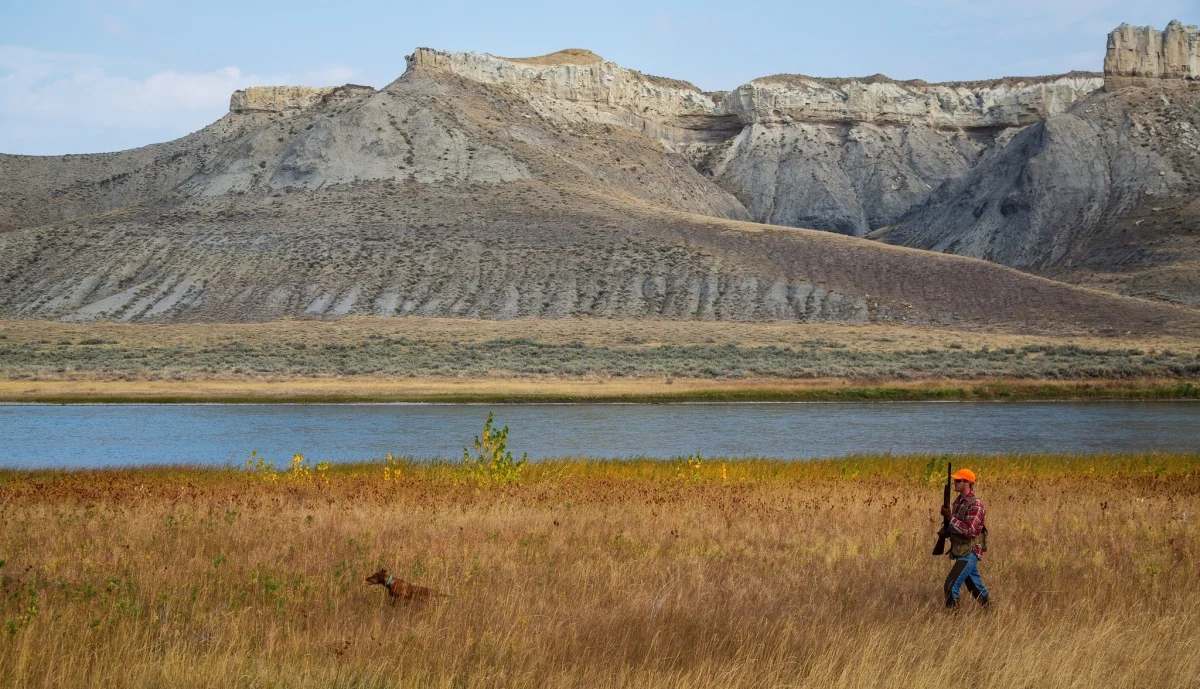
Photo: Bob Wick / Bureau of Land Management. Hunter and dog at Upper Missouri River Breaks, Montana. Public domain; converted to WebP without cropping. Archival photograph, not an endorsement of this article.
More perspectives →